February 13, 2026

Orchid Portrait 01 — 02/2026

The way we respond to life’s deliveries impacts the world’s impact on us. Our response ability works to make things better than they are in each situation as it arises–and is our “first line of defense” in the work of making things as livable as they can be. Controlling what can be controlled helps to influence what happens next, and developing our ability to be good at that helps what can be helped all along the way.

200 Zen Thoughts #2 By Jim Dollar

  1. What is called for in a situation trumps all other considerations. Knowing what is called for here, now is essential knowledge, and we are attuned to that from conception. We know what is called for here, now, beyond all doubt. Even though we may not be able to explain, justify, excuse, defend our choice/actions. When the dog needs to go outside, we take the dog outside. When the baby’s diaper needs changing we change the baby’s diaper. When it’s time for a cup of coffee or a nap we know it. And so on, all the way to the end of the line.
  2. Things are not going my way, and there is nothing new about that. I relish it in that there is no better mechanism for growing up some more again than that of coming to terms with things not going our way, and growing up some more again today every day is the path to whom we are capable of being–to whom we are called to be, built to be. And I am glad for being able to square myself up with the way things are that I would deeply prefer to be different than they are, but “here we are, now what?” Answering that question as it needs to be answered brings out the best in us in each situation as it arises. And being the best self that I am capable of being in every one of those situations is that which I aspire to be in every situation always. May I be so lucky!
  3. Speaking of being lucky, that reminds me that being lucky is the foundation of a life well-lived. Those who live well are likely to consider themselves to be lucky, and they all would be right to do so. Being lucky is the essential quality required for a well-lived life and no one can do that on their own. However, we can position ourselves to be lucky by laying our hopes, desires, plans, aspirations, ambitions, etc. aside and do what needs to be done, when, where and how it needs to be done no matter what in each situation as it arises by living aligned with, in accord with, our inherent intuition no matter what that means for our hopes, desires, etc., throughout the time left for living. If we want to be lucky we have to live intuitively and allow the outcome to be the outcome in good faith accommodation to that.
  4. I don’t care if you love me–I care about you treating me lovingly whether you love me or not. Feel about me however you feel about me, but treat me lovingly. Treat me so consistently lovingly that I would never guess that you don’t love me. And if we all do this in our relationships with one another, it will transform the world in no time at all. So replace “Love one another,” with “Live lovingly toward one another” in all times and places. And all will be well.
  5. Living lovingly with one another is being accommodating, with kindness and compassion, gentleness and grace. The world is dying for lack of those things when we all need to be kindling them in all of our relationships. Taking the lead by being what the circumstances need us to be here, now throughout our day, throughout our life. There is nothing difficult about this, and with practice it becomes second nature. It should be first nature, and may have been for Neanderthal, hunted down and killed by Cro-magnon. Genocide from the start. Something we have been good at from the beginning, and something we evidently are unable to out-grow or overcome. Racism being evidence of who we are capable of being without shame or remorse. Fie! Fie on us all! No?
  6. We want more than we need, have any use for, know what to do with. We have Billionaires, even Trillionaires who don’t know what to do with their money. So they buy a congressman/woman, or a Senator or two, or the entire Supreme Court. Whom they also don’t know what to do with. We have no idea of what we are to be about. Jesus and the Buddha would not known what to do with us either. We cannot be still or quiet. We cannot sit waiting for the mud to settle and the water to clear. We have the means with no end in sight. What’s the point of that? We don’t know what the point is. We don’t have a point and no idea of how to find one. Or, of where we go from here. Dropping into the emptiness, stillness and silence doesn’t sound inviting at all, yet is the way, the truth and the life waiting for us to be willing to discover what waiting is all about.
  7. The next moment hinges upon how we interpret/understand/comprehend what’s what in this moment. Each moment is a springboard into the next moment. How we see, hear, understand what’s what, what’s happening and what is called for here, now determines, or strongly influences, where we go from here and what happens next. We can, at any point influence/control the future and all that flows from that into all that will be because of what happens right here, right now. How competent, capable, balanced, alert, awake, aware are we right here, right now? That makes all the difference in terms of what happens next and where we go from here, now. How tuned in are we to ourselves and our surroundings? How in touch are we with the psychic foundation of our being right here, right now? How alive are we to ourselves and our surroundings? How sensitive are we to the psychic movement of past and future of ourselves and of all things in this moment with us right here, right now? How open are we to what is happening and what is called for? How available are we to what is called for and what needs to be done about it right here, right now? How can we best cooperate with the forces, the drift and flow of life and being at work within these circumstances of this situation in order to assist it in its movement toward what needs to happen? What do we mean by stepping into any moment without being in touch with all the things this paragraph opens up for our reflection, insight, intuition to take into account and consider cooperating with?
  8. The psychic foundation of life and being is that which has always been called God. Psyche is God. God is our interpretation, our understanding, our conception, our projection of psychic reality, which is the essence of reality in cosmological form. We experience psychic reality and interpret it, understand it, define it as God. And give this God all of the qualities and capabilities that God has come to possess over time. We drape psychic reality with all of the projections humanity has created for God and build a theology complete with doctrines and dogma to explain all that needs to be explained to our relatively complete satisfaction, but it is all imagined and made up by those who have only the experience of psychic reality to work with over time.
  9. Psychic reality is life. Mystery enfolded in matter. And there is no getting beyond the Mystery of life, of psychic reality. That is all there is. And it calls us, asks us to live in relationship with life and being and psychic reality so that we are one with all of it and happy/content to be so, doing what is called for, what is asked of us in relation to life and psychic reality, in each circumstance, in each situation, in each here, now that arises and asks us to offer what we have to give in service to the whole, or the part of the whole that is available to us in any/every given moment in living in accord with, in tune with, in harmony with the flow of life and being in every here, now by doing what needs to be done, when, where and how it needs to be done in each situation as it arises all our life long. Engaging the magic and the mystery, at one with the magic and the mystery, aligned with the Tao, always and forever. Amen! May it be so! No?
  10. My present reality is a good-enough reality for me, and the more personal the reality, the better the reality. And I read that as the “reward,” the essence of my being available to psychic reality, moving in relationship with, in response to, the influence of psychic reality throughout my life. I have always been attuned to, aligned with, the Tao, with the flow, the current, the drift of life and being through all of the times and places, the here, now’s, of life over the entire scope of life, and have “reaped what I have sown,” without knowing what I was doing or that I was sowing anything. We are always sowing something. The more attentive we are, attuned we are to who we are and what we are doing, the better the outcomes for us over the full course of our life, without our trying to achieve any outcome at all, just doing what was called for in each time and place of our living. This is the magic and the mystery of life at one with life, which is how we all are asked to live–and it is never too late to start living that way. Here and now is always the ideal time and place to begin doing what is called for, when, where and how it is called for. Doing the right thing at the right time in the right place in the right place, just as the Tao has always asked that things be done.
  11. Not forcing. Not pushing. Not shoving. Not insisting. Not striving. Cooperating. Listening. Looking. Seeing. Hearing. What’s what and what needs to be done about it here, now. Communing with the present. Being present with the present. For the good of the present moment. The here, now. What is called for? How? When? Where? Living at one with the Tao of life and being in each situation as it arises.
  12. Benefiting and profiting from not trying to benefit and profit. From not caring about benefiting and profiting. Being aware only of here, now and what is called for, when, where and how for the sake of doing that and only that alone. This is living innocently with a noble heart in all times and places. Doing that, living in this way is the way of living well-enough and doing well-enough in all times and places. Why ask for more than that?
  13. I have said before here that Carl Jung said, “There is in each of us another whom we do not know.” Our place is to get to know The Other Within. Begin with thinking of The Other Within as our psychic connection, as Psyche Within, and see if The Other Within has a gender preference. Ask the question and wait for a reply. It may come instantly and it may come as a dream tonight or next week. Don’t be in a hurry, just wait. If you care to, you can also ask for an actual, physical symbol to represent The Other within and see what comes to mind, instantly or eventually. We are making psychic reality real–the imaginary becomes real, tangible, actual when we treat it as though it is, and psychic reality is the foundational actuality of the physical universe. The spiritual is physical and Quantum Mechanics would not be surprised to hear so, and has known so from its beginning. We are following the path of Quantum Mechanics in taking up the work of making the immaterial real, actual, tangible, personable, factual and undeniable.

    As we become comfortable with emptiness, stillness and silence, it becomes an inner world that we can rely on to ground, stabilize, guide and direct us in an inward and intuitive way to know what is called for and needs to be done in response to our outer circumstances, and “dropping into the silence” becomes the equivalent of Jesus’ injunction to “pray always.” Living from the silence is living from our intuitive awareness/realization/enlightenment/awakening/knowing what’s what and what is called for/needed to be done about it here, now. And the imaginary becomes real “like that.”
  14. If we think of Psyche as fundamental/foundational reality–the stuff of which everything is made, matter and spirit/life/energy–and the Tao as the flow of life and being, then Psyche/Tao is all there is. And we can participate with Psyche/Tao through consciously aligning ourselves with Psyche and Tao in doing what is called for, when, where and how it is called for in each situation as it arises, not for our own advantage but for “the good of the whole,” assisting the movement of life and being along the lines of the flow of life-being-energy through the experience of here, now, as we “chop wood, carry water,” and “eat when hungry, rest when tired,” and do what it takes to “take care of business” in each here, now that comes along.
  15. Donald Trump is the environment in which we conduct the business of assessing what’s what, what’s happening, what’s called for and what needs to be done about it here, now in every situation as it arises. We the people have always been at the bottom of the social order, lacking the tools and the wherewithal to do what needs to be done, where, when and how it needs to be done in the time left for living. While those with the tools and the wherewithal to do what needs to be done aren’t interested in doing it, preferring instead to give themselves to idle pursuits pertaining to personal pleasure.
  16. Anyone could look around and see this isn’t getting it done. And that has been the story of life and being, of Psyche and the Tao from the beginning of life and being. It is a travesty and a sham. Those who could won’t and those who would can’t. And we waste our lives going nowhere doing nothing–and this is all we have to show for our efforts through eons of sun rises and sunsets. I feel completely justified sitting in my recliner looking out the window. And look forward to doing it again tomorrow.
  17. No plan. No agenda. No objective. No aspiration. No ambition. Just waiting. Just watching. Just looking. Just listening. Just seeing. Just hearing. Just knowing what’s what. What’s happening. What’s called for. In each situation as it arises. And doing what needs to be done, when, where and how it needs to be done. Doing the right thing, in the right way, in the right place, at the right time, time after time. So that everything is as it needs to be here, now. Then dropping back into the emptiness/stillness/silence to wait and watch, look and listen…knowing what’s what, what’s happening and what’s called for in each situation as it arises as “circumstances beget circumstances” (An old Taoist observation) throughout what remains of life to be lived. Word without end. Amen.
  18. Knowing what brings us to life is essential knowing. Knowing what depletes us, drains us and leaves us lifeless is also essential knowing. Vitality directs us throughout our life. We go where the life is and stay away from the places life cannot be. We know what is life and what is death for us, just as we know what is “YES!” for us and what is “NO!” for us. We only have to listen to what we know to know what we need to know to live the life that is right for us and avoid the life that is wrong for us.
  19. Here’s an exercise I recommend for you: Pray as you normally would to the god of the bible and theology, and ask that god to introduce you to the Psyche/Tao god of all and everything. And see where it goes.
  20. Psyche/Tao envisions all we have known of God through the ages, which also serves as a mirror of the best we have known about ourselves. We are one with the god of Psyche/Tao, and when we are conscious of being one with Psyche/Tao, none of the other gods we have imagined in all the pantheons of those gods could begin to match us in terms of the positive qualities those gods represent. When we are at our best we are the best that could ever be. And if we cannot sustain it for long that is only because we have other things on our mind that require our attention and break the spell of the Holy Other that we also are, and know it in the best moments of our best days. We are what we worship, or can be when we put ourselves into the role of PsycheTao and love one another as we are capable of doing. If you spend some time with this idea, you will know it is so. No?
  21. That being the case, all you have to do is sit still, be quiet and become conscious of your realizations to know that you are quite capable of enlightenment and awakening and of living as though you are enlightened/awakened/compassionate/etc. and doing so just by paying attention, knowing what is called for in each situation as it arises and doing what needs to be done about it, when, where and how it needs to be done, which is all the Buddha and Jesus, etc. ever did. The Buddha said, “You are the Buddha!” The Christ said, “You are the Christ!” And they knew what they were talking about. When we think about it, we know it is so.
  22. We are capable of realizing/recognizing the Buddha in the Buddha and the Christ in the Christ. If we can realize/recognize it in them we can realize/recognize it in ourselves if we would but get out of our way and see what we look at when we look at ourselves, and stop giving ourselves over to the un-Buddha-like and un-Christ-like aspects of ourselves, and thinking that is who we Really are. We are the Buddha, we are the Christ–all it takes is acknowledging/ realizing that it is so and living as though it is for it to be so. And if you are screaming “NOT SO! NOT SO!” now, I invite you to begin living as though it is so for it to actually be so. Do this for me: Live to see how close you can come to it actually being so in each situation as it arises for the rest of your life. How about it? What do you say?
  23. Think of Psyche as the foundation of life and being. Think of the Tao as the guiding principle of the Cosmos controlling direction and flow through time and space, through when, where and how. Put them together and we have what, where, when and how. Psyche/Tao. One thing not two.
  24. I am a proponent of living as though it matters how we live even though I realize that on a lot of levels it doesn’t matter at all. Because on some level it matters to someone, me, for instance, my children, other drivers on the highway, etc. And not just matters–it makes all the difference. So, I live in light of the difference I do make and don’t bother with it not making any difference whatsoever. Some impact somewhere is impact. No?
  25. If you do an internet search for “What is the relationship between Psyche and the Tao?” The internet search engine will turn it over to AI, which makes AI THE internet search engine, and in about 30 seconds, you will get a readout that would take you years of research the hard way.

And you will get this for starters: The relationship between psyche (the soul/mind) and the Tao (the ultimate principle of the universe) is deeply explored in Jungian Psychology, viewing the Tao as the Self—the center of wholeness where inner psyche meets the outer world, achieved through individuation (integrating opposites like Yin & Yang), experiencing synchronicity, and finding flow (Wu Wei) for inner harmony and self-realization, bridging Eastern philosophy and Western depth psychology. And the links are also amazing.

So, I encourage to do this, which will put you in position to grasp where this inquiry leads–away from the “God of theology presumption”, to the “God is One with Psyche and Tao, and all of life and being including us, and does not require worship, only recognition, realization, enlightenment, awakening, awareness, knowing and understanding that the distance between us and God is the distance between water and H2O.

And how that changes things is the gigantic shift in perspective/perception of our way of life and its impact on each other and all of the Cosmos, and our attitude about wanting/getting/having etc., and living consciously in the service of what is called for day-to-day.

Psyche/Tao sits us down in emptiness/stillness/silence and asks us to wait for (in the words of the old Taoists) “for the mud to settle and the water to clear,” so that what’s what becomes visible, and what is called for becomes obvious, and we make the shift from wanting-getting-having-amassing-etc. to seeing-knowing-doing-what-is-called-for-in-each-situation-as-it-arises. As it is called for, when it is called for, world without end. Amen.

26. We all go our own way, and when we do that naturally, smoothly, easily, everything is in sync and Tao guides and directs effort and outcome and all is well with wu-wei leading the way. But. When we push and strive, snatching and grabbing, forcing our way with no respect for what is called for and needs to happen, the Way is disrespected and dishonored, conniving and swindling determine what’s what and what is done and left undone, and shame and misfortune carry the day.

The Way that is Tao is blocked by wanting, desiring, having to have. Adam and Eve before the Tree with Forbidden Fruit. The United States before the West. Russia before Ukraine…The list is long, no? Wanting demolishes wu-wei. And destroys our life before we have a chance of living it. We know what we want, and it is not in our best interest to have it. But, when has that ever stopped us, or even slowed us down?

27. Jesus and the Buddha had the same access to what’s what, what’s happening, what’s going on, what’s called for and what needs to be done about it that we do. This is all there is in any/every situation as it arises. The same information is “out there” and available to all who witness each here, now as it comes along. “Here we are, now what?” is all there ever is. Everyone gets the same question and has the same opportunity to “get it right” in coming forth with what they have to offer in meeting the moment and doing right by their time and place. WE HAVE EVERYTHING WE NEED!!! HERE, NOW!!! To do what needs to be done, where, when and how it needs to be done, in every situation as it arises. SO WHAT IS THE PROBLEM??? Why don’t we do a better job with responding to the moment as the moment needs to be responded to? When all it would ever take is a pause, a breath while we drop into the silence (emptiness, stillness, silence) and wait to see, hear, understand, know, do, be–which could happen instantly. All it takes is a pause and a breath, and it is precisely what Jesus meant when he said, “Pray always.” He was saying, “Be awake, aware, alert always.” And the unstated but always implied corollary is “Do not always be striving to get what you want! Be listening, looking, watching, seeing, hearing what needs to happen here, now, ready to do the right thing at the right time in the right place in the right way–and do that!” It is so simple. Why is it so hard?

28. James Joyce was of the opinion that “the secret cause” of all of our deaths is/was/will be the idiosyncrasies that make us who we are. We are ourselves because of the things that separate us from one another and identify us as us in the eyes of those who know us, and they may be able to do a better job of recognizing us than we would be able to do in describing us. And it will be those things that are behind the reason for our dying, when, where and how we die. Jim Dollar will die “just like Jim Dollar.” And so on all around the reading circle of those reading what I am writing. No?

29. Just as our death is/will be fitting to who we are, so is our life. Our life is “just like us.” No? We live the way we live as a way of being true to ourselves, as a way–THE way–of being who we are. And, to live differently would be to BE different. Which we cannot do and still be who we are. It all comes down to and revolves around who we are. Who are we? How did we get to be this way? Who is in charge of–responsible for–us being who we are as we are? Genetics and the time and place of our birth, who our parents were and what they allowed, encouraged, and how all of that shaped our choices and our personalities… And here we are. Just like ourselves. And now we are capable of observing ourselves in action and changing our behavior in light of what we like and don’t like, influenced as we are still by our environment and the people we like and don’t like, hang with and don’t have anything to do with. And becoming ourselves in spite of ourselves, and because of ourselves, all the way to the end of the line.

30. Immersing myself in the silence (Which implies emptiness and stillness as well as silence) orients, grounds, centers, stabilizes, guides and directs me. And I do not know how anyone can survive without regular retreats into the silence (etc.). Noise is distraction, diversion, denial. Silence is our refuge and our foundation, where we go to take stock, recognize/realize what’s what and what is called for in each situation as it arises. Without that, we are like leaves or dust in the wind. No?

31. Emptying ourselves of everything several times a day opens us to the presence of stillness and silence which opens the door to reflection, realization, recognition, awareness, enlightenment and awakening, which makes us available to what’s what and what is called for here, now, which offers us the opportunity to do what needs to be done, where, when and how it needs to be done, and that transforms everything and makes all things new, and that has an impact for the good on all things. So. Why wouldn’t we empty ourselves of everything several times a day?

32. Psyche is the Greek word for Soul. In my view/opinion, Soul is the interface between humans and what has always been known as God. Psyche is the union between humans and what has always been known as God. Psyche is all we can know of God. But the God we call God is the God of theology. It is God as the Church of Rome thought of God in the 392 years between Jesus’ death on the cross–his execution–and the closing of the Canon when the Church of Rome said, “No more books in the Bible” at the Council of Rome in 392 CE.

Up until the advent of theology, which was the Church of Rome’s collection of theories/opinions regarding the doctrines and dogmas that make up Christian Theology, Psyche was what we experienced as God through all the years of evolution from what has been called “The Big Bang” until Jesus’ death when the Church of Rome seized the advantage and claimed for itself the position speaking for God about all things religious, Original Sin, Redemption, Atonement, Salvation, etc and so forth.

And I am at the place of righting all the wrongs that have been done to Psyche all these years by giving credit where credit is due and inviting people to recognize the place of Psyche in their life and honoring her by living out of our own individual Original Nature, our innate Virtues (The things we do best and enjoy doing most), our inherent Intuition and our intrinsic Imagination. By aligning ourselves and our life with Psyche/Tao (Where that line lies no one knows) we do what is called for, when, where and how it is called for–doing the right thing, in the right place at the right time, in the right way, and everything falls into place exactly as it should be, world without end, finally, at last, Amen!

33. You have heard me say, or read me saying, that silence (emptiness, stillness) is the most important thing, but. In order for that to be the case, we have to be on our own side. We cannot be giving ourselves down the river. Being ashamed and fed up with ourselves, down on ourselves, up to here with ourselves. Is not going to enable the silence (etc.) to be a bit of help. Not at first. We have to start with apologizing to ourselves, seriously and with benevolent intent. And take up the practice, the program of being on our own side 24/7/12. Cutting ourselves slack. Giving ourselves break after break forever. Giving ourselves the benefit of the doubt from here on out. Once we get good at it, then we can trust ourselves to the silence (etc) a little at a time until we get good at that as well. Then the silence can be a friend in all times and places, and the place where we can trust ourselves to in knowing what is called for and doing what needs to be done.

34. This is a duplicate of my December 25 WordPress “Jim Dollar’s Photography and Philosophy” blog:

The Buddha under the Bodhi Tree is Jesus in Gethsemane and on Golgotha. And Dylan Thomas writing as his father lay dying, “Do not go gentle into that good night! Rage! Rage! Against the dying of the light!”

The last one alive is still dying. The work remains the same: Rage! Rage! Against the dying of the light!”

It is our work to do! We must do it even with our dying breath!

Socrates drank the hemlock. Hitler pulled some trigger in some dank bunker. How different they’re dying! Jesus on the cross, shouting, “Into thy hands I commit my spirit!”, having done all the could do–all that was his to do–all the way to the end was Socrates drinking the hemlock. That is the way to do it!

I will be writing and perfecting photographs all the way to the end–not caring if anyone reads or sees or gets it and dies doing their own thing the way it ought to be done, laughing, dying, knowing that’s the way to do it, or not. It is mine to do! Theirs to do! Yours to do! “Get in there and do your thing, and don’t worry about the outcome!” (Joseph Campbell on the crucial importance of saying YES! to life just as it is, on his way to death).

We are all on our own way to death! So What? That is the nature of the game that’s afoot all the time all the way! We live and we die! That is the way it is! DO IT! The way it needs to be done all the way! And when it is done, say, “Good-by, Gracie!” “Good-bye, Gracie!” Laughing and dying, dying and laughing. Getting it and rolling on the floor laughing, dying, all the way!

35. The great-granddaughter is about to be 3 and her brother, the great-grandson, is about to be 2, and they are perfect examples of how to do it, of how it is to be done. They are full of zest and joy and delight and wonder and life, discovering things learning things, loving everything, going full blast and dropping into a nap with a nap is demanded, and waking up to go at it again, living with all they have, looking forward to all that remains, not caring that they, too, will die. They are too busy living to care about dying!

And that’s the way we need to be doing it! Too busy living to care about dying! That is the lesson of children to the old and decrepit. “Get your dancing shoes on and go looking for a party!”

36. Today is Christmas Day. It should be everyone’s birthday! The day we all celebrate as our coming to life day. And we all should celebrate it together as the day we all came to life, as the day we all come to life, and live as though we are fully alive to the wonder and joy of living no matter what! It should be a pact we make again together every December 25 for as long as there are December 25’s! How about it? Are you in? I’m in! And, you?

37. Being alive comes down to loving what you love and doing what you love to do. If we aren’t doing that we may as well be dead for all the good being alive is doing us and the world. No?

38. I write to get it written. Or, as Bill Hamiltion’s friend something Stacel said about his art, “I paint like a dog wags its tail.” I have to write this in order to get beyond this to that, to whatever is next, to whatever this is leading to, taking me. I’m always writing because I’m always being led somewhere else. I’m always on the way, never arriving, and if I ever arrive I will be back where I started and it will be as though for the first time–and who said that in “Little Gidding” (Or something like that, I don’t remember. But I remember not remembering). T.S. Eliot (I googledit).

“We shall not cease from exploration
And the end of all our exploring 
Will be to arrive where we started 
And know the place for the first time.”

That’s it! It is what we are all about. Leading ourselves on a merry chase to ourselves. Writing to say what needs to be said so that we can hear it for the first time. And know what we need to know so that we might do what needs to be done that only we can do. That is the whole point of life, of living, of being alive–to know who we are for the first time. In an “Oh, Peter! There you are!” kind of way.

39. In any situation there is what is called for and needs to be done. Our place in every situation is to discern what that is and do it with the psychic gifts at our disposal: Our Original Nature, Our Innate Virtues (The things we do best and enjoy doing most), Our intrinsic Intuition, and Our inherent Imagination. Notice that what we want doesn’t make the list. What we want is a source of noise/interference in all situations and it is up to us to empty ourselves of all distractions in order to give our full attention and our energy to the tasks of seeing and doing what needs to be done, when, where and how and doing it exactly as it needs to be done, situation by situation.

40. In the New Testament we get to pick our God, and there is a wide variety from which to choose. I’m going with the God who is like the prodigal son’s father: “You were lost and now you are found! You were dead, but now you are alive!” “I hold nothing against you–nor will I ever!” “Welcome to the hospitality of your eternal home!” That is God as God ought to be.

But, if that is too soft for you, you have other options–I’m sure you will find one to your liking. There is the Good Samaritan God, treating his enemy, a Jew, like they are the best of friends, not sworn enemies for generations. That’s a God of grace, kindness, generosity, and a lot like the prodigal’s father.

If you like your God to be a tougher sort, there is the Unjust Landowner paying his workers the same wage for working different lengths of time. Not a just and fair wage at all (And let’s see how he does, hiring workers the next day, or the next year). A harsh and ruthless landowner might have a hard time farming over time. That God is not likely to last.

Then, there is the “Do unto others as you would have them do unto you” God. The far extreme of the Unjust Landowner. But quickly and easily dismissed by the hard realities of life as exhibited by the story of the wise and foolish bridesmaids: “You go get your own oil! We only have enough for ourselves! Too bad for you!”

And then there is the God who cleans out the money changers in the courtyard of the Temple–certainly not the same God who gives his servants a potful of money to invest while he is away and judges them harshly for knowing the kind of God he is and keeping their portion of the pot safe so as not to lose a penny and be punished severely upon his return. If you can’t keep this God happy, it’s all over for you. He is the far extreme of the prodigal son’s father.

We have plenty of options for the God of our dreams. And most of them don’t make the cut as far as I am concerned. How about you?

41. I would like a Do-Over from the start! We have made such a mess of things, there is no straightening it out this far into it! War was a stupid idea that never should have been. And discrimination of any sort on any level should not be ever at all! Giant Sequoia trees seem to get along just fine. I think they are the highest form of life. They are high anyway. And they don’t have any truck with the “Life Eats Life” Law of the Jungle that rules all other life forms–and is as stupid as war. We all should be Giant Sequoia Trees! The world would be better off in every way even if no one ever made it to the moon and back. What kind of achievement was that when we came back to war and hatred? Getting rid of war and hatred would have been something worth talking about–going to the moon, not so much.

42. I want more for us than this. This is ridiculous. And obnoxious. And disgusting. Look at our choices! They are not worth choosing! We need better choices! Like being able to choose a life worthy of us! A life where we could actually be the best we can be! Just look at the lives people are stuck in! Unable to come anywhere close to maximizing their potential! “Parking cars and pumping gas,” etc. all their life long. Sit with that for a while. Being born black is a curse for most people born black. Being born poor is a curse for most people born poor. And on it goes. This is utterly unacceptable! And seeing/saying so doesn’t do a thing to improve the way things are for most of the people on earth. Or anywhere else. But, I’m playing under protest. Protest and renunciation! And I would shave my head if my wife would allow it. If she dies first, I will be bald for the funeral.

43. Seeing and doing what is called for in each situation as it arises is the Taoist way. Seeing, saying, doing the right thing, in the right way, at the right time, in the right place is to be riding/walking/being with the Tao, the flow of life and being through time. But. Who can claim to be doing this, to have done this? And to what end? What good did it do? Has it done? The world still stinks, right? So it is only a personal good that is done at best.

The Corporate Good is a fantasy never experienced anywhere any time. Trump and his legions are the poorest example of The Good At Work in the World as any ever. Where would we go to find The Good At Work in the World? Mother Teresa? Jesus? Thich Nhat Hanh? The Buddha? Did any of them leave things better than they found them? For how long was it better? When was it good? For whom? For how long? The best of the best are dust in the wind. How good is the good that doesn’t last? Doing good means doing what exactly for how long? When, where have things been changed for the better? And how long before someone like Trump comes along demolishing and trashing, deporting and doing evil everywhere all the time? Creating weal, making woe?

Lao Tzu said the hell with it and went off to the west. Who can blame him? I say the hell with it and sit in my recliner looking out the window, refusing to let it get to me, because if I had it to do all over again, I couldn’t do better, and I could do a lot worse. So, here we are, doing what we can do in the service of the best we can imagine, and letting that be that, as it has been done before us throughout time.

The Sisyphean task awaiting all who know a little about what they are doing. Laughing as we do our thing uphill and downhill throughout our life, knowing that no one could do much better than we are doing. Being the best company we can be with each other all along the way.

44. I grew up among people who took someone else’s word for everything. Nobody thought for themselves. Everybody was trying to make someone else happy, and no one was happy. I did not know a single happy human being who wasn’t a baby throughout my childhood, even into adulthood. And I only know a few happy people now. That’s ridiculous. What are they all waiting on? If they are ever going to be happy, why not now? With things just as they are? Baby are a lot happier than adults. Babies have the right attitude. Happiness is just a perspective, just a perception, just a point of view. If we can be happy anywhere, we can be happy here, now. Why not? Why not be happy right here right now? Like a baby would be.

45. My message to you is to stop worrying. Stop trying to arrange things so that you don’t have anything to worry about. Relax. Drop into the emptiness/stillness/silence (One thing, not three), and focus entirely on aligning yourself with your Original Nature, your Innate Virtues (The things you do best and enjoy doing most), you Intrinsic Intuition and your Inherent Imagination, so that you know what’s what, what’s happening, and what is called for in response in each situation as it arises, giving yourself to doing that where, when, how it needs to be done, trusting yourself to know what you need to know to do what needs to be done and allowing the path to open before you and, as Joseph Campbell would say, watch as doors open where you did not expect to find doors, and assistance coming from places you never imagined would be helpful, as though your life is rising up to take care of you and things are falling into place all around you. Relax into your life and live it as it needs to be lived throughout the time left for living.

46. Having done it is it. No one living–no living thing–has done it without having toughed it out somewhere, if not all the way, along the way, and they get stile points for having toughed it out with style and with grace and with Pizzazz along the way. Style points are icing on the cake. They are what sets us off as individuals worthy of applause and curtain calls, and bring out the show-off in us all. 

It’s what we bring to the moment, that we get out of the moment. It’s the tune, the melody, the rhythm, the harmony… That we bring to life in our life. It’s what they remember about us when we are gone. What we leave behind. What stands out. What sets us apart. We showcase who we are in a thousand ways throughout our life. That’s it. What life is all about. Daisies and sunflowers waving in the breeze. Showing off.

The old Taoists knew all of this. Style points are all there is. The old Taoists talked about Wu-Wei, doing it without doing anything, getting it done without breaking a sweat, without moving a hair. Yin/Yang. Same thing. Being who. you are and who you are not at the same time, in the same place. Doing what is called for, when, where and how it is called for in each situation as it arises by doing the right thing in the right way at the right time in the right place with everyone grading us on the smoothness of our movements in not moving a muscle, without breaking a sweat, without doing anything and yet everything is done precisely as it should be, as it needs to be done.

Zen is what happened when Buddhism met Taoism and the Bodhisattvas became the masters of doing-while-not-doing, but it was Taoism that they were “doing,” not Buddhism with its Dharma and its ten thousand rules about how to sit correctly and be quiet precisely in order to get it done properly, but the Bodhisattvas “just did it” all, spontaneously, automatically, naturally, being perfection without trying, without doing anything out of the ordinary. So that “Nothing special” became the mark of a true master of life for both male and female. 

And that is what life is all about, across the board, around the circle throughout the universe: Doing it the way it ought to be done, when, where, and how from start to finish, from beginning to end, living like it ought to be done, with just the right touch. No?

47. Frasier Snowden said, “The only true philosophical question is ‘Where do you draw the line?'” And, I would add, it is the only thing that matters, and it is what sets us off from one another, around the world, and throughout the Cosmos over time. Carl Jung’s emphasis on “individuation” comes down to drawing the line where, when, and how we would draw the line. Only we know that. Only we can do that. No one can draw our lines for us. We have to draw them for ourselves. Learning to draw our own lines, where, when, how is the sum total of growing up. Once we get that down, we have done it, and are ready to move on. No?

48. At this point in my life, the word “pathetic” stands out as the descriptive term of choice that I would use to sum up “the whole catastrophe” (Zorba the Greek). I see it all as being pathetic. Sad. Pitiful. And it is salvaged, redeemed, atoned for by our recognition of it for what it is and embracing it fully, living it “to the hilt,” as those who are proud to be a part of it just as it is. Saying “YES!” to it all and throwing ourselves into it fully, completely all the way, being wholly pathetic, as pathetic as the role we are called/required to play all the way through the pathos to the pathetic end of the line.

We know it is pathetic and we know there is nothing we can do to change that–the more we try to change it, the more pathetic it becomes. So, we smile, chuckle, laugh at our helplessness and embrace it, playing our part to the fullest, so that we deserve an Oscar for our effort and take our place among all of those bowing to the applause of the ages, having done all and “arriving at the place of our beginning and knowing it for the first time” (T.S. Eliot, Little Gidding).

49. Despair is out of the question unless our role calls for despair. Despair as our judgment upon the role we are asked to play with our life is taking our role too seriously, as though some roles are more worthy than others, whereas all roles in all scenes in all lives are of equal importance to the impact/outcome of all lives “across the board, around the table, throughout the Cosmos.” And individual actors can’t be disparaging their part in the greatest movie/play of all times. All parts are required to make the whole the greatest of all time.

50. Sex, drugs, alcohol and money are the noise makers of our day, with acquisition, accumulation, power and control being the things money is mostly used for. Together, they serve to divert and distract us, consume our time and disrupt our attention. Preventing our immersion in emptiness, stillness and silence, and keeping us from knowing or caring about what is called for by consuming us with the need for achieving our goals and gaining what we want–in a “Those who die with the most toys win” kind of way.

Psyche/Tao has no concern for sex, drugs, alcohol, money or the things money can buy. Noise in all forms interferes with seeing, hearing, understanding, knowing what’s what and what is called for in each situation as it arises and having what it takes to rise to the occasion and do the right thing at the right time in the right way in the right place to maintain harmony and flow, serve “peaceful abiding here, now,” allow the dust to settle and the way to be clear at last.

51. Maintaining our balance and harmony, direction and flow is to be at one with Psyche/Tao on the Way that is Truth and Life, knowing fully, in the words of Martin Palmer, “The path that can be discerned as a path is not a reliable path.” Meaning, I take it, that the way can be best discerned as hindsight, confirming that we are indeed at one with the path and need only to “keep her steady as she goes,” through the clashing rocks and crashing waves of the wine-dark sea for as long as need be. World without end, Amen!

52. What has life for you? Meaning? Purpose? Enthusiasm? Zest? What do you live to do? The camera and the typewriter (Keyboard) stand out for me. I would be just fine with a camera and a keyboard for the rest of time. And I did not search either out. They came looking for me. I was rocking right along in my life at the time and out of nowhere I was whammed with a camera and a keyboard (typewriter). The typewriter came first when I was a junior in high school. Of course, I had no idea what to do with it, and just plinked around and things developed on their own. The camera came along when I was a sophomore/junior in college. And again, no idea of what it meant, so I started fooling around with it, reading about photography, following my interests to see where they would lead. In a sense, I couldn’t make a living with either, but, in another sense, I did make a living with the typewriter/keyboard, and made a life with both the typewriter (keyboard) and camera. And it has been the best life I could hope for, with me doing nothing but following the way that opened up around being thrown to the ground by a typewriter and a camera and living to find out what that meant. I’m still making discoveries.

53. We are waiting for the connection. Sitting in emptiness-stillness-silence, waiting for the connection between ourselves and our life. Our life is not something we think up. It is not the result of careful 5-year Planning. It is the outcome of being who we are, where we are, when we are, how we are in each situation as it arises, perceived/conceived in the silence (etc) and lived out on the field of action.

The connection/perception/realization, awakening/enlightenment occurs in the silence (etc) and is executed/expressed as the movement of the Tao in the here, now of our life as knowledge being unveiled moment-to-moment, day-to-day in a “This is who I am and this is what I do” kind of way. We grow in the darkness and we bloom in the light, having made the connection between who we are and what we do. Without thinking anything out. Without planning a thing. Just knowing/doing spontaneously, automatically, Wu-Wei unfolding, the Tao coming to life here, now.

54. We are here together with nothing better to do than to be who we are, dancing together around the center of the circle that includes all of life held together by the energy of life and the still point at the center of the circle of life–knowing as we do that “There is only the dance!”

55. Being who we are is no more difficult than dropping into the emptiness-stillness-silence (One thing, not three, implicit in the single word “silence” for all who live knowing that the silence is at the heart of life, and we all live knowing what’s what and what is called for in each situation as it arises–and doing that with the gifts we have from birth: Our original nature, our innate virtues (The things we do best and enjoy doing most), our inherent intuition and our intrinsic imagination).

Everything flows from there like the Tao through all living things by way of the Psyche that grounds and establishes us as the essence of Psyche/Tao at the heart of here, now, eternal and everlasting, world without beginning or end–is now and ever shall be!

56. There is only knowing what we know and doing what is ours to do in each situation as it arises for the joy of doing it and the satisfaction of having done it–doing the right thing in the right place at the right time in the right way, here, now always and forever!

57. I heard the owl call my name: Who? Who? Who are you? What are you about? What is called for here, now? What will you do about it? How can you be sure that is what needs to be done? The way it needs to be done? Where and when it needs to be done? How do you know you are right about all of that? 

It is easier with photography. I can look at a photograph and see what it needs, or if it is perfect and stands on its own just as it is. People, myself included, come with so many nuances attached, it is hard to be “perfectly personed” just as we are. 

Where would we stop making adjustments? When would we be “just fine exactly as we are”? There is always something else to get right. No? Something else that needs to be done differently, better, all the time. 

At some point we have to be who we are here, now and let it be just as it is because it is and this is it. Just walk away from the mirror and let it go! They can take me or not exactly as I am! I, I, I can take me or not, just as I am!!! Even perfection has its down side! Right?

58. The remainder of my days upon the earth could be spent between walking through scenes with my camera, or sitting, looking out the window with my computer in my lap, writing what needs to be written here, now, or reading what someone else has written about things that are important to me–that currently being Psyche and Tao and how they relate and are connected, and may be the same thing. I think Psyche/Tao is/are all that is, with everything else being some aspect of Psyche/Tao/Awareness/Enlightenment being experienced/expressed in some particular way. And I experience/express that with photography and writing/reading–and call that “Getting the most out of being alive.”

59. Starting with the word “unprecedented,” how can we be sure? Perhaps everything is “unprecedented” in some ways on some levels, no? Perhaps everything is made up fresh everyday, including memories. I know that is ridiculous, but where does “precedent” start? And how can we be certain that it doesn’t start somewhere else? Who is to say? What does it matter? How factual/actual does precedent have to be? Who says so? How can they be sure? What exists today that did not exist yesterday, or ever before, and will not exist tomorrow, and what does it matter? What does it matter how dogs know when their owner/master is coming home? How would we use that information in making a better world? How often do we, or other life forms, sense that something is about to happen? How often are we right? How often are we wrong? What does it matter? What would need to change about our perceptions regarding how things are to make a difference for the better in the way things are? What would change things for the better across the board, around the table, throughout the cosmos? When does “better” go over into “worse” on some level somewhere? How can we be sure we are not making things worse thinking we are making them better? When better for something is worse for something else? Or when better and worse are true for everything all of the time? More or less? Where in our experience has an answer not raised more questions? Making answers the source of all of our questions?

60. Psyche and Tao are the actual source of all of our questions. They are the actual source of everything. The old Taoist said “Circumstances begetting circumstance” were the source of all that is. They should have said that about Psyche and Tao. And the line between the two is probably impossible to recognize, so give it to one or the other and that would be accurate. For what purpose, no one knows. I cannot imagine how it would matter. Jung said synchronicity was “meaningful coincidence.” Who is to say whether a coincidence is meaningful or not? Whether a coincidence matters or matters not? What is the source of everything? How does knowing help anything or anyone? Where does life come from? Where does it go? How do we know? How does it matter?

61. What does matter? Living aligned with ourselves, in sync with ourselves, at one with ourselves, true to ourselves, with intentional, deliberate and conscious integrity, awareness and realization. This is the key to everything that follows. Seeing, hearing, understanding, knowing who we are and what we are about, and living to do/be that in the world in an “I am who/what I am” kind of way. Letting come what comes and doing what needs to be done about it in each situation as it arises.

62. Meaning is projection. Everything is. Nothing exists apart from our projecting meaning onto the thing. We speak it into existence by declaring “This is this and that is that,” upon everything we look at. Until we name it, it does not exist. We are the Namers. We make it all up. We have made it all up. Look around. Everything you see exists because we named it. Who called the moon “The Moon” first? And so on with every other thing. Who designated everything? That is how things came to be what they are. Human beings are the projection casters. Nothing means anything until we say what it means. Everything is invisible until we declare it to be what we say it is. We are the meaning makers. We bestow the gift of being upon all that is.


63. The psychic ideal–the way it is all supposed to be–is the Taoist ideal: Doing the right thing, in the right way, at the right time, in the right place. What, how, when, where. The Taoists even when so far as to say how to go about doing What, How, When, Where: Wu-Wei, roughly translated as “doing without striving, pushing, forcing. compelling, or making anything happen.” Just allowing things to be as they are. Assisting things in being what they are. The way of the seed in the earth, the yeast in the dough. Doing without doing.

And Jesus is no savior. Jesus is just one of us. Doing the right thing, in the right way, at the right time, in the right place. Reforming the way things were thought and done in the first century CE, and being executed for his efforts. Just because it is the right thing, etc., doesn’t mean it will be popular. But it does mean it needs to be done, popular or not.

64. Our life comes down to our response to being alive. To our interpretation of what’s what and how things are. To how we see things. To how we see what we look at. To how we look at what we see. To how we think about how things are. To what we make of things. To our response to the impact the experience of being alive makes on us. Our response to the impact of life determines the impact of life. We are the swing point, the turning point, the determining factor of our life experience. “We cannot remake ourselves without suffering, for we are both the marble and the sculptor” (Alexis Carrell). We are the stone, the chisel, the hammer and the artist of our own becoming. We are up to us. Every day. All the way. We are up to us. No?

65. All of the trauma and the drama of our life is our own doing. We are in accord with, in harmony with, at one with Psyche/Tao or not. We drop into the silence (emptiness, stillness) and “wait for the mud to settle and the water to clear,” or not. And in that moment, in that here, now, resides all of the outcomes that have led to this moment, this here, now. And where we go from here, now is entirely up to us and what we do next. It would be wise if we “slow down, we move too fast, we have to make the moment last, feeling groovy” (Simon and Garfunkle). And, we think there is more to it than that. And, here we are. No?

66. We are emptiness, stillness, silence (One thing, not three) away from being at-one with, aligned with, in accord with, in harmony with Psyche/Tao in all times and places. And this has been known, dismissed, discounted, denied from the start. Because we want what we want and not what we need to want, ought to want, should want in each situation as it arises always and forever, just like Adam and Eve.

67. Drop into the silence (etc.) and notice what you are ignoring, dismissing, disregarding. Pay attention to what keeps coming back and what you keep pushing away. Become aware of the coming back, pushing away dance and how that becomes the primary theme running through your life. And how maintaining that arrangement keeps things as they are. And remembering “We cannot remake ourselves without suffering…” Remaking ourselves means suffering. Refusing to remake ourselves means suffering. We make the call and live with the circumstances. No?


68. Our choices tell the tale. They reflect/determine the nature and course of our life, and are the cause of our death. We live and die by the accumulated impact of our choices over time. Everything would be different with different choices. What are we serving, trying to arrange, with the choices we make? What is the theme, focus, direction of our choices? Toward what are we living by way of the choices we make?

69. My thinking consists of being aware of the implications of what I’m thinking–of what it means that I am thinking “this” and not something else instead. I am also aware in conversation of simply responding naturally, spontaneously, to the flow of conversation without trying to force or direct the conversation toward a particular outcome. I’m just talking to see where it goes, to see what I will say in response to what is said. I speak in response as an observer-participant. Perhaps also being aware of wishing I were somewhere else doing something else. I don’t think or converse in the service of manipulation and control, but in the service of observation, awareness, recognition, realization.

My life is a meditative experience in the service of enlightenment, awakening. I seek silence. I avoid noise. Always have, I think in response to the environment of my birth, which did not invite my input but rejected my input in favor of the way I was supposed to respond/speak/act. I was not free to be me, so I became me in the silence where I was safe and out of harm’s way. I wonder who I would have been in a different, friendlier, environment. My father was not a safe place to be, I think because he was afraid of how my behavior would reflect on him, not only as a father, but also as a human being. My father’s insecurities produced my introversion and my intuitive response to life in general, always reading the world, seeking safety because of my own insecurities.

70. What do we serve with our choices and our life? Observing our choices, introspectively considering our outcomes and our life, leads to what realizations regarding what we are serving, what we are striving for, what we are seeking, what we have achieved, what we are doing and have done with the life we have lived and are living? Drop into the silence (etc) with these questions and see what comes and where it goes.

71. I am about to step into my 82nd year, and at this point in my life, I care more about the quality of life than I do about the length of life. I’m going to take hot showers because I am cold natured and enjoy the warmth of hot showers, though it may be drying out my skin and leading to medical conditions in the future.

I am going to be quiet, introspective and introverted, not a gregarious “hale fellow well met.” I am going to be slow and easy, not in a hurry to be somewhere else and angry because it is taking so long to do anything. I am going to find things to enjoy where I am and spend time being aware of where I am and of what is happening here, now.

I am going to look forward to dying and seeing what is on the other side. And hoping it isn’t going to drag out for the sake of one more breath when the whole point of breathing was passed long ago.

72. Our life unfolds according to its own pleasure. Our role is to know what’s what, what is happening, here, now, and what is called for in each situation as it arises and do that where, when, and how it is called for, for the joy of doing it and the satisfaction of having done it, no matter what as long as we shall live. And the most important thing about this entire process is to have no opinion in the matter, but to allow ourselves to be carried along by the forces (the force) at work in our life from one here, now to the next, saying yes and no to the choices/opportunities, that open before us according to our sense of what is happening and what is called for in that present here, now and letting that be that–relying on what we know to be so with our body and our feel for the moment without any need to defend, justify, explain, excuse our actions beyond, “I don’t know why I am doing this beyond knowing that this is what needs to be done, and we will see where it goes and “I have no say in the matter. Savvy?”

73. The Great Enemy is opinion that is created, formed and justified by wanting, craving, having to have. Our guiding light that is fueled by wanting leads to the dark night of the ever-deepening and expanding wasteland after the manner of Adam and Eve. True guidance is grounded in simply knowing what is ours to do and what we have no business doing, or even considering, at all. I have no business owning a horse, taking up farming, singing and dancing or doing standup comedy, for a few examples of attempting to do what is Not Me At All. I am going to sit looking out the window and waiting to see where that goes. I spend most of my time seeing where it goes, with nothing at stake in the matter beyond interest and curiosity.

74. In turning to the silence (emptiness and stillness) and waiting for what arises there, it is our place to see with awareness, comprehension, recognition and realization what we are looking at, waiting for a “There you are Peter!” kind of moment. We don’t just settle for the first thing that appears. We wait for the arrival of what we know we are waiting for, though we do not know what that is until we see it, like the Lost Boys waiting for Peter’s return in the movie “Hook.”

And we sit with what we were waiting for, absorbing the meaning it has for the here, now of this moment in our life, and how we apply it and live in light of it in the moments that follow this one, and seek the long term meaning this moment has for the rest of our life. An Epiphany is never lost or forgotten, but remains with us like a Witching Rod to point the way and remind us of who we are and what we are about through all of the times and places of our living. Never leaving us bereft, always by our side.


75. “The Way, The Truth, And The Life,” is the Psyche/Tao sensed as The Flow, The Force, The Charge compelling us along a path of action with an urgency and a sense of direction that cannot be ignored, dismissed, discounted, over-looked or denied. I fell in love with a camera in this fashion, and was adopted for life by a typewriter which morphed into a keyboard somewhere along the way. And there was no escape from either. They claimed me as their own, and so it has been through all the years from then (in my late teens) until now, and beyond now, into the Great Beyond encircling always and forever, world without end. And I trust that you know, or will live to know, what I am talking about! May it be so for all of us! World without end!


76. Wanting and striving to have what we want and living in the service of our wanting, seeking, striving to have, is to lose the way, wander from the path into the far reaches of the wasteland. Wanting is at odds with the Tao. Striving has no place in the world of Wu-Wei and “Peaceful abiding, here, now.”

Living at one with Psyche/Tao is devoting ourselves to the movement of vitality and life directing us along a path that cannot be seen, only sensed and felt, not physically, but psychically, psychologically, spiritually. Life with Psyche/Tao is life on a different level, lived in silence (Emptiness, stillness). Sensing, feeling, knowing without knowing how we know and cannot say what we know, and must live in light of what we know, anyway, nevertheless, even so. The Tao Te Ching says it well: “Darkness within darkness–the gateway to Mystery.” The Way, the Truth and the Life!

In order to understand what I am saying, you have to know what I mean. And you do know what I mean, and will know it, if you sit quietly and wait for realization that waits for your waiting.

77. What would make the biggest difference for good in our life that is in our ability to effect? The one thing I can think of that would apply to all of us is emptiness, stillness, silence (One thing, not three) regularly applied frequently throughout the time left for living. Just sitting still, being quiet, watching without engaging the things that arise in the silence, making room for that which needs to be attended to make itself known, seen, heard.

Opening ourselves to our inner world–realizing that we are not alone, but are a part of a life-long partnership with what I think of as Psyche/Tao, a presence that knows what’s what and what is called for, needs to be done, in relationship with it in each situation as it arises always and forever. We have a guide who has our best interest at heart but is often at odds with what we want and asks us to ignore what we want in favor of what is called for here, now, day to day, all the way.

When we become partners with that presence, we come to life in a way that has nothing to do with getting/having what we want and everything to do with getting/having what we need. But it will require waking up, seeing what’s what, knowing what to do in response to it and doing it where, when and how it needs to be done here, now, forever. And all of this becomes increasingly clear to us by way of time spent in emptiness, stillness, silence being aware of what is present with us there and allowing nature to take its course. 

May it be so for us all. The rest of the way. I am confident this is what Jesus had in mind when he said, “Pray always,” and what the Buddha had in mind when he said, “Peaceful abiding here, now.”


78. Ambition, aspiration, desire, aims, goals, plans, agendas, schemes, missions, etc are all in the way. They are distractions, diversions, intrusions, obstructions, hindrances, etc. Abandon them all and sit quietly. “Peacefully abiding, here, now.” Present with the silence and aware of all that arises within without engaging any of it. Just waiting quietly with no interest in anything beyond being aware of it all as it comes and goes, waiting for something to appear with a particular charge, energy, attraction, appeal, pull, force, enchantment, fascination, etc. that draws us, propels us, to action. Go there, do that, and see where it goes–with no concern or interest in what we stand to gain from it, but doing it when, where and how it needs to be done, and letting that be that.

We rise to the occasion and do what is called for, doing the right thing, at the right time, in the right way and the right place, and letting that be that, returning to the emptiness, stillness, silence and waiting for the next thing that needs to be attended arise in the silence and lead the way into action all along the way.

79. We give ourselves over to Psyche/Tao (One thing, not two) in the silence (etc.), and wait “for the mud to settle and the water to clear,” and what’s what and what is called for in response to appear inviting us onto the field of action and do what needs to be done, when, where and how it needs to be done with the gifts that are ours from birth, being who we are, doing what is ours to do, here, now in each situation as it arises, all our life long. It is all here, now, there in the silence (etc), waiting to unfold with us in the life that is waiting to be lived, even yet.

80. Forget trying to make it to the big time. Knock it out of the park. Bowl them over. Be a success. The trick is to content ourselves with doing what we do well. To know when it is done. And to move on to the next thing that needs doing. Our place is to know what needs doing. To know what is called for here, now. And to do it well.

81. Take care of the details and let that be that. Return to the silence emptiness, stillness and wait “for the mud to settle and the water to clear.” So that we know what’s what, what’s happening, what’s called for here, now and do that when, where and how it needs to be done. Do it with the gifts at our disposal (Our original nature, our natural virtues–the things we do best and enjoy doing most, our inherent intuition, our intrinsic imagination. Do it well and return to the silence, emptiness, stillness. And wait… This is the program for the rest of our life. Do it as it needs to be done throughout the time left for living and let that be that.

82. What now? What’s next? Where do we go from here? How do we know? What guides our boat on its path through the sea? Listen! Look! Hear! See! Hush! Be quiet! Drop into the emptiness-stillness-silence! Become “the still point of the turning world!” Waiting for what we do not know but. We will know it when we see it, hear it, feel it there in the darkness, waiting for the light to shine. For the epiphany to arrive. For the vision to arise. The Divine Aha. Saying, “Come! Follow me! Here I am! Do this!” Guidance from within. Hidden-buried beneath years of Not this! Nope! Not this either! And Not That! And most certainly not THAT over there! No’s know, no? What do no’s know? How do we know no’s know? What makes us think no’s know? That they know more than YES! By all means! THAT’s IT? How do yes’s know? What makes them so sure? And here we sit in the darkness thinking we will know it when we see/hear/feel/sense it. So, we make a pact with ourselves not to move until something moves us. And wait “for the mud to settle and the water to clear,” which is what the Old Taoists said. It worked for them. It will work for us. No? And what alternative do we have? We have to trust our Psyche to know what she is doing–and sit waiting for Psyche to nudge us into action in the moment of knowing for sure this is it! Without knowing how we know. With everything riding on knowing what is called for here, now. And refusing to move until we know, unless we have to move–and then we will come back, dropping into the silence (emptiness, stillness) again to wait again until we know what is called for and do it in what we know to be the right time, and the right place, and the right way in the flow of the Force and the Flow of the Tao and the Psyche. We wait to see, hear, understand, know, do, be what needs to be here, now always and forever!

83. When we disagree about how we are going to do it…when we disagree about what is important…when we disagree about what matters most…how do we proceed from there? Take a vote? If we take a vote on gerrymandering, and the vote is gerrymandered, what kind of solution is that? Who runs the country? “Of the people, by the people, for the people”? What do the people know with indoctrination and propaganda in charge of what the people are told? (And we can gage our degree of indoctrination by the number of questions we will not allow ourselves to ask–or permit other to ask) Who is in charge of a democracy? Who determines what is done in a democracy? What causes a democracy to crumble and fall apart? Dishonesty. Deception. Deceit. Denial. Greed. Hatred. Fear. The list is long. But it comes down to how difficult it is to function as a democracy in good faith throughout time. Calling to mind Rumi’s observation, “If you are not here with us in good faith, you are doing terrible damage.”

84. We would do well to follow these rules for life: Do not live from a script! Do not live a scripted life! Live from the heart in every scene. Ad-lib each situation. Dance with the music as it changes moment to moment throughout each day. Do not know what we are doing. Do not know whom is in charge. Do not know where it is going. Do not have anything at stake in any scene: Nothing to gain, nothing to lose. Live each scene as though it is our last one. Live as though everything is riding on our having nothing on the line anywhere, any time, and can be completely free to rise to every occasion without any concern for how well we are doing. And dance with every moment as though it is our last one. And dance every moment as though we are not being graded in any moment.

85. When we live carefully, self-consciously, as though everything is riding on now well we handle ourselves here, now, we live with more concern for how we are doing than for what the moment calls for. We have to trust ourselves to dance with the music with no thought on the outcome and no concern for what anyone thinks of our performance. We are not performing. We are simply living the scene as the scene needs to be lived, like a baby fresh from the womb. What does the baby care? The baby is at-one with its role: being the baby the baby is here, now. We are to be at-one with our role: being whom the moment needs us to be here-now exactly as the moment needs us to be without any thought regarding how well we are doing. Just live the moment without any ideas for the moment, moment to moment. And let the outcome be the outcome. That is as Zen-like as it is possible to be.


86. I am as rigid and rule-bound as anyone I know, and I think the same could be said for Jesus and the Buddha and Lao Tzu. Which is the polar opposite of being flexible and easygoing, taking everything as it comes with no expectations and no opinions, riding lose in the saddle with nothing to gain and nothing to lose, taking it all as it comes without demands or requirements for anything. I draw hard lines everywhere and live outside the lines all the time. Make sense of that if you can. But it does make me utterly unpredictable all of the time, which I take to be my most outstanding and predictable characteristic.

87. Dropping into the silence (emptiness and stillness) and simply observing what is there, what comes up, what I’m aware of without being engaged, captivated, consumed, carried away by any of it, but just watching, waiting for something to come along, come up, with a particular charge about it that I recognize as “IT” and explore “IT” in depth by writing it out in the form of one of these Zen Thoughts, or as one of my daily submissions on my other WordPress blog.

The emptiness, stillness, silence is a fertile ground for realizations that need to be explored, examined, investigated, deepened, expanded, pursued… And off I go, writing what needs to be written, seeing what needs to be seen, saying what needs to be said and allowing Psyche-Tao to “guide my boat on its path through the sea,” with one thing leading to another, and “one book opening another” (As the old Gnostics liked to say). And here we are, on our way to whatever is next.


88. The Tao and Psyche are to be experienced, not defined. And they are experienced as forces, as flow, as being with the unfolding of the moment, of being one with the moment that is one with us. Our doing is being, doing/being. When we do what is called for, when, where and how it is called for with nothing to gain and nothing to lose, just one with the moment, applying the gifts of our original nature, our inherent virtues (the things we do best and enjoy doing most), our intrinsic intuition and our innate imagination in the service of what is called for here, now. Experiencing the magic and wonder of being fully alive, doing/being one with ourselves and with the time/place of the here, now. Relishing the meaning of being alive.

89. Keeping things clear between us and Psyche/Tao is our highest priority and places emptiness/stillness/silence our primary concern throughout each day, clearing the way to see, hear, know what’s what and what is called for in each situation as it arises in order to understand how to respond with the gifts of our original nature, etc. in doing what needs to be done, where, when and how. Maintaining clarity and being aligned with the Tao/Psyche regarding what needs to be done here/now will do it, and that is all there is to it. No?

90. How many world leaders have been madmen? Leadership seems to favor viciousness and cruelty in a “right forever on the scaffold, wrong forever on the throne” kind of way. The Buddha, the Christ, and those of their ilk had no interest in leading the world, and were quite content to do what was right, when, where and how it was right to do so, with no personal ambition at stake anywhere along their way. Personal ambition is Trump’s driving force, and the driving force of all those who revere him as Lord. They will have to excuse me if I fail to bow, or send me to the scaffold.


91. In any situation there is what is called for (Or, what needs to be done), and there is what we want to do (Or, what we want to happen),
and there is what we do not want to do (Or, want to happen).
The more grown-up we can be in any situation, so that we do what needs to be done, when, where, and how it needs to be done, whether we want to or not, sets the tone, the flow, the movement within the situation influences the outcome toward better and away from worse. Attitude, spirit and participation here, now make all the difference in what follows.

92. Our place/role is to cooperate with our life. To say YES! to life in the here, now, in the moment of living in doing what is called for, where, when and how it is called for with good faith in and compliance with the process of doing what needs to be done here, now throughout the movement of our life from beginning to end. May it always be so!

93. To do what is called for, where, when and how it is called for, in each situation as it arises is to live life as it needs to be lived–with the gifts of our original nature and the innate virtues (The things we do best and enjoy doing most) that come with from the womb, and that is not asking too much of any of us. It is what we are equipped to do, and when we refuse to do it, we are failing ourselves and our place in life. May it not be so said of any of us ever.

94. The God of theology has nothing to do with the God of our experience. The God we are told to believe in has nothing in common with the God we know to be God. Who is the God we experience as being God? That is the only God there is! The God of Theology is the God the Church of Rome made up in the 392 years between Jesus’ execution and the closing of the Canon when the Church of Rome decided it had all it needed to close the book on the God of its imagination and claim the absolute authority in explaining the concepts of Original Sin, Redemption, Atonement and Salvation, and any other doctrine it has made up (In the form of the Holy Catholic Church) through the years.

And then, drop into the emptiness, stillness, and silence and ask yourselves what you know to be true of God that you did not get from some other source, including the Bible. Then consider the differences between the God you know to be God and the God you have been told to believe in as the Only True God of Faith and Practice.

95. I wait in the silence (etc.) for an urgency to arise and propel me to write what needs to be written, often coming as dictation, and sometimes just as an idea that needs to be expanded. The experience of an urgency is a undeniable connection between me and Psyche/Tao, reminding me again of the undeniably of The Other Within, and confirming our relationship of mutuality and delight in one another’s presence over time.

96. The 50th anniversary of Fritjof Capra’s book The Tao of Physics is available and underscores again the connection between scientific experiments and meditative realization revolving around the fundamental realization that “Things derive their being and nature by mutual dependence, and are nothing in themselves.” This stems from the interplay between classical physics where the properties and behavior of the parts determine those of the whole and quantum physics where it is the whole that determines the behavior of the parts.” And what we see depends entirely on how we look.

97. The old Taoists held that existence throughout the cosmos is the result of “circumstances begetting circumstances.” And here we are. All of our outcomes are what they are stimming from the outcomes of all that occurred that produced the outcomes that produced here, now over the long stretch of time. Without intent. Without purpose. Without point. Without meaning beyond what we read into all of it. What anything means is what it means to someone, some thing. All meaning is personal and imposed upon the event in question, projected onto the event in question, by those impacted by or simply observing, the event in question.

98. “May the Force be with you always,” isn’t the same as, “May you be with the force always.” The force is always with us in the sense of being “right there,” waiting for us to wake up and join forces, so to speak, with the force that is always “right there,” waiting for us to wake up and become one with the force.

It is our place always to “read the times” that are upon us, to sense the flow and movement of what’s what, and what’s happening, and what is at work in the moment, in the here, now, in the time that is at hand–to know what is called for and position ourselves in the service of what is being asked of us in the time and place of our living, aligning ourselves with the Tao, being at one with how things are and where things are going, regardless of whether that is what we desire, but doing what needs to be done, when, where and how it needs to be done, no matter what, in the best interest of the situation as a whole.

When we do that, magic happens, though it may not be what we want to happen. This is called “growing up.” May it be said so of us all!

99. The here, now is always asking, wondering, where we are in relation to the here, now. Are we here, now? Or, are we some place else, somewhere else, with our mind on something other than what is happening here, now and needs our assistance, our service, in applying our Original Nature and our innate Virtues (The things we do best and enjoy doing most), and our inherent Intuition and our intrinsic Imagination in doing the right thing, at the right time and place, in the right way, here, now all our life long?

Being here, now, is always placing ourselves in the service of the here, now, for the good of the here, now, all our life long. We are here to do what is needed, not to get what we want. But to do what is called for in every situation as it arises for as long as there are situations arising.


100. Catching the drift of each situation as it arises, knowing what’s what and what is called for is essential knowing. Then there is only the matter of aligning ourselves with what is being asked of us and doing what needs to be done, when, where and. how it needs to be done, regardless of what it may mean for us personally, with “all our heart, and mind and soul and strength,” one situation at a time for a long as we are alive. May it always be so!

101. What is going on? What is being asked of us? What is called for here, now? What is the direction and flow of the moment? What has the momentum and the drift of time and place? Aligning ourselves with the movement and motion of the moment and living in accord with what is happening and what is required is the basic requirements of life from start to finish. This is being at one with the Tao and serving the needs of the time that is at hand. No one can do more than this, and all of us are asked to do at least this much throughout the time left for living.

102. I have two ponchos, one wool and one fleece, that I alternate for inside warmth and comfort throughout the winter months. They are exactly what I need to keep the chill at bay, which is to say, away. And I hunch that “Assisted Living” will have nothing like this to offer. So, I am devoted to living out what remains of my life in ways that keep me self-sufficient all the way to the end of the line. And, I wonder what the people standing in the way of physician assisted suicide think they are doing.

103. When we live out of our own sense of what is called for here, now, and do it here, now, and follow that with what is then here, now for as long as there are here/nows, we will be living in accord with the Tao by not thinking, just doing, spontaneously, naturally, automatically, like a baby straight from the womb. All babies are at one with the Tao until they learn to think about what they are doing so as to make someone like mommy and daddy happy, and then it’s all over for them and the Tao is removed from their life and they grow up to be automations, thinking before they do anything to be sure they are doing the right thing, which is the thing somebody else determines to be right, with everybody trying to make somebody, sometimes themselves, happy. A baby fresh from the womb isn’t confused about whether they are or are not happy, they are just doing what needs to be done and letting that be that.

If we all could get back to just doing what needs to be done and letting that be that, we would be aligned with the Tao and everything would be fine just as it is.

104. Saying YES! to something is saying NO! to something else. What are we saying NO! to when we say YES!? When I say NO! to complexity and confusion which I equate with NOISE, I am saying YES! to solitude, emptiness, stillness and silence. I don’t do NOISE. Or noise. Never have. Never will. But, I had to be old before I had the degree of self-awareness necessary to know what needs to be NO! and YES! and devote myself to saying both when appropriate moment to moment all my life long. Which makes it great to be old.

105. To be gripped by an urgency that cannot be dismissed, discounted, denied is one of the most self-directive experiences of being human. This is a full-body five alarm fire attention getting necessity that cannot be ignored, and we remember it for the rest of our lives. It is like falling in love only more intense and insistent, and is a certain encounter of the moved with the mover. Which is a very interesting phenomenon, and a comforting reminder that we are not alone but under the watchful eye of an intuitive presence who will not abandon us at any point along the way.


106. There is success that can be measure monetarily, and there is success that can be measured by good faith and wellbeing. One from doesn’t necessarily rule out the other, and we have to make our own peace with the shape our life takes. There isn’t enough money to pay me to do live a life that is not alive for me, and I haven’t capitalized financially from sitting in my recliner looking out the window, but that has been an avenue to “having life and having it abundantly” for 81 years, and I’m still “cashing in” without making any actual cash at all.


107. Life will make us crazy if it matters to us. And the more it. matters, the crazier we become. We have to let things be the way they are without striving to make them like we want them to be. The ebbs and flows even all things out over time. It helps to keep that in mind and take things with no more seriousness than they deserve. Hitler is in his grave and Trump will be in his. Everybody is two generations away from being dust in the wind.


108. Caring about the outcome is ridiculous. We are all going to die. We put it off as long as we can, but. The outcome is inevitable. So, we make our peace with it by not caring about it. We let it be. We may even look forward to it, to seeing what is on the other side of death. Will we know it when we see it? Will we see anything? Will we know anything? Will consciousness just disappear? Will it be altered in anyway? We will find out sooner or later. Or maybe it just won’t matter at all, and we won’t find out anything because it doesn’t matter. It is not important. So what is important and how do we know? It is all projection. What we tell ourselves is so is a projection of our ideas, our opinions, and has no actual existence except in our own mind. If we could withdraw all of our projections, what would be left? Where would that leave us? I think it would be mostly blank, maybe like looking at a wall. And we would have to imagine some projections to maintain our sense of here, now, and tell ourselves stories to calm ourselves down. Perhaps death opens us to endless stories about the hereafter to keep ourselves sane, which would be the same as being alive still. If it is all projection on this side of death, perhaps it is all still projection on the other side of death. And everything is mental to keep from going mad.


109. Observing ourselves observing our life modifies the way we live our life. Becoming curious about everything changes everything by changing the impact everything has on us. This is the observer interfering with the experiment by observing the experiment. By observing the experiment/experience we change our relationship with it by altering our experience with it. Observing ourselves step into the day. Observing how the day impacts us and how we respond to those impacts. Makes the day different from yesterday. Changes us ever so slightly just by being aware of ourselves in action as we deal with the day. Perhaps for the better. Who is to say? How do we determine “better” and “worse”? Something else to be aware of as we go through each day.


110. Who says so? How do they know? What makes us think they know so? Who has authority for us about things that matter? Who says they matter? Who says they ought to matter? What makes us think they know what they are talking about? Why should we care what they think/say? Why should we take their word for it? Why should we trust our life/ourselves to them?


111. How do we know what we know? Like what it’s time for, a cup of coffee or a glass of water, or milk? Or a nap? Or a shower? Or a walk in the woods? How do we know what is called for here, now? Who is the knower who knows? Who is the knower who guides our life through each day? Who guides our boat on its path through the sea? Who knew/knows that photography and writing were my things to do/be? What lunch needs to be? Or needs NOT to be? Who knows these things? Why aren’t we more curious about this than we are? Who is the “I” who says, “I know what I am doing!” (talking about ourselves)? How do they know? How do we know they know what they are talking about? Who are we trusting with our life?

112. I go into “glide mode” and wait for instructions. Like now. I’m sitting in my recliner typing what is called for on my computer, hitting a comma or a period when that is appropriate, with no idea of where this is going, beyond one word, one keystroke, at a time. At some point, I will put the computer aside and have a sip of coffee, and visit the toilet, and walk into the kitchen for a bite of something to eat, and so on throughout the day. In “glide mode” the entire day. Taking instruction. Doing what I am directed to do. And I project/suspect that it is much the same with you. Who is directing our life? Who is in charge of us, of what we do and how, when and where we do it? Psyche/Tao? It is a mystery. The mystery of life and being. “Darkness within darkness. The gateway to mystery” (Lao Tzu).

113. Allow everything, everyone that/who catches your eye to become an object of reflection/meditation. Be aware of the associations that you make between the person/thing and you. See what comes to mind, reminds you of, and follow the chain of associations to see where they take you, what they open up for you, and explore all of the connections between you and the field of observation/inquiry the object/person initiated in your soul/mind/psyche, searching for what your soul/mind/psyche might have in mind for you to explore and become aware of at this here, now of your life, and see where it goes–following “That Which Knows” into knowing what it wants you to know and doing with it what needs to be done. Our life is not our own. We are here to serve something greater than ourselves. Our place is to live as “the Moved in response to the Mover” (Perhaps, Joseph Campbell).

114. The everywhere now and the always now constitute the Fifth Dimension and await us on the other side of death. We transition from the four dimensions into the fifth dimension and exist there in the Eternal Now, a state of being perfectly expressed by the Buddha’s “Peaceful abiding here, now.” With nowhere else to be and no when else to be and no how else to be. Only here, now. “As it was in the beginning, is now and ever shall be, eternal and everlasting without end.” Like an on-going, “Aaaauuuuummmmmm…” without end.


115. The Gnostics were early followers of Jesus who were persecuted as heretics by the church of the day which accused Gnostics of bad theology. The Gnostics refused to believe what the Christians believed about what it took to be a True Disciple of Christ. Well. Who is to say? By what authority? The early church based its beliefs on what the original Disciples of Christ said about what Jesus said and did. But. As we might imagine, there were differences of opinion about what Jesus said and about what he meant by what they said he said. Disputes were settled by a consensus of early disciples and apostles who claimed to have known Jesus or those who knew him and staked their authority on saying what those closest to him said. Which comes down to flipping coins and rolling dice, and settling on whatever makes us happy.

The Gnostics based what they knew of Jesus on their “secret knowledge” (or gnosis in Greek) that was held by them to be “direct revelation” that was available to anyone/everyone who was blessed by the Holy Spirit as being True Disciples of Christ. Today, we would call their “secret knowledge” intuition, but in those days it was held to be a mystery of personal revelation, and since anyone could say anything and claim it to be direct revelation, which was a challenge to the early church’s claim to be “the sole authority regarding faith and practice.”

The early church, particularly the Church of Rome, which became in time The Roman Catholic Church, still a force to be reckoned with in the world today, took issue with the Gnostic’s claim to personal authority in determining right and wrong, designated Gnosticism as a heresy and persecuted them with torture and killing them by burning them alive “at the stake.” Which resulted in the disappearance of Gnosticism as a force to be reckoned with, but remaining alive and well through the centuries to here, now, knowing what needs to be done and not done in tune with our intuition and true to our inner sense of direction and purpose throughout our lives.

I think of our “inner knower” as our “Gnostic within,” and imagine her as an extension of Psyche/Tao, guiding our way through the mass of choices and decisions to the life that is ours to live on the basis of our own authority, here, now, day to day.

116. My Gnostic within is teaming up nicely with Psyche/Tao to offer clarity and direction to the here, now aspect of my life. I only have to wait quietly with attentive presence here, now for whatever appears with an urgency that sets it apart from the normal dust of the world kind of thoughts and images that blow across my field of view to summon me to the cradle of possibility to see what I might do with what I find there with my particular blend of Original Nature, Innate Virtues (What I love to do and What I enjoy doing), Inherent Intuition and Intrinsic Imagination. With all those things swirling around the cradle wheels begin to turn, turn, turn, churning out ideas with compelling odors and enticing sounds, and before you know it, “The Game’s afoot!”

And this completely disses any sense of personal interest or gain or profit, etc. There is nothing in it for me beyond the joy of doing whatever is called for and needs to be done, and the satisfaction of having done it–when, where and how it needs to be done. This is the formula for the creation of our life, not from a “what do you want to do” standpoint, but from a focused interest in serving what needs to be served with my particular gifts and seeing where it goes. This is the search for the Philosopher’s Stone, or the Holy Grail–what I am about and what I am to be up to in the time left for living–It is the Hero’s Journey opening up one day, one here, now, one day at a time.


117. My plan is to not have a plan. To sit, watching, waiting, looking, seeing, listening, hearing, knowing, doing, being. Knowing what’s what and what is called for, doing what needs to be done, when, where and how it needs to be done, with the gifts I have to offer, being awake, aware, alive, sitting, watching, waiting, looking, seeing… Etc. from start to finish. Like all of the contemplatives before and after me, being nobody, doing nothing–being everyone doing everything as it is called for in its own time, in its own way.


118. My way is to leave people alone and trust them to find their own way. People whose way is to want to do “it” the “right way,” are looking for someone else to tell them what to do and assure them that they are good and doing things the right way, the way they ought to be done. The way things need to be done has to take into account who is doing them and what their limitations/restrictions may be, so that the doer and what is done are one thing, but the dancer and the dance will be different as individuals are different, and the teacher cannot expect the dancer to dance the dance the way the teacher wants it done because the dancer is not the teacher. And the teacher has to get out of the way and let the dancer find her/his own way of dancing the dance, which will be the student’s dance and not the teacher’s dance. I do not teach people to dance. I get out of the way and encourage them to dance their own dance in ways that are commensurate with who they are. “Do not listen to me!”, said the Buddha. “Listen to YOU!”


119. In order to know who people are, we have to read how we are reading them and know who is standing before us without knowing how we know. We have to be with them in a way that enables us to realize who they are, what they are capable of and the extent to which they can be trusted to be who they are in all situations and circumstances. Are they self-confident? Compassionate? Caring? Aware? And all of this is to be recognized instantly, spontaneously, without thinking about it. We have to practice knowing what we know until it becomes natural and immediate.


120. We realize what we know by waiting in the silence, trusting ourselves to know what we need to know when we need to know it. We cannot co-op what we know with logical, rational, intellectual efforts like a six-step plan for knowing what we need to know when we need to know it. We simply wait, trusting ourselves to gnosis, Psyche, Tao, and allowing things to be what they are without meddling, interfering, forcing things to be what we want them to be, when, where and how we want them to be. Wanting, pushing, striving is the enemy of waiting, trusting, knowing. Knowledge comes in its own way, in its on time, and is not to be rushed.


121. Joseph Campbell noted that reflection leads to realization, which calls for more reflection, and we can entertain ourselves indefinitely that way, which may fuel all the aboriginal walk-abouts and lead to the great awakenings worldwide as people pick up a thread of thought and follow it out just see where it goes, amazed at what they come across along the way.


122. Gnosis/Psyche/Tao constitute the base/foundation of the Self. Of each of us. Of everyone. Of life itself. We can think our way to the base/foundation of the Self, of ourselves, and that’s as far as we can go. There are no words for anything beyond that. No vocabulary. And we can barely experience what we cannot say. It is a gray zone for me, or maybe it is grey. I don’t know where that line lies. It’s like the line between Gnosis/Psyche/Tao. I can’t find it because I can’t say what it is.

We can call it Gnosis/Psyche/Tao/Gray/Grey and that is as far as we can go. Beyond that, there is only sitting and wondering, waiting, for what arises in the silence. And something always arises in the silence. We can count on that. Being quiet enough long enough brings things to life. Something arises, emerges, appears, occurs and we see where that goes. And we cannot force it to go where we want it to go. The things that arise in the silence have their own purpose/goal/direction. We are not in charge of ourselves. We are here to observe, reflect, realize and to follow our realizations wherever they take us. We do not direct the show. We serve our realizations, and see where it goes.


123. What we do with the day depends on what’s what and what is called for in meeting the moment, here, now. The day holds all of the cards and we follow the day’s lead one situation at a time. What we do is a spontaneous response to Psyche’ s (Gnosis,’ Tao’s) reading of the moment and our complying with what needs us to do it. Our plans and desires fade into the background as the here, now takes priority over all other concerns. The present moment is always the most important moment ever in our life. Our ability to recognize that and meet the moment as the moment needs to be met makes all the difference in what happens next and where things go after that.


124. Clarity regarding what is called for here, now reduces considerably the amount of noise and complexity in our life. Reducing the amount of noise and complexity in our life produces considerable clarity regarding what is called for here, now. How quietly we live determines how well we live. How well we live depends on how quietly we live. It always has. It always will.


125. The silence knows. To know what the silence knows, we have to be quiet. And listen. Stand waiting at the fringe of stillness, empty of noise and complexity. To know what the silence knows. And to do what is called for here, now, with the gifts that are crafted for the moment and the time that is at hand. Time after time after time…


126. Swept away in MAGA madness is a tidal wave of mindlessness sweeping over the country–for what? The billionaires are shark-feeding on More Money Now! When they cannot spend what they have. Money for what? They already own the Supreme Court and Congress and the Justice Department, and soon the Pentagon! And all they can think of to do with these toys is self-destruction and suicide, taking the rest of the USA with them. A Trump-led demolition machine wrecking what was created in 1776 in less than a year. The Bane of Trump will last longer than democracy did. And what will have been learned? There is no redemptive lesson for the insanity driving the return to lawlessness and madness. It is a wasteland like the genocide of Native Americans and the atrocity of slavery, forever reflecting the ignominy of what we are capable of, and the utter pointlessness of the phrase, “Never again!”


127. Creating a place in our life for knowing what we know is as simple as making room for regular and recurring experiences with silence. Consciously “dropping into the silence,” for twenty minutes or so, were we do nothing but become intently aware of being quiet and observing without engagement all of the things that “pass in review” before our awareness, letting come what comes and letting go what goes, “waiting for the mud to settle and the water to clear,” as it will if we avoid emotional connection with what we find there in a “there’s that, and that, and that…” until the infinite reflection is noticeably jarred by realization which comes out of nowhere to startle and jolt us with clarity and a calling to get up and do what needs to be done, when, where and how it needs to be done, and “the game’s afoot” and we are off in possession of gnosis, Psyche/Tao, Intuition breaking into our life and commandeering us for a mission that only we can do with the gifts that are uniquely ours, and all of the angels in heaven bend low to see if we have what it takes to stand up and be who we are in the service of what is ours to do here, now, for the joy of doing it and the satisfaction of having done it, with wonder and amazement and anticipation for our next “mission if we choose to accept it.” Having discovered for ourselves a new world without end…


128. Having no plans beyond planning to have no plans. Having no wants or desires beyond wanting and desiring to have no wants or desires. Having no mission beyond the mission to have no mission is to be at “the still point of the turning world.” Ready and able to pounce on any wandering situation that might happen by in need of exactly what we have to offer in doing there what is called for here, now, the way it needs to be done. This is called “A miracle of time and place–being what is needed exactly when and where and how it is needed.” All times and places are in need of that very thing, and it is everyone’s calling to be exactly that in every here, now that comes along, and that happens all of the time. Wow! What an amazing coincidence! Every moment is a coincidence waiting to happen! What are we waiting for?


129. The Tao Te Ching can be interpreted/understood as “The Way and its Power.” Cept, but only, “Power” doesn’t mean what we might think it means: Having/Getting our way and getting what we want in all situations and circumstances. The secret to having it made and happiness ever after. When has having our way and getting what we want led to happiness ever after? But, that’s what power is for, right? It is certainly Trump’s idea of power, and when has he been happy once in his sour, sorry, twisted and bitter little life?

The Taoist understanding of Power is the right interpretation or understanding of what is called for in each situation as it arises and the ability to align ourselves with what is needed so that we do that with the right attitude, in the right way, at the right time, in the right place in each situation as it arises.

It is the power to live in accord with what is asked of us moment by moment in each here, now throughout what remains of the life left for living. Not the power to have/get our way, but the ability to subjugate ourselves to what is asked of us in submitting ourselves to what needs us to do it throughout our life. To live in service to our circumstances all our life long.

THAT is the way of the WAY. The path of gnosis, Psyche, Tao, Intuition. It is the power of surrendering ourselves to the service of our circumstances in each situation as it arises forever.

That is the way of Jesus. The way of the Buddha. The way of the Tao. The way of life everlasting. And it is not in the way we have in mind for ourselves and our life. It is the way of not having a way. Not the way of getting our way!

Do you think that has a chance of catching on? Becoming a Thing? Being popular? Transforming the world for the better? The Tao has been in circulation from between 1,000 and 500 BCE. And it hasn’t transformed the world for the better in that length of time. What are its chances for, say, the next 50 years? “The power of submission and service” is not likely to draw many followers–but it is the way to peace and serenity and “Peaceful abiding here, now.”

130. All of our wanting is a distraction keeping us from the goal of being who we need to be in the service of doing what is called for in each situation as it arises, the way it is called for, when it is called for, where it is called for, for as long as it is called for. We cannot change the baby’s diaper and say fifteen minutes later, “Hell no! I just changed your diaper and I am not changing another one this soon after I changed the last one!”

We have to adjust our own attitude and submit to what has need of us here, now, in each situation as it arises. No matter what.


131. We are impatient and want “Serenity NOW!” We want OUR WAY NOW!!! And do not intend to wait for anything. Instant everything is our idea of happiness ever after. Think it, have it is what we have in mind. And so, it is a stand-off. And we are no closer to peace and harmony at the end of the week than we were at the start. We gage the quality of our life with our degree of satisfaction at any point in our life. And lip service is as close as we get to daily practice with Emptiness, Stillness, Silence. We can’t be quiet. We cannot reduce the amount of noise in our life. We cannot stop and sit down and be silent, calm, at peace. There is too much out of control for us to be silent, calm, at peace! And thus the importance of taking up the practice of sitting silent, calm, at peace every day. Pushing, pushing, pushing for Our Way Now is not the idea. Not having a way beyond not having a way is the idea.


132. We don’t know what is coming, or what will be called for, or what we will do about it. Gnosis, Psyche, Tao, Intuition doesn’t work that way. We can’t get a read-out a week ahead of time. What’s what here, now is the deal. What is called for here, now is the question. What we do about it here, now is known in the act of doing. What happens next waits to be seen.


133. The moment calls for action in the moment. Spontaneity is Gnosis, Psyche, Tao, Intuition’s speciality, art, genius. “The path that can be recognized as a path is not a reliable path” (Martin Palmer). The flow of life is like water running downhill, not like a map with designated routes, or a guidebook with places to shop and eat and things to do and see spelled out beforehand and always on hand to consult and plan for years ahead of actually being there, doing that.


134. We live best moment by moment, not having things chiseled in stone or spelled out long in advance, and not knowing beforehand what we will do having carefully considered all possible scenarios and their most preferred outcomes so that there are no surprises and everything unfolds like a stacked deck of cards just like it is suppose to and everyone is well pleased with the outcome. Not-knowing where it is going or how it is going to turn out is the way of Gnosis, Psyche, Tao, Intuition, where everything is always a surprise and a wonder, a mystery and a creative work of art.


135. We put too much effort into designing the ideal life and not enough time “flying by the seat of our pants.” And it shows by the degree of our dissatisfaction and the absence of amazement, thrills and wonder. We have a boring, over-thought existence made bearable with addiction and psychotherapy and little more than momentum to keep us going. Replacing sex, drugs and alcohol with emptiness, stillness and silence will put us in touch with alternative possibilities that may well transform our outcomes in surprising, life-giving ways.


136. The plan is to see what is called for here, now by dropping into the Emptiness, Stillness, Silence and waiting for what’s what and what needs to be done in response to be clarified and get up and do it with the gifts at our disposal in each situation as it arises all our life long.


137. Steven Weinberg said, “The more we learn, the more pointless it seems.” And that doesn’t matter at all to humpback whales. Or countless other organisms. The more we know the more meaningless it becomes. How/what would we have it be? We don’t find meaning. We make it up. And we make up stories about what we declare to be meaningful. All of our stories/explanations about what we find to be meaningful are projections imposed upon our musings to pass the time. They don’t mean a thing beyond what we say they mean. Talking to whomever is listening, passing the time.


138. Everything we see is a projection reflecting back to us a combination of all of our past experiences, memories of all of our “befores” with things that remind us of the thing(s) in question. We live within our associations of everything within our field of vision. And what we say about the things we see is but a reflected memory of things we have already seen. There is very little new about us. We are our stored projections of our experience.


139. How do we get in the flow, maintain the flow, be and remain one with the flow? Stripping ourselves of intention, purpose, and desire. Not having to have the flow return. Waiting with respect and devotion for the experience of flow. Knowing that the flow comes and goes and turns around, to come and go and turnaround of its own accord, and cannot be hurried or controlled by our intention, purpose and desire. We are the Moved in response to the Mover, and the roles will not be flipped. So we wait, trusting the time to eventually be right again.


140. I would say, “Empty ourselves of our wanting. Relieve ourselves of our needing. Absolve ourselves from our having to have. Liberate ourselves from our bondage to making ourselves happy with our life. Put down our burden and listen within. See what arises, emerges, appears and do that, regularly, repetitively, over time.”


141. Jesus wasn’t a Christian, but he was a Gnostic. And all of his teachings came straight from his Secret Knowledge in the here, now of his time and place.

Gnosis , Psyche, Tao, Intuition–the terms all mean the same thing: Secret Knowing. Everyone who knows who has ever known, knows the same things. Jesus spoke to the people as one who knows and told them what they had never heard, but what they all had always known without having the words to say it out loud. He said it for them, to them. And they said, “Who is this who teaches with such authority and tells us what we have always thought is so?”

What we all have always thought is so has been with us always as Gnosis , Psyche, Tao, Intuition. We have always been Gnostics like Jesus and did not realize it until here, now. And now we know we cannot deny it, and that it will be true forever. No?


142 . We are stuck with Donald Trump until he dies, and he is stuck with the idea that with enough money, he can do anything he wants, and he wants the stupidest things. And that sums it up. Here we are, waiting for something to happen to shift our present circumstances enough to bring new possibilities to life in our lives. The Buddha’s recommendation applies to our present situation: “Peaceful abiding here, now.” While we wait for things to change for the better.

143. “The Tao that can be said, told, explained, defined is not the eternal Tao.” This can be translated as, “The path that can be perceived/recognized/understood as a path is not a reliable path.” “To understand what I am saying, you have to know what I mean.”

It is said that an alcoholic can recognize another alcoholic across a crowded room. This is the Tao at work within the alcoholics in the crowded room. No one can know how it happens. But they know it when it happens. We all know it when it happens.

We can feel/sense being “in the flow” and “out of the flow.” We know when we are “in the flow” and when we are “out of the flow.” And we know that trying consciously, deliberately to remain one with the flow knocks us out of the flow “like that.” Trying consciously, deliberately to get back into the flow, keeps us out of the flow. Flow is not a thinking thing. But it is a thing. It is a Psychic thing. We can align ourselves with the psyche by emptying ourselves of the desire to be one with the psyche. By not caring about ever being at one with the psyche. By focusing instead on a stream of water flowing downhill. By getting a feel of the water flowing, becoming one with the flowing water, and by living as though the flowing water is our life. By seeing how the flow of our life is equivalent to the flowing of a stream of water. Our life flows from one circumstance to another. And we can become one with the flow of our life by not-wanting to do/have/achieve/acquire anything and caring only about being one with the flow of our life–with nothing at stake in being one with the flow beyond enjoying the experience of flowing with our life.

We cannot manipulate the flow. We can only flow with the flow for the sake of flowing with the flow alone–trusting the outcome to be good but not caring what the outcome actually is. Flowing with the flow is no way to get what we want. In order to flow with the flow, we have to give up the idea of getting what we want. Living to get/have what we want is antithetical to flowing with the flow.


144. I don’t know why we see the way we do. I see it as one of the great mysteries of existence. We look at at the same thing, say, Donald Trump, and I say This, and you say That, or someone says That to our This, and that’s that.

How we see what we look at tells the tale. Why do we see the way we do and not some other way instead? Our perspective about the way things are is unique to us. We don’t do anything intentional and deliberate to see the way we do, but we all see the way we do. It might be instructive if we got to the bottom of who, of all the people we know or have known, would be most pleased about the way we see things. Whose way of seeing things is most like the way we see things? Who influenced our way of seeing the most?

I’m sure that I have been most influenced by people I do not know personally. Joseph Campbell has been highly influential. And Carl Jung. Martin Palmer. Rachel Remen. Jean Shinoda Bolen. The list is long. The way I see things leads me to people who see the way I see things. I am proud of the company I keep.


145. What is the basis/foundation of our choices and decisions? What guides our boat on its path through the sea? In light of what do we live? How do we know what to do, where, when and how? Where do we turn for guidance and direction?

Emptiness, stillness, silence (One thing, not three), are my answer to all of the above questions. And “Not knowing how we know what to do, where, when and how.” Which means not knowing what guides our boat on its path through the sea. Having no idea of how we got here, now–or where we will go next. And being comfortably okay with that, in a “Looking forward to finding out” kind of way.


146. What makes us think that what we think is so? Is our faith in our faith? In our assumptions?

Do we know where our projections begin and we end? Can we discern what is projection and what is opinion?

How do we know/determine where any of the lines lie? What makes us think so? Between good and evil, say, or right and wrong, or should and should not? Who says so? How do they know? What is our authority in saying, doing, thinking, believing, knowing anything? Who are the authorities that guide our living? And who interprets what our authorities have to say? How much of what we say and do amounts to nothing more than “dust in the wind”?

147 . When we are at peace with ourselves and can relax in the in-between state of detached awareness open to the realization of the power within to address and orient us toward that which needs our attention, and consider what is called for and how to approach the matters that are at hand. It is the perfect vantage point for attending the here, now and waiting to see what might emerge, arise, make itself known and where that may lead.


148.

No one can sin for another, or atone for another’s sin.

Psalms 49:7 — No one can redeem the life of another, or give to God a ransom for them.

Deuteronomy 24:16 — Parents are not to be put to death for their children’s (sin), nor children put to death for their parents’ (sin)– each will die for their own sin.

Ezekiel 18:20 — The one who sins is the one who will die. The child will not share the guilt of the parent, nor will the parent share the guilt or the child. The righteousness of the righteous will be credited to them, and the wickedness of the wicked will be charged against them.

These three Old Testament texts disappear the Doctrine of Original Sin and the need for atonement, redemption, forgiveness and the sacrificial death of Jesus on the cross. Just like that, Christianity is disappeared from the League of World Religions. Good riddance, I say. It was ridiculous from the start.

149. Disappearing Christianity opens the way to flipping Christianity into a new version of its old self just by re-imagining all of its doctrines and its theology and transforming its offerings from “How to Avoid Hell and Get To Heaven When You Die,” to “How to Live a Life Devoted to Being True to Ourselves in Doing What Is Called for Here, Now, The Way It Needs To Be Done Forever!” Changing out the hymns will be the biggest problem–and a great opportunity for song writers and musicians.

150. I retired in February of 2011 as a minister in the Presbyterian Church U.S.A after 40.5 years of service to 5 congregations in 3 states. The motto of the PCUSA, and of Presbyterianism since its inception is “Reformed and always reforming.” I have been about the business of reforming the church, not just the PCUSA, but the Church Universal since my ordination in the First Presbyterian Church of Ferriday, Louisiana (The home of Mickey Gilley, Jerry Lee Lewis, Jimmie Swaggart, and Howard K. Smith, no kidding) in 1970.

Reformers have always been seen as heretics in the eyes of those who want things left alone because they are just fine as they are throughout the millennia. And the line between reform and heresy is nonexistent in that the two are one depending entirely on the point of view of those who are clear about the distinction. It is a matter of opinion, going back to the beginning of opinions and points of view.

So, I have had my detractors all along the way, and take solace in the fact that Jesus had his own detractors and told those who were his benefactors, friends and companions to “Pick up your own crosses and come follow me.” I have been glad to do so, being, as it were, so-called from birth to “ask, seek and knock,” in questioning everything in the work of spotting contradictions and incompatibilities, reconciling dichotomies and incongruities and making things more like they ought to be than they likely would ever have been without me. Which has always been problematic with those who like things just fine as they are.

And now I have come to the place of disappearing Christianity as it has been throughout the ages because it cannot bear the strain of its own inconsistencies, and must, therefor bear its own cross in ceasing to be at odds with itself and become true to itself and its calling to see, hear, understand and know what’s what in each situation as it arises in order that it might be who/what it is needed to be here, now in ways appropriate to the occasion throughout the time left for living.

The Church has to die to what it has become in the service of living into who/what it is called to be, here, now, world without end. May it always be so!

151. The Death and Resurrection theme is as old as humankind. It plays out again again over the course of our own life, the big one being dying to our own desires in order to grow up and live the life that is waiting for us to live it as mature, compassionate, caring and kind human beings. We are rarely grown up enough and must relive death and resurrection in a metaphorical, symbolic kind of way throughout our life.

152. When our work is done, sit down, drop into the silence and wait for what arises, appears, emerges, appears with an urgency about it to call us into action and do what is called for, trusting it to find its own place in our life at the appointed time, though that be years, or weeks, away.

We spend most of our time waiting between things for the time to be right for the next thing. There is no hurry to get things done. All is done in its own time, in its own way. There is no time table, no schedule. There is only here, now and what needs to be done, when, where and how. Then we will wait again to see what’s next.

153. The Bible interprets the Bible. For instance, Jesus’ Parable of the Prodigal Son sets forever aside all the biblical references to God being displeased with human beings to the point of sending them to hell if they don’t repent and believe in the atoning, redemptive death of Jesus on the Cross. Jesus holds up the Prodigal’s father as the everlasting model of who and how God is. Psalms 49:7, Deuteronomy 24.16, and Ezekiel 18:20, erase forever the doctrine of Original Sin and the Substitutionary Theory of the Atonement, plus any need of the execution of Jesus to be understood as being redemptive/atoning in any way, ushering the way for the Prodigal’s father being the way it is between human beings and the eternal ground of their spiritual experience and existence.

154. The Bible interprets the Bible and we are the one who says what’s what. We are the sole authority in comprehending, understanding, saying what’s what when it comes to the Bible and everything else. We are the absolute authority in determining what’s what to us and our life. Jesus said, “Who do YOU say that I am?” Which is the only thing that matters. Who Jesus said he was has to pass in review before our interpretation/understanding of who Jesus is to US. We can’t take anyone else’s word for anything. WE say what’s what and what is called for and what is to be done about it, when, where and how! That is our role in our life. That is the part we must play. We cannot allow anyone else to tell us what to do, think, say, believe. We make up what we take to be so and live as though it is all our life long. It is our place. Our responsibility. And we are uniquely shaped and prepared for our responsibility. If some waitress asks us if we would like some more coffee, we are of all people most qualified to answer her question.

155. We are the authority determining how our life is to be lived. I recommend that we consult Grace, Mercy, Peace, Compassion, Good Will, Kindness, Generosity, Sincerity, Spontaneity, Decency, Tenderness, Gentleness, Warmth, and Wellbeing, and live in light of and in service to these qualities and ways of being all our life long.

156. Why do we all see the way we see? What makes us think we are right about seeing the way we see? Where do our opinions come from? How do our opinions transform into absolute certainty “Like That”? It is only the way we see things. It is only how we think about things. Yet, we take it to be the “Truth, the Whole Truth, and Nothing But The Truth.” And then we don’t want to say that we are the authority determining how our life is to be lived. What’s going on here? What is the deal? Get to the bottom of this if you can.

157. “Who says so?” This is the question to ask of every assertion made by everyone over time. If they say, “The Bible says so,” the question then becomes, “Who says that the Bible knows what it is talking about?” And if the reply is, “Every believer throughout all the past 2,500 years says so,” the question then becomes, “Who says that every believer throughout the past 2,500 years knows what they are talking about?” Keep following every answer with this question and you will at last get to the place where the person who initially said so has to say, “I SAY SO!” and at that point you can decide what you have to say in the matter and let that be the final word base on your own personal authority in determining where you stand here, now.

158. Everything about our life is transformed for the better once we realize what is most important here, now, and are right about it being so, and begin to live as though it is so.

159. What is most important here, now? What do we need to do in the service of what is most important here, now? This is all we need to know and do in each situation as it arises.

160. In order to know and do what is most important in each situation as it arises, we have to stand apart from what we want/desire/have to gain In each situation as it arises and observe everything that is going on as a completely disinterested observer with nothing to gain or lose and nothing invested in any outcome, in a completely unperturbed by and divorced from all that is going on in the moment, thus absolutely free to do what is called for here, now in each situation as it arises.

161. Here rises the catch in all situations: Where does the observer end and the participant begin? At what point do we begin to influence the experiment/experience just by being aware of it? “Aware” becomes
“invested” Just Like That (Snaps fingers)! And we have something at stake, something to gain and to lose, without knowing what is going on. We have been kidnapped by the occasion, and are being held for ransom, no longer knowing where we stop and the experience starts, and are incapable of doing what needs to be done, when, where and how it needs to be done, just because it needs to be done, with nothing influencing us one way or another, because we are emotionally hooked/involved/interested/etc. and cannot help it.

162. Peace and serenity are much easier to arrange alone and far from disruption and disharmony. The louder and more boisterous the crowd is, the more likely things will get out of hand, heat up and break out into rage and violence. Which never happens when I’m sitting alone in my recliner, looking out the window. Or in the library thumbing through magazines.

163. The louder my surroundings, the less likely the chances of me being there long. Church services are usually loud affairs unless they are held in a Quaker Meeting House, which has a lot in common with a quiet stroll through woods alongside a brook on its way to the sea. We all seek out favorite places to be, and our list is an accurate reflection of who we are and what we are about, exhibiting how we would represent heaven and how we would depict hell.

164. I while away the hours in reflection to the point of new realizations by way of making connections between/among theories, concepts, ideas, possibilities, experiences heretofore unrelated and separated from any type of interaction, like a chocolate coated dill pickle, for example, or a cold shower before going to bed. Not that there is any particular gain to be had through such associations, but the entertainment value alone is reason enough to wander regularly among the options–and who knows where such woolgathering might lead? It is an ongoing preoccupation to find out.

165. Thinking about what matters most here, now in any situation is a worthy mental game to play. What is called for? Knowing and doing that would immediately, spontaneously, transform all situations everywhere. Being cognizant of what matters most here, now is tantamount to doing what matters most here, now, and that is a wholly new approach to any situation. Living in the service of seeing and doing what needs most to be done here, now, where and how it needs to be done completely changes everything about the way life is lived one moment at a time. For better and for worse. Talking about rocking boats and upsetting apple carts! That would certainly do both! In each situation as it arises! How long, I wonder, before it would completely change the world and how things are done worldwide?

166. It is the business of water to flow to the sea, and to hydrate the land, the plants and life along the way to the sea, to fill up the creeks and river, lakes and ponds in maintaining the cycle of life on land and in the water. And if something interferes with the flow of life, you might say, water finds a way around, over, under or through (as in bursting through levees and dams) in order to get where it is going. Water here is to do what needs to be done in any situation that may arise until it merges with the sea.

Water never quits or gets discourages. It never even takes a day off, lies back and takes a nap. It is dependable and determined to do what it has to do all its life long. And it finds a way no matter what. And when push comes to shove (Whatever that means), water evaporates and becomes airborne in the form of clouds to fly over obstacles and rain itself back into runoffs and streams, continuing its journey to the ocean. Without opinions, pouting, groaning or grumbling, focused on and content with getting the job done.

That’s the spirit! We are are to see what is called for and do it, without allowing anything to deter us or force us into quitting. The old Taoists would say, “Become the water and do what needs to be done, when, where and how it needs to be done–doing the right thing in the right way, at the right time, in the right place. And when our work is done, we let that be that and turn our attention to whatever is next. The plan for the rest of our life. And after that, we will see what is called for then and what needs to be done about that.

167. The rule of enlightened life is to see what is called for in each situation as it arises and do that when, where and how it is called for–doing the right thing in the right way, in the right place, at the right time, and to let that be that until the next situation arises and repeat the process again and again throughout what remains of life to be lived. Once we get the rhythm and flow down “there is nothing to it but to do it,” as Maya Angelo would say.

168. Finding our way is about not thinking about it, but relaxing into it and knowing it by knowing what it is and isn’t. We feel our way along the way playing the “Yes/No” game all along, often day-to-day. Start with what you wear. Do not think it, be aware of it, feel it. Look at your top options and your bottom options, and say “Yes” or “No” with your top choices and then your bottom choices, waiting for an actual “Yes” feeling for each. Do this with your menu choices, with your route choices, throughout the day. Feel your way. Don’t know what you are doing beforehand, unless today is an obvious, certain soup day or bagel day or doughnut day… Let your life come to you, through you, instead of being imposed by you upon the day without even asking for your life’s permission anywhere throughout it.

Look for confirmation with every decision/choice. No pushing! No forcing! No taking your life for granted as though you are the only one–and the conscious you at that–that matters!

169. When it is too much for us we have to call time out. Sit quietly. Empty ourselves of all anxiety, fear, confusion, complexity, pressure, etc. Of everything that is causing us to experience imbalance and disharmony. And sit in the stillness and relax into the silence, grounding ourselves and waiting for peace to settle in with us. Simply breathing and waiting in the silence for balance and harmony to return. Collecting ourselves and reflecting on what happened that was too much to handle. Explore it from the standpoint of the silence. Pinpoint the exact source of our dis-ease. Be curious about that and see what comes to mind. What does this remind us of? What do we need to face our circumstances? What would be helpful in doing what needs to be done? Sit quietly with the question and wait for what emerges, appears, comes forth from the silence as comfort, guidance, direction, and a very present help in sensing what is called for here, now, and doing it when, where and how it needs to be done, and seeing where it goes from there.

170. Truth. Justice. Freedom. Equality. These are the four pillars of the American Revolution. They are who we are as Americans. We are American only to the degree/extent that we embrace and exhibit Truth, Justice, Freedom, Equality throughout our life, in all of our dealings with everyone. Even Fascists. Fascists have the right to be Fascist. But they don’t have the right to force their views onto anyone. Or to mistreat anyone who isn’t Fascist. Or to mistreat anyone who is Fascist. Americans honor all people and grant them the right to be who they are without forcing their way onto anyone.

171. Everyone needs to know when they are balanced, in harmony and at peace with themselves. I call this “being at rest.” We need to spend our time “at rest” most of the time. We need to know what the sources of destabilization are in our life. What constitutes noise and complexity for us? What knocks us off center? Disrupts, demolishes, destroys our tranquility, serenity, calm? Our “peaceful abiding, here, now”? We need to avoid those things, and live to enhance and sustain “peace at last.” How would we (do we) do that?

172. “The Sage knows what’s what in their gut and is guided by their intuition and not by what their eyes want.” — Tao Te Ching, Chapter 12.
When what we want guides our boat on its path through the sea, the clashing rocks and heaving waves smile when they see us coming because they know the game’s afoot, and good times lie ahead.

When has wanting ever known anything worth knowing? Why trust what we want with our life? What does knowing know? That is where we have to look for what is called for here, now and what needs to be done in its service.

173. What do we know without knowing how we know? We need to sit with that and listen, exploring where that comes from and how we might access that on a regular basis. This is how water finds its way down hill and across the deserts and over the mountains to the mouth of the river that opens before the sea.

Our intuition has been finding its way like the water across the deserts and over the mountains for longer than we can imagine. Why not consult the Knower if we want to know something? Why don’t we go where the Knower lives and wait for the blessing of presence and grace? If I were me that’s what I would do. Every day. All the time.

174. The Tao Te Ching says in Chapter 13, “If you can put yourself aside, you can know what is called for in each situation as it arises that has nothing to do with you and everything to do with what needs to be done then, there, in that situation. And it is only a matter of leaving yourself aside and doing what needs to be done, when, where and how it needs to be done. No one could do better than that, or have a greater impact for the good in the time and place of their living.”

175. In Chapter 16 of the Tao Te Ching, we find, “The Sage lives from the purest motives, relying completely on quiet and inner peace.” Waiting for the mud to settle in any situation is only a matter of being patient like a farmer waiting for rain, or a boy waiting for a fish to take his baited hook. People everywhere wait all the time for things to be right before they act. So what is the problem?

176. Life without theology is life as life needs to be: Here, now. What’s what? What’s happening? What is called for? When? Where? How? What does our Inner Guide prefer? What is our spontaneous, initial, tendency/reaction? What are we missing? Sit still. Be quiet. Listen within. Feel what we are feeling. Know what we know. Wait to see what we do.

177. We could take up the practice of allowing our body to take the lead. We could wait to see what we do all of the time. We could take our body’s lead as an experiment to see what would happen if we listened first to our body all along the way. That’s the way nature does it, no?

A flight of birds, a school of fish, turning as one, instantly being/doing what they need to do, be. How do they do that? NOT by thinking about it! They do it by doing it all together at the same time. They know what their body knows. They do what their body does. They live tuned into what? Into their body, and it is though they all have the same body. How do they do that? They know by not knowing how they know–and by not thinking about it.

If we turn our life over to our body and truly “go with the flow” of our body, what will happen? Let’s do it and see!

178. I saw a photograph of a bull moose sanding in the center of a pond with a pack of wolves spaced equal distance from each other around the edge of the pond looking at the moose. That is nature’s way. Life eats life. And there is nothing we can do to improve the situation. This visual standoff is a perfect representation of how things are with life throughout the cosmos. And when the wolves eat the moose, as they surely will, they will kill the moose in the process of eating it. Nature is efficient but it is not concerned about etiquette, decorum or civility. The big fish eat the little fish and the little fish swim through the mesh in the netting that haul the big fish to the cannery. And that’s the way it is. Like it or not like it, ignore it and don’t think about it, but like the wolves around the pond, it is not going away. Squaring ourselves up with how things are. Making our peace with it. And taking our place within the scope of natural processes is what we are to do. And letting that be that. It is the way.

179. This concept of making our peace with the way things are and letting that be that–and allowing that to point us in the direction of where things are likely to go from here, now, and what we need to do about it here, now, in order to do what we can to shape our future in ways that are as comfortable as we can make them carries us into aging and the realities that sit like wolves around the edge of the pond, waiting their turn.

180. Those of us who know what’s what and know what needs to be done but lack the power/force to do anything about it would be grateful for a psychic connection with each other that could be a physical/material force operating in the world to neutralize hatred, anger, rage, animosity, and all similar emotional expressions before they had a chance to be expressed–“nipping them in the bud” so to say. And keeping the world safe from their impact. If Mary Poppins is listening in I hope she will do her magic and turn this idea into a working reality.

181. Finding the path and staying on it is not a problem for those who are past wanting things to be different than they are and are open without prejudice to what is called for here, now, in each situation as it arises, where this means that and not Not THAT, and Not THAT OVER THERE! What is called for is simply what is called for always and forever no matter what. If we cannot do that we cannot be trusted to do what needs to be done, when, where and how it needs to be done, reliably, dependably, absolutely always and forever in each situation as it arises. Which is all that is ever asked of each of us all our life long.

182. “Security Forces” are Death Squads in other countries. It is no different with ICE in our own country. Death Squads, Terror Squads, it’s all the same. Hired by the government to deal with enemies of the government NOT the enemies of America! Killing American citizens in the name of enforcing the law is a lie and an outrage. And I look forward to living long enough to see a modern Nuremberg called to order and empowered to do its job as the entire world looks on. May it certainly be so!

183.

Living simply, not looking to gain–how hard is that? What does it take to do what is called for in each situation as it arises? What is required to have nothing to gain and nothing to lose? What more is asked than to be what is needed here, now? Why want more than that? To be what is needed? To do what is called for? Here, now? In each situation as it arises? What is the problem?

184. How hard can it be to be true to ourselves? How difficult is it to know when we have turned from the path and left me for not me? What are we seeking that we do not have? What do we want that will complete us and make us whole? What do we lack? What is its name?

185. Be plain and natural and the Way will recognize you as belonging to the Way. And you will recognize the Way as being the mirror to your own way of being. Where could we be more at home than with who and how we are?

186. What could be more natural than liking what we like and doing what we enjoy doing? We are one with what we love, no? Who knows us better than we know ourselves? Why worry about what other people think? Why worry about what to do? Why not just wait to see what we do? It won’t be long before we find ourselves doing something. It’s automatic. Natural. Liking what we like and doing what we enjoy doing.

187. It takes listening to ourselves to know who we are. I fished a lot as a teenager and young adult because it was parentally approved and it got me out of the house. I never liked catching, killing, cleaning, cooking, eating fish. When a camera came into my life I put fishing aside and it stayed there.

A camera is authentically me. And a keyboard. If my environment had been more friendly, I would have figured that out earlier on. Our environment has a lot to say about who we turn out to be, and how genuinely, authentically, natural that actually is.

188. The importance of our environment is the degree to which it is cooperative, supportive, friendly, encouraging to us and our inherent needs. We all could do better with the right kind of environment. And the absence of that kind of environment is a burden we carry our entire life–and more unconsciously than needs to be the case. Being aware of what we lost would enable legitimate grief to be recognized and expressed as the hitch in our stride that it actually is. Who we might have been if we had had the chance is the question that haunts us all. I don’ t think I would do it over just to find out. I consider myself lucky to be who, where and how I am. How many abused children feel that way into their eighties? Too many, I’m betting.

My tendency to prefer my own company to that of others reflects a natural leaning toward, and preference for, introversion abetted by environmental encouragement in that direction. I have been shaped by circumstances in the form I was genetically built to assume, so the curse became a blessing, and “I yam who I yam,” and happy to be so at along last.

189. We live toward “the good-enough,” and settle into that, striving to avoid making things worse by trying to make them better. I think that is as balanced as we are capable of making our life situation–where we live, who we live with, how we live–into a “this is how it is and we can live with it as it is” kind of way. Trade-offs and making-do characterize what we settle for, leaving perfection for “just fine as it is,” and “leaving well-enough alone.”

190. The impact of our environment on us is difficult to determine with accuracy and assurance. I don’t know where I end and my environment begins. To make an “educated guess,” I have to consider what is impacting me here, now. To what am I responding with my body and emotions? Is that actual, physical? Emotional, mental? Is some present event triggering a distant memory and am I responding here, now to the memory and not the event? It takes awareness and reflection to know what is causing my current reactivity throughout the day, every day. And this means, for me, turning to emptiness, stillness and silence in order to attend and listen to what’s what within and without, and what balance and harmony require here, now in the present moment of my life. And so on and so forth all my life long.

191. Jesus came to tell us that nobody goes to hell, that everyone realizes the truth eventually and bears the pain of having taken so long to wake up to all things being the way they ought to be finally, at last, forever. The Prodigal’s father is the way God is. Drop into the silence and meet what meets you there and, and you will know that it is so. What kind of world would it be if it were not? “Peaceful abiding here, now.”

192. The most important thing (ask anybody) is letting things play out according to their own drift and flow over time. Don’t be intervening for the good out of time. That is getting in the way. Assist things in going the way they need to go by taking the time to know what’s what and what’s happening and what’s called for here, now before we act like we know what we are doing and make a mess of things which will create momentum that continues the mess making in all directions when what needed to be done initially was to assist what needed to happen and let that be the way to the way of what needed to happen next. Which would have made all the difference.

193. We come to know who we are by listening carefully to what is going on within. What’s what? What’s happening? What’s called for? Who in there thinks they know what they are doing? What makes them think so? Get to the bottom of how things are with them. Interview them. Talk to them. Get their story. Ask all of the questions that beg to be asked. Say all of the things that cry out to be said in your conversation with the one who thinks they know what they are doing within. Don’t leave anything unasked or unsaid. Take as long as it takes.

194. Start with balance and harmony. Add emptiness, stillness, silence. Allow the three to become one, which I will refer to as “the silence.” Sit (or stand, or walk, or lie, etc.) in the silence, waiting for what arises, emerges, appears there as awareness of what’s what with you here, now, and what is called for with the gifts of your original nature, your innate virtues (The things you do best and enjoy doing most), your intrinsic intuition, and your inherent imagination. Carry the silence with you as you return to the world of normal, apparent reality, and see what can do there with the gifts that are yours to share in the time left for living.

195. We live to discover and serve who we are and what we are about in the time left for living. Let plans, dreams, schemes and visions go and see what is called for in each situation as it arises and what you can do about it with the gifts that are yours to share, spontaneously, naturally, automatically–for the joy of doing it and the satisfaction of having done it alone, with no concern for what you have to gain and no interest in what you want or don’t want. Simply be aware of what is called for and what you can do about it with the gifts you have to share. In each situation as it arises.

196. Let’s start with Adam and Eve and Original Sin. Eve’s sin was eating a fig, or a pomegranate, or a pear, or an apple, something tasty that she was told not to eat. Adam’s sin was joining her in eating “the fruit of the tree” as well. It is a little murky regarding how Cain and Abel (The two sons of Adam and Eve) became entangled in sin, but Cain killed Abel in a jealous rage and it spread out from there. Exactly how sin became so prominent and universal is assumed to be genetic, like a Sin Gene, passed from parents to children, but that can’t be it according to the Bible. Jeremiah 31:30 says, “Whoever eats sour grapes, their own teeth will be set on edge.” The Biblical view is clear: No one can sin for another and no one can redeem another’s sin. Adam’s and Eve’s teeth can be set on edge, but they can’t infect their children, and certainly not their children’s children. So how is it passed around? It isn’t. Original Sin is a hoax. Invented by the Church of Rome in the four hundred years between Jesus’ execution and the closing of the scriptural canon (the Bible) in 392 CE. The Church of Rome invented theology during that time, along with Atonement, Redemption, Faith (Believing what the Church tells us to believe), Heaven and Hell. We can’t find any of that in the Old Testament. And Rome had to oversee the genocide of heretics to make their story stick in New Testament times. Christianity needs to make amends. And who speaks for Christianity if not the Pope of Rome?

197. Finding the flow, the rhythm, the grove of the way and maintaining our balance and harmony in the “sweet spot,” the “still point of the turning world,” is the art of being alive. But, we aren’t content with humming along, we want to own the show and determine how we want things to go, and what we want to achieve, acquire, own, possess, command, control… And it all goes to hell like that (snaps fingers). Pushing, striving, forcing, insisting, demanding our way NOW destroys the magic at the heart of life at its best as we “pave paradise and put up a parking lot” (Joni Mitchell).

198. I am devoting myself to being warm and not minding when I’m not over the next 19 years (Which will make me 101 and I think that is long enough) in doing the work of whatever is called for in each situation as it arises, using the gifts of my original nature, my inherent intuition and my intrinsic imagination to meet my life and the world as they need to be met and doing what needs to be done when, where and how it needs to be done, no matter what. Sounds doable and I’m sure it will keep me out of trouble. I certainly hope so. I have lived this long without being hand-cuffed and hauled off in a police car to a jail cell–and I would hate to have that on my cumulative record when I’m making my case before the angel with my Book of Life in hand and heaven and hell lying in the balance.

199. We choose our choices and let that be that. Maybe we would be better off if we made different choices. We only get one lifetime, so far as we can tell, which means we do not get unlimited choices. We cannot choose to be married and have children and then choose to do it over an not be married with children. And, even if we could there would be things we enjoyed about one and other things we enjoyed about the other, and might not be able to decide ourselves where we were better off, and this doesn’t consider the 10,000 other combinations of choices we could make living out a lifetime. Living a life we are well-suited to live is, for me, a good-enough way to live a life. So we make a choice that fits our demeanor and desires well and let that be that.

200.

I have taken enough photographs of sunrises and sunsets, moonrises and moonsets. And all of the landscapes and sea scapes in between. I wouldn’t get up early or stay out late again for another photo of any of it. It was good to do, I am glad I’ve done it, and I don’ t need to keep doing it. I feel the same way about scrambled eggs and eggs over medium and coffee and lemon icebox pie…and everything else that goes into living a life. Now, I’m looking forward to what’s next, certain that something is–even if it isn’t. I’ll keep an eye out for you, whatever that might mean then, there.
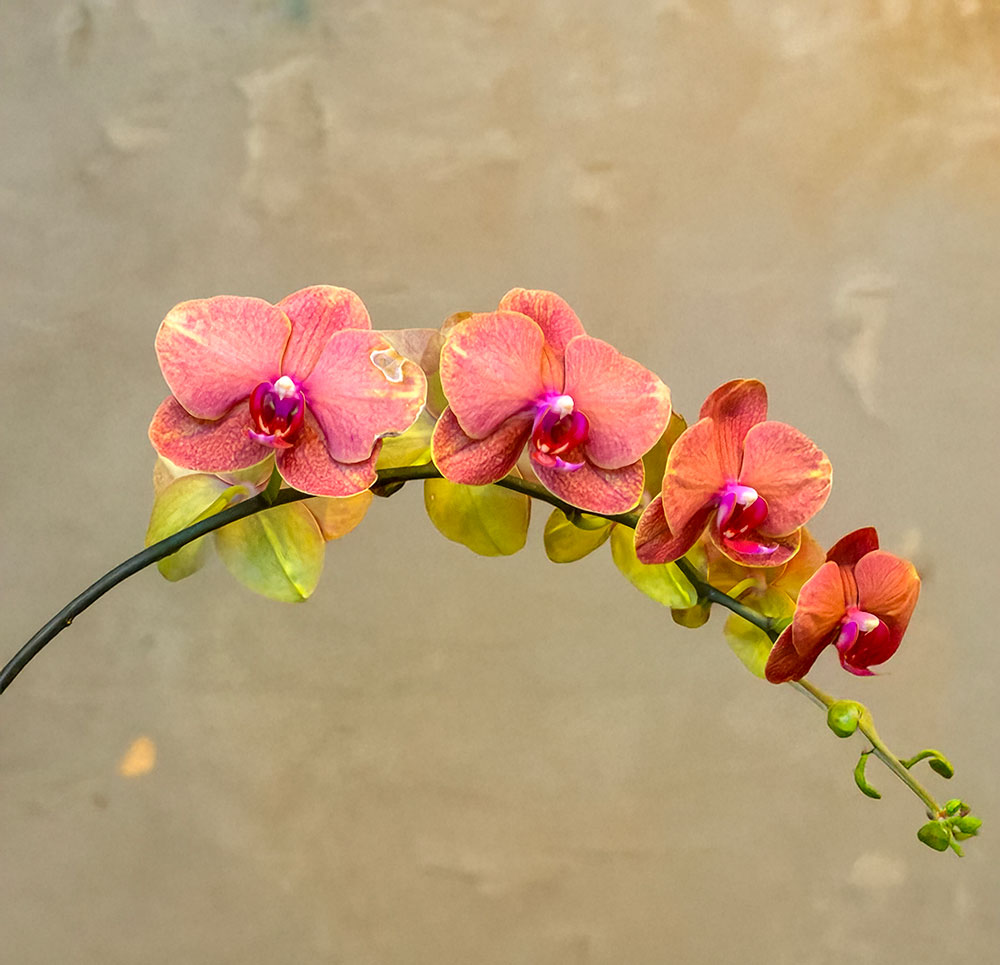

Three Points on Prayer

Excerpted from my eBook, A Handbook for the Spiritual Journey II available from Amazon Kindle with an internet search for “Jim Dollar Kindle”

1.

Prayer is invalidated

by its very premise

and its posture as being

driven by the profit motive

and its interest in maximum benefit

at minimum cost.

Absolute gain with nothing ventured at all.

Prayer purports to be a bargain

wherein we offer faithful obedience,

filial devotion and unwavering allegiance

throughout eternity 

in return for whatever we want at the moment.

A new puppy, perhaps.

Or a shiny red convertible.

It’s always something.

Something we want badly in return for

something we will gladly do in return.

It is corrupt from the start.

We are standing before the Mob Boss

asking for favors, hat in hand, eyes on the floor,

with nothing to put forth as collateral 

and only our word as a tool of persuasion.

It is ridiculous.

Who came up with this as a worthy strategy

for guaranteeing our future

and smoothing our way?

“Tell God you will never cuss again

and you’ll pass the test without studying at all!”

Even I can spot the absurdity at work in this hokum.

2.

We redeem prayer when we think of it as the matrix forming the grounding foundation of our life, orienting us, forming, shaping us, guiding, directing us, and serving to comfort and console us all along the way.

Prayer is our connection with the source and goal of life. But it has nothing to do with asking and receiving. It is solely concerned with “peaceful abiding, here, now” (The Buddha) and where we go from there.

3.

You might not call it “prayer” when I drop out of the here, now and drop into emptiness, stillness, silence (one thing, not three) and wait for what meets me there to arise, emerge, become present with me with some psychic urgency, or some inner drift of soul, or some intuitive sense of what’s what and what’s called for creating an internal communion serving as guidance and direction for the here, now of my life–but “prayer” fits what I am doing to a “tee.” It is a back-and-forth flow of life and power on a spiritual level, guiding and directing me along the Way of the Tao, sometimes referred to as “the Way of God.” Where that line lies no one knows and who cares when it works for guidance and direction?

Often I encounter an idea there that compels me to rise up and write it down before it is “lost and gone forever” along with someone’s Darlin’ Clementine.

Making myself available to the emptiness several times a day and quite often at night, has become a grounding, steadying, and pleasant, helpful way to spend the time—reassuring me that I am not alone, but well-equipped to deal with whatever comes up and calls me to do what needs to be done, when where and how it needs to be done, around the clock and in and all weather conditions, in the company of That Which Is With Me Always, To The End Of The Age.

December 02, 2025

Avalanche Lake — Glacier National Park, Kalispell, Montana

Silence and the stillness beyond silence and the emptiness that permits silence (by emptying ourselves of thoughts, fear, anger, all emotions, plans, all noise, are the essential elements in seeing, hearing, understanding, realization, enlightenment, awakening, knowing, doing, being, peacefully abiding here, now.

Living a noise-free life–with noise understood to be diversion, distraction, disturbance of any kind on all levels–is foundational to being fully alive to/in the moment here, now, available for what is called for, where, when and how it is called for in each situation as it arises all our life long. And that is what life is all about, no? Living, as life needs to be lived here, now? Who could do more than that?

200 Zen Thoughts # 3 By Jim Dollar

  1. Zen is what happened when Buddhism met Taoism. And there is more Taoism in Zen than there is Buddhism.  Ray Grigg’s book, “The Tao of Zen,” is an excellent source for understanding the development of Zen Taoism and its place in the pantheon of religious expression and experience.

  2. The present moment is the pivot point, the fulcrum, to all moments that will follow. This is the only time we have to work with. What is happening? What needs to happen in response? In what ways does the future impact the now? In what ways does the past impact the now? The now does not exist in a vacuum! It has antecedents and it has consequences! All are valid in taking all things into account—in being aware of all that is to be aware of here and now. Awareness is the key. Awareness takes everything into account, and waits in the Stillness for Right Seeing, Right Hearing, Right Feeling, Right Knowing, Right Being and Right Doing to arise from the Stillness and call us forth onto the Field of Action. Here and now is where it all comes together and flows into what is next—where we repeat the process into all that is to come.

  3. Our work is doing what needs to be done here, now, in light of all things considered. We live in the service of doing the right thing, at the right time, in the right way and in the right place. This is the Tao of being. The Yin/Yang of Life. Two things (Yin and Yang) are one thing. One thing is Two things. Not this and not that. Which leaves us where, exactly? Here! Now! What is called for here, now? Do that!

  4. The totality of here, now, takes into account the antecedents and the consequences of what is happening in the present moment. Past and future impinge upon the here and now, and their influence has to be considered as a part of “the totality of what is happening right now.”

  5. It’s always a choice, moment by moment, between the nice world that we have in mind and want to set up in our life, and how life turns out to be. No whinning, just awareness. This is not That and not This. Doing here what is called for is all that is asked of us.

  6. Accepting things just as they are means doing what needs to be done about things just as they are—not extending things just as they are indefinitely. Integration not segregation! Gay Rights not homophobia! We accept what needs to be done about the way things are, and do it, to make things more like they ought to be than they are. Cups of cold water to the thirsty. Bread and soup to the hungry. We act here and now in light of what needs to be done here and now. Accepting things as they are means accepting the implications that are incumbent upon us to act in the service of what needs to be done in response to the way things are. The way things are is always calling us to action—and the action may well be non-action, as we wait for the time to be right to do what needs to be done. Waiting is acting. Watching is acting. Listening is acting. Looking is acting. Hearing is acting. Seeing is acting. Biding our time is acting.

  7. There is no advantage to leaving things as we find them. If the baby’s diaper needs to be changed, we change the baby’s diaper. If the baby needs to be fed, we feed the baby. Just being with a crying baby is not the thing to do. Responding as needed to the crying baby is the thing to do. Doing what is called for here, now, is the thing to do.

  8. Seeing it is responding to it. Is doing something about it. Self-transparency is the pivot point, the fulcrum which shifts the future into place. We do not live just in the present, but also in light of the present. And in light of the past. The now transforms the not-yet, creates what is next, opens the way to what needs to happen. Seeing clearly is living appropriately in light of what needs to be done about the way things are. Seeing is doing—the right thing in the right way at the right time and the right place.

  9. This is the life that is perfect for us! We are well-suited for the life we are living! Here we are, now what? What does this mean for that? Let’s find out! By doing what we think needs to be done here and now and seeing what that calls for, and doing that! Which may be the opposite of what we just did! “The Spirit is like the wind that blows where it will” depending upon what is called for here, now, no matter what it just did!

  10. This life that we are living is the life that we are born to live, but if we have spent our life this long trying to live some other, better, life instead, we will have to make some adjustments going forward. For one thing, throwing the life that was theirs to live away in favor of a richer, finer, life is the mistake Adam and Eve made, and the moral of the Garden of Eden is “Don’t let wanting get in your way and prevent you from living the life that is your life to live!” Starting over means spending time with Emptiness, Stillness, Silence, waiting for clarity by waiting for the mud to settle and the water to clear, as the old Taoists would say. In the silence, and the stillness beyond the silence (Emptiness is about emptying ourselves of our ideas, emotions, desires, and all the baggage we bring with us into the Emptiness, etc. so that we are unencumbered and free to experience what we will find there.) And we make a covenant with ourselves for at least 20 minutes of silence, etc. once a day forever.

  11.  We live our way into enlightened living—we do not think our way there. We cannot be told it. Life is the teacher, living is the lesson. We learn how to live by being alive, with our eyes open, fully present in the here and now. Looking for what meets us to lead us along the way.

  12.  It takes a lot of looking to be able to see, a lot of living to be able to be alive. But, we have to reflect on our experience to the point of new realizations in order for experience to be the source of wisdom. Experience is wasted without reflection and realization.

  13. We cannot sit quietly without facing ourselves and realizing what is too painful to bear. Too much comes up in the silence! Too many bad memories! Too many ghosts come stalking us! Too much of what we have done poorly, or what we failed to do! We cannot bear the weight of what has happened to us, or has failed to happen to us, or of what we have done, or failed to do, in response to what has happened or not happened to us! We must flee into the noise of diversion, distraction, denial! The silence is too painful! Too horrible to bear! And so we must develop the power of disengagement.

  14. The key word to the right kind of silence is disengagement. How disengaged can we be? How aware can we be of everything without being engaged by anything for twenty minutes once a day? How long can we live without being hooked by something? We live from one hook to another. As we learn to live disengaged for twenty minutes once a day, that ability begins to show itself throughout our life. And that makes all the difference.

  15. Dreams can be ways of impacting reality, of transforming reality. Everything that we see that has been produced by human beings came from someone’s imagination. Someone dreamed up everything human beings have created. Begging bowls and monk’s robes—where did they come from? Someone dreamed them up! Monks who decry that everything is illusion run into the contradiction that if everything is an illusion, then saying something is an illusion and something is not is an illusion. And if they say, “No duality!” they create a duality between “No duality” and “Oneness.” It is the nature of Koans to be contradictory. Life is a koan. We live between the hands: On the one hand this, on the other hand that. Bear the pain. Do what needs to be done, anyway, nevertheless, even so!  Not This! Not That! (Wu-Wei), and doing what is called for in each situation as it arises.

  16. When we are meditating seeking emptiness, stillness and silence, and thoughts intrude, we simply add the thoughts to awareness as something else to be aware of in a “This, too, this, too,” kind of way. Awareness is infinitely expansive. Awareness includes all things. Everything is welcome in awareness, nothing is unwelcome in awareness. Awareness is Wu-Wei in action. To say something doesn’t belong in awareness is to be unaware of how everything belongs in awareness.

  17. We will never get to the place of being aware of everything, but. We can easily be at the place of being open to being aware of anything. Is there something, some area of our life, we are closed off from, unavailable to? Is there something, some place, too threatening, frightening, painful to consider—to even be aware of refusing to be aware of it? We can at least be aware of refusing to be aware of it in an “I’m not ready to go there yet!” kind of way.

  18. The idea of Karma being the source of reward and punishment introduces duality into the conversation. Rewarded? Punished? Really? What is “rewarded,” “punished”? Everything flows naturally from how we respond to each moment. We create the future by how we respond to the present. No rewards, no punishment! Just this, here, now. No one is keeping score! Whatever happens is just something else to be aware of and to respond to. What is bad? What is good? It is what we call bad! It is what we call good! But what do we know? We only know what we like and don’t like, what we want and don’t want! But what does liking know? What does wanting know? Wait, and bad grows into good. Wait, and good goes over into bad. Everything is a step on the way to something else! There are no steady states of being! Perspective changes over time, and changes everything with it. Things are what we say they are. Our interpretation of reality colors reality. Reality becomes what we say it is. The most objective reality has to be interpreted subjectively. We assign meaning based on our assessment, our evaluation, our opinion, our judgment of observed reality. What reality is, is what it means to us, here, now. When the meaning changes, reality changes with it. If it is meaningless, it does not exist. We cannot see anything that is completely meaningless. If we see it at all, it is because it has some meaning associated with it. We are meaning-makers. We exist to make sense of things we bump into, of things that exist in the world with us. The better we do that, the better things go for us. The more we can be aware of, the better able we are to make sense of things, and be better able we are to deal with things. There is no reward, no punishment. There are only outcomes which we interpret, which we make sense of. “Reward,” “punishment” are nonsense.

  19. Simply experiencing things as they are, without judgment, evaluation, opinion (to the extent that is possible)—without declaring something to be “punishment” and something to be “reward”—and doing what needs to be done about it—is the essence of a life worth living. “Not this! Not that!” “This, too! This, Too!” And laughter all around the room!

  20. Just being who the moment needs us to be is our practice. When we get that down there is no more to get.

  21. Life is always going to be exactly what it is, and we are always going to be exactly the way we are! Carl Jung said, “We are who we always have been, and who we will be.” Carl Jung also said, “There is within each of us, another whom we do not know.”

  22. We can all rest in the moment just as it is. We can all rest in ourselves just as we are! We can trust ourselves just as we are to respond appropriately to life just as it is! Not by thinking about how to do it, but by “just doing” it! Spontaneously! No thinking! Just doing! What needs to be done, here, now. Just like “Peaceful abiding, here, now”!

  23. When we refuse to bear legitimate suffering, we create a situation that  cannot be helped. No one can do it for us. We must bear our own pain as it needs to be borne! Bear the pain! And do what needs to be done about it, in response to it! Maybe, in addition to walking with a limp for the rest of our life! “

  24.  Entitlement. Now, that’s a problem! “I don’t deserve this!” Where does “deserve” come from?  Where does our sense of entitlement come from? Not This! Not That! Wanting, not-wanting, wanting-not. The sources of all of our problems today. If we were truly disengaged, truly open, truly present with what is present with us in a Wu-Wei kind of way, we would be enlightened.

  25. Escape! Diversion! Distraction! Denial! Even the Buddhists seek Refuge from Suffering! What? How does this square with being present with what is present with us? With Seeing? Hearing? Knowing? Doing what is called for? Being who we are here, now? No matter what? Contradiction is at the heart of being. Koans are everywhere. Not This! Not That! Not Not-This! Not Not-That! Do we embrace suffering or do we deny suffering, or do we seek escape from suffering? Or do we say Yes! to everything just as it is? Wu-Wei! Peaceful abiding amidst all of the contradictions great and small! With “No Duality!” being the greatest of them all!

  26. We meet pain on the road we take to escape it! Wu-Wei! This, too! This, Too! No? No escape. No denial. No refuge. Just being okay with everything just as it is! Equanimity. Peace. Tranquility. Serenity. Anyway. Nevertheless. Even so.

  27. What life requires us to give is what is needed in responding to the situation  as it arises, moment-by-moment. Doing what is called for here, now is all there is to it.

  28. Wisdom and compassion inform and direct our response to life as it is. What we do here and now determines, or greatly influences, all that follows. The present is the door to the future. We can only go here, now, where we have been allows us to go.

  29. We want things to be different than they are. Not That! Not This! It all emerges in the silence. Anger, fear, hatred, greed, shame, remorse, regret, jealousy… It takes great courage to be quiet long enough to perceive and rest in the stillness beyond the silence. The stillness beyond the silence is the source of life and being, the Great Mother of all that is. The Tao. From the stillness comes all things, including what’s next.

  30.  Allowing life just as it is to show us what needs to be done in response to life just as it is, and to lead us all along the way, going with the flow, moment-to-moment-to-moment, no matter what. Not this! Not that! Now This! Now That! We cannot make sense of it, of any of it. Making sense of things is a thinking thing. We are asked to do what is called for, where, when and how it is called for—without being able to defend, explain, justify, excuse any of it.

  31. Reflection leads to realization. Seeing means seeing more than meets the eye. Seeing always has implications for those who see. “What is the meaning of this?” “What now?” “Now, what?” What is on the other side of enlightenment? “Chop wood, carry water.” “After enlightenment, the laundry.” But with a difference! Now with joy! Now with love! Now with compassion! Now with full participation on the field of action! Now we do what needs to be done with complete abandon for the tasks at hand, fully alive to the moment of our living, so that the dance dances the dancer, so that the song sings the singer, so that the work and the worker are one!

  32. The point of it all is living the life that is our life to live within the life we are living! We are not going through the motions of living, we are not doing this with our mind on something else—we are here, now, living the moment the way the moment needs to be lived, the way it needs us to live it, the way we need to live it, anyway, nevertheless, even so! Nirvana! The Yonder Shore is right here, right now!  In living our life as it needs to be lived, as it needs us to live it, in doing what is called for here, now.

  33. We spend most of our time trying to set life up in a way so that it will be make sense; when, contrariwise, the joy of our life is just in totally doing what is at hand, and just bearing what must be borne, in just doing what has to be done. The way it needs to be done! Without being able to explain, justify, defend, excuse any of it!

  34. Feeling our feelings and being one with it all, in a “This too! This too!” kind of way! Without allowing that to stop us from seeing how things are and doing what needs to be done in response. Maybe what needs to be done is to grieve! “Tears are grief’s way of saying what words cannot say, yet must be said.” There is a place for a Wailing Wall in everyone’s life!

  35. Being in right relationship with all that is going on is all there is to it! That transforms everything! And that requires that we be living in right relationship with emptiness, stillness and silence and that we be peacefully abiding here, now in each situation as it arises.

  36. Being present with what is present with us in each moment and doing what needs to be done in response to what is called for in each moment is the practice that transforms the world one situation at a time.

  37. Our life has a mind of its own! We do not direct our life. We do not know what we are doing or what needs to be done about any of it. We do not know where we are going or where we need to go. We live moment by moment, doing what is called for in each situation as it arises, with no outcome in sight. We are feeling our way along from one situation after another, amazed at all that has happened and all that has been done about what has happened to produce the life we have lived up to this point—with our not being in command and control of any of it. Our life is an amazing wonder and all we have done is what has been called for, all that has been asked of us, moment by moment to here, now. It is a miracle and realizing that is enlightenment, awakening to the experience of being here, now in this life just as it is.

  38. We cannot be intimate if we will not be vulnerable. We cannot be present if we will not be vulnerable. Awareness entails awareness of our vulnerability and being OK with that. We cannot be aware of what we are not OK being aware of.

  39. Growing up is coming to terms with the discrepancy between how things are and how we want them to be. We grow up some more again in each situation that comes along. OK, now this. OK, now that… And our experience is visceral—of the body, knowing—not intellectual, thinking. It is experience that leads to reflection and new realizations.

  40.  Are we OK with having to do what we don’t want to do? With having to deal with what we don’t want to deal with? If we can do that, we have it made—as much as we can have it made in a world with circumstances like these to throw at us 24/7.

  41. If we are willing to be as we are with other people being as they are in the world as it is and being OK with all of that, this is the way of a true human being. Of a Bodhisattva! Of the Buddha/Christ among us!

  42. When we accept that we have to do what has to be done in response to how things are, and do it as it needs to be done, when and where it needs to be done, this is the Tao at work in our life. And, we grow up some more again.

  43. This too, this too…  Everything is coming or going. Moods change. Feelings change. Perspectives change. Perceptions change… If we sit, watching, long enough everything changes, and all we did was watch!

  44. We cannot make anything into our idea of it, for it, and we have no business trying. But. We can turn things that have no business being away from being that way toward being a different way. We can stop things from happening that have no business happening. A cup of cold water, for instance, to one who is thirsty. A bowl of rice to one who is hungry. Alms to the poor… We are not helpless before the storm! We have the power of response to our circumstances—limited though it may be! We have the power of responding to the limited nature of our response, and act to the best of our ability, anyway, nevertheless, even so!

  45. Our growing changes our experience—changes how we experience what we experience, and changes what we experience. We impact our experience by experiencing it, and doing what needs to be done in response to it. When, where and how it needs to be done.

  46.  Our emotional responses to our life are indications that we are being asked/called/required to grow up some more again.

  47.  It is all ebb and flow, wax and wane… The rhythm of the universe. Now we have it, now we don’t. So what? Here it comes again! There it goes again! The sun is shining. Now it’s raining… There is little that is “Steady as she goes” about our life, about being alive. We have to adapt to not having things our way. Being truly okay with that is the Bodhisattva among us kind of thing.

  48. When life is not as it needs to be, we work to change it! Cool water to the thirsty! Rice to the hungry! Alms to the poor! Etc. If things can be improved, improve things! If you need to be helped, you should be helped! If you can help, you should be helpful! Why bother to be enlightened if nothing changes? Why bother to take the next breath? Taking another breath is refusing to settle for life as it is! Breathe on! Live on! In the service of the way life needs to be! Life always needs to be better than it is in 10,000 ways! Lao-tzu stalked off the job in protest of the way things were, seeking a better life! The Dali Lama left Tibet seeking a better life! He teaches “Compassion! Compassion! Compassion!” to this day, seeking a better life! Leaving things as they are is to fail things that need our help!

  49. Just being with things as they are is our Practice. This is what being here, now, is all about—being with our life just as it is here and now, and doing what that asks of us here and now. Maybe to just sit. Maybe to get up and prepare dinner, or do the laundry.
  50. What are we not willing to have continue about our life? I am not willing for things that need to be done to go undone! If I need to go to the bathroom, I am going to the bathroom! If I need to chop wood, I am going to chop wood! If I need to fetch water, I am going to fetch water! Etc. So, Being unwilling for things to be as they are is not a bad thing. It is an essential thing. We are here to make things more like they need to be than they are. Food for the hungry, for instance. Etc. across the board, around the world.

  51.  There is no reason for our experience to have to be what it is! Alms to the poor! Help to the helpless! Compassion! Compassion! Compassion! Live in the service of what needs to happen! That is the way it is! And is to be!

  52. Appreciation for life as it is leads to life in the service of how life needs to be! Life is always moving, and needs people to serve its movement from how things are to how things need to be—and this is  how things are! The flow! The movement! There is no steady state of being! Life does not stand still! The river flows to the sea! Water runs downhill! Only the dead are static, stationary, unmoving, uncaring, lifeless, dead to the world! The living do what needs to be done here, now.

  53. Doing it is just the thing that enables us to see what we are doing! How will we see what we are doing if we do not do it? Once we see what we are doing, we will do something else, as it needs to be done, in its own time, in its own way.

  54. To experience the reality of our life just as it is and to do what needs to be done about it, in response to it is the way of being who we need to be here and now in each moment of each situation as it arises. We are here to experience things as they are and to change the way things are in the direction of making them more like they ought to be than they are. If the baby’s diaper needs changing, change the baby’s diaper!

  55. We live toward what needs to be done in each situation as it arises! Toward the response that needs to be made! I am in motion! I am growing up some more again! I am the stream flowing downhill!
  56. We live to see things more clearly and to do what needs to done about them here and now. How to see more clearly how things are and what needs to be done in response, in service to how things need to be! Eat when hungry! Rest when tired!

  57. We have to reconcile ourselves with the work that is ours to do. When do we allow things to be what they are, the baby’s diaper needs changing, for instance, and when do we do what needs to be done to make things better than they are, changing the baby’s diaper, for instance. When things need to be done that we can’t do anything about, we have to accept it and grow up some more again.

  58. Awareness of who we are and what are about guides us to wise decisions in each here, now of our life. We live out of who we are and what is ours to do. We live to be true to ourselves within the circumstances defining each situation as it arises, and how we, with our gifts, with what we have to offer, may be helpful in the situation. Meaning we have to be clear about the gifts of our original nature. The Myers/Briggs Personality Inventory sees me as an I-N-F-P and I concur with that. “These personality types tend to be quiet, open-minded and imaginative, and they apply a caring and creative approach to everything they do.” Sounds about right to me. Throw in my intrinsic virtues, the things I do best and enjoy doing most, my innate imagination and my inherent intuition and my ability to tune into these things and allow them to guide me and assist me along life’s way and I find that I am clued into what’s what and what is called for waiting only for clarity to emerge from the emptiness, stillness and silence to sense what is called for in each situation as it arises and to act in light of that in each situation as it arises.

  59. Knowing what is called for in each situation as it arises just leaves finding the courage to do it for things to flow with the Tao with balance and harmony all along the way.

  60. Willing to be vulnerable and trusting ourselves to respond on the fly to circumstances as they change about us requires the confidence that comes from knowing there is more to us than meets the eye, and that we have all we need to find what we need to do what needs to be done in each situation that arises—that is, we have a connection with the center and the source, the Great Stillness beyond silence, from which guidance and direction arise as needed all along The Way. When we nurture the connection and live from the Source, we have nothing to fear.

  61.  To live our life just as it is and not to manipulate and exploit life to our comfort and satisfaction forever is the problem Adam and Eve failed to work out. It seems that we have only what we want to guide us, and what does wanting know? Wanting only wants what it wants—it does not know what to want, or how to un-want what it has no business wanting. When we are seized by a mythic, a mythological, vision—a vision of mythic/mythological proportions—we are hurled into doing what needs us to do it past all wanting or willing. We are driven by liege loyalty to the service of more than we understand. Then manipulation and exploitation are out of the question, and we must obey the calling beyond all reason to the end of our days. How to arrange the mythic, mythological, vision is the trick. It helps to be quiet on a regular basis.

  62. The mythological vision picks us out of life as it is and plops us into life as it should be, and we live to serve another “whom we do not know” (Carl Jung). Living on the edge of mystery and exploring psychic possibilities puts us in the center of life’s possibilities in the world of more than words can say. And that is a very cool place to live.

  63. Nothing special is transformed by a shift in perspective into the field of action where we serve what calls us to go and do according to its good pleasure. To those who do not see, we are doing nothing special, but we know we are bringing ourselves forth in ways that are astonishing, astounding and amazing. We can begin to explore our psychic side simply by dropping into the silence and asking for a vision of what might serve as a symbol to us of psychic reality, and waiting to see what might arise out of the silence as a gift to us for asking. From that point, “The Game Is On!”

  64.  It is certainly possible to find in the stillness the source of life, and grace and being! Ask questions and wait for the response to appear. Probe and explore, trust and rely. Psychic reality is as near as our curiosity and our trust in the presence of More Than Words Can Say.

  65. When we open ourselves to whatever we are called to do, whatever we know we must do because it is ours to do and no one but us can do it the way we can do it, the Way will open before us, and, as Joseph Campbell would say, “Doors will open where we did not know doors existed. And help will come from sources we never imagined would be helpful.” There are no replaceable people! We are not interchangeable! We are unique and essential to the wholeness, fullness and completion of The Way! When we realize that and begin living as though we are unique and irreplaceable, we will be led along the way that we did not know was a way.

  66.  Mindfulness solves the problem, whatever the problem may be, by seeing it, recognizing it, and holding it in awareness without acting on it. Solutions have a way of appearing out of nowhere.

  67. Doing what is“Most fruitful” to the situation at hand is what needs to be done. In any situation, there is what needs to be done, whether it bears fruit in that situation or not. It may appear to be a complete waste of time, or the entirely wrong thing to do, but if it needs to be done, we do not reason why. We do it, trusting the Source that is with us always to the close of time and space.

  68. We have our ideas, and our ideals. Our Ideal Self is not our Invisible Other Within. The Other is the stone the builders reject. When we lay aside who we think our Ideal Self ought to be, and simply trust ourselves to the Invisible Other Within, we open ourselves to possibilities and opportunities to making all things new that will bring vitality and enthusiasm to life within us and make living a joy.

  69. Our life has a mind of its own. Always the recipe: Listen to your Body—to your Heart, your Belly and your Bones. Listen to your nighttime dreams. Listen to your experience. Listen to the Stillness Beyond the Silence. And talk to the Stillness Beyond the Silence and trust yourself to its responses.

  70. Facing up to how things are and squaring ourselves up with it, coming to terms with it, letting it be because it is, and doing what needs to be done in relation to it, in relationship with it will transform everything.

  71. We are attached to our opinions! How would we ever live without opinions? That is the life that waits on the far side of practice! Being here now. Attending the moment, moment-to-moment-to-moment carries us into new ways of thinking about who and where we are.

  72. What would life be without our attachments? That is the life that waits for us to begin living it. What are the attitudes, beliefs and opinions we cannot part with? Ask the question in the emptiness, stillness and silence, and wait for the response.

  73.  Mindful awareness of the moment and where our thoughts go in the moment, coming back to our breathing and watching when we lose sight of our breathing because our “mind wandered,” and coming back to our breathing… Watching what comes and what goes. Becoming enamored by the drift of our mind as we watch.

  74. Notice everything, engage nothing. Be aware of awareness being aware.

  75. Break the engagement, the being engaged with our thoughts. Come back to awareness. Seek the stillness beyond the silence.

  76.  Noticing what our thoughts are doing, and bringing ourselves back to simply being aware of the moment, attending the moment, breathing in, breathing out. Going off, coming back…

  77. We need to move toward that which makes our little heart sing, which catches our eye, which stirs our soul, which calls our name. We also need to live in the service of our gifts, not just follow some order of the day, doing chores, meditating, blah, blah, blah… What quickens our pulse? Enflames our passion, our joy of life, our vitality, our libido? Serve THAT!

  78. Living our lives fully goes well beyond meeting the demands of the day! We enter here the spiritual dimension of finding and serving the thing that is ours to do above all the other things that command our time and attention. Joseph Campbell talks about the Primary Mask and the Antithetical Mask. I think of them as callings rather than masks. Our Primary Calling is to meet the duties, requirements, obligations and the like of the culture and society, paying the bills, being a good father/mother/spouse/partner, son, daughter…, doing what we are supposed to do whether our heart is in it or not, living the life we are expected to live whether it fits us or not. The Antithetical Calling is the calling with our name all over it. It is the thing we individually and personally are best suited to do. We can never live our lives fully without embracing the Antithetical Calling and serving the thing we are built to serve, beyond all reason. This is the world of the mythical/mythological vision, and off we go on the adventure of our life! That is to be fully alive!

  79. The Primary Calling provides us with a stable foundation for our life, paying the bills and that kind of thing, but it cannot offer anything in the way of enthusiasm for life or joy of life. Those belong to sphere of the Antithetical Calling. That points us in the direction of being who we truly are! Doing what is ours to do!

  80. Being who we are here, now, meeting the moment, facing the moment, knowing what is called for and doing that, when, where and how it is called for is all there is to it. What is interfering with that? Preventing it? Whose permission do we need to be who we are, where we are, when we are, how we are, why we are?

  81. Listening to our body’s signals and aligning ourselves with the messages coming from within is the essential connection with the Psyche and the world of That Which Has Always Been Called God. Psyche is God and has been God from the beginning. Psyche is life and life communes with the living, and the living call that “God.” And build a theology around “God” with sin and atonement and heaven and hell and the entire array  of nonsense imagined to explain the messages of our body to our mind. There are only life/Psyche communing with our body with messages about living in accord with the Tao, with the flow of life and being in the here, now of each situation as it arises.

  82. It comes down to accommodating ourselves to the way things are in order to live in accordance with the Tao, the flow of life and being. We have the ability to synchronize ourselves with the movement of life/Psyche through the here/now as it extends throughout the situation as it arises individually and collectively, from the local to the national and the international and the cosmic. We are connected with it all, and live in light of everything, here/now.

  83. We are learning to attune ourselves to “the music of the spheres.” We are the individual learning to be at one with the corporate worldwide and universally. It is not “just about us.” And we are born with the mechanism in place to enable us to take our place within the larger framework of life/Psyche. We are one with it all, with everything, and only need to listen within to know how we need to blend with the without in each situation as it arises all our life long.

  84. Lao Tzu asks in the Tao Te Ching, “Do you have the patience to wait until your mind settles and the water is clear? Can you remain unmoving until the right action arises by itself?” Can we be quiet for a moment, until the right words are spoken by themselves? This is being attuned to the Cosmos—living aligned with the Way that flows through all things for the true good of the whole. Can we live with the Whole in mind? In each situation as it arises? Asking, “What is called for here/now in light of the true good of the whole?”

  85. Aligned with the Tao, the stillness beyond the silence, the right worlds arise and right action appears in the here/now of each situation as it arises. The Tao is doing what is called for here/now, when, where and how it is called for. Aligned with the Tao, all is well on every level throughout the here/now of cosmic reality.

  86. When we are aware of ourselves and our circumstances, attuned to the here/now of life/Psyche and at one with what is happening and what is called for, we are at one with the Tao and with the flow of life and being throughout the Cosmos.

  87. When we act with kindness, we are extensions of the Tao in the here/now of life/Psyche. The Tao expresses itself through us in acts of kindness. We are at one with the Tao when we are kind to ourselves and to others.

  88. As we experience our experiencing, know what we are doing, when, where and how we are doing it, we are at one with life/Psyche in the here/now of our existence. Awareness tunes us into life/Psyche, here/now.

  89. We need only to drop into the silence and listen to, experience, the stillness beyond the silence, emptying ourselves of all resistance to experiencing the here/now, and waiting “for the mud to settle and the water to clear, in order to know what’s what and what is called for here/now. Then it is only a matter of doing what needs to be done, when, where and how it needs to be done in each situation as it arises.

  90. Not wanting things to be what they are, or wanting things to be different than they are, is perfectly Zen-like: “Eat when hungry, rest when tired.” We live in response to the way things are in each moment. And the way things need to be. When we are cold, we wrap up or start a fire. When we are hot, we seek the shade, or the air conditioning. Who lives with things as they are when they can make things better? We “chop wood, carry water,” in anticipation of needing wood and water in future moments. We do not wait until the need arises to meet the need. We do what the moment calls for, moment-by-moment-by-moment. We meet the moment as it needs to be met. Letting things be what they are means letting what is direct our actions toward what needs to be, doing what needs to be done to do right by the moment of our living. Everything moves toward better, away from worse. The Dali Lama fled the Chinese occupation of Tibet. The Dali Lama’s bodyguards carry automatic weapons. There is better and there is worse. Sensible people opt for better. No?

  91. I seem to be constructed around what I call “The Essential ‘I’.” And what the Myers-Briggs Type Inventory would call “The I-N-F-P. And what Popeye The Sailor Man would call “I yam what I yam!” And what Joseph Campbell (from #78 above) would call The Antithetical Self. There is a “core I” within each of us who knows, as Joseph Cambell would say, “When we are on the beam and when we are off it.” I view this Core I to be a function of, and evidence of, The Psyche, or the Psychic Source of life within us. It is not just “any old life” that we are living, but the individual, particular, one-of-a-kind-life that fits us like our fingerprints and our Iris Cones fit us. We are one of a kind regardless of the similarities that make us “one” with each other. And our “calling,” we might say, is to live aligned with who we are at the Source/Core level–which gets us back to the central place Psyche, or our Psychic Core, plays in forming/shaping our essential identity. Which we might think of as the Tao within us, so that when we are “on the beam,” we are at one with, aligned with, in accord with the Tao, in the flow of life and being, as Yin and Yang are in the flow of life and being as they produce the flow they are a part of. And it is our place, our role, to consciously, deliberately, intentionally live in ways that are true to our central self with all of our choices, decisions and actions.

  92. When I sit quietly, ideas begin to appear, things I have never thought dance before me, waving their hands, saying, “How about me?!”, “What about me?!” “Over here!” Opening ourselves to the possibilities for life and being apart from doctrine, dogma and threats of bad Karma and essential dharma, etc., brings us to the threshold of new worlds beyond the boundaries of the old ways of thinking and doing. “The old has passed away, and behold, the new has come!” Again!

  93. The disruption/destruction of life under Trump’s imposition of ICE raids, arrests and deportations will impact for the worse all of life in the US and throughout the world. There will be devastating impacts that MAGA could not have anticipated when they voted for a bold new MAGA life under Donald’s sure to be wonderful rule. Well. Let the Truth shine forth to the tune of “We got what we wanted and it did not turn out like we expected it to be!” Silent reflection to the point of new realizations is such a simple matter of taking a seat and opening our eyes to the possibilities that exist and the actions that are called for here, now in each situation as it arises throughout what remains of the life left for living. Meditation, contemplation, reflection lead to realization, enlightenment, awakening–as they always have, and always will. No?

  94. If you are taking something “on faith,” you are making it up and deciding it is so. Declaring it to be so. If you are taking something “on faith” that someone else has taken “on faith” and told you to do so as well, you are believing something to be so that someone else made up and decided was so. Faith is nothing more than a collection of opinions about hearsay. There is not a single fact anywhere to be seen. And what to do now? See things for what they are and “turn the light around.” Start with these two passages from the Old Testament: Psalms 49:7 — “No one can redeem the life of another, or give to God a ransom for them.” Deuteronomy 24:16 — “Parents are not to be put to death for their children’s sin, nor children put to death for their parents’ (sin) — each will die for their own sin.” Now decide what you are going to do about these two texts in light of all that you have heard all your life about sin, redemption, atonement and salvation. You probably know that I am a retired minister with 40.5 years of ministry in the Presbyterian Church USA in my past, and I did not leave the church in disgust. I lived out my life there, preaching from the pulpit every Sunday, and saying things you probably have never heard in a church. There is plenty to say that has nothing to do with repentance and faith in the Substitutionary Theory of the Atonement. And I talked about those things, and continue to talk about those things here and in my eBooks on Amazon. So, take heart! And “turn the light around!” By seeing that our place is to wake up to our own responsibility for seeing things as they are, knowing what’s what and what is called for in each situation as it arises, and doing what needs to be done here, now with the gifts of our intrinsic intuition, our original nature, our innate virtues (The things we do best and enjoy doing most), and our inherent imagination–and doing it when, where, and how it needs to be done throughout the time left for living. I preached that for 40.5 years, and am still preaching it! Can I get an Amen!?

  95. Wanting, desiring, fearing, buying, spending, amassing, consuming, having to have, acquiring, striving, pushing, wanting… When does it stop? When do we sit quietly, take stock, see what we are doing? Know what’s what and what’s happening and what is called for in each situation as it arises and do that when, where and how it needs to be done no matter what, using the gifts of our original nature, our inherent intuition, our inherent virtues (The things we do best and enjoy doing most) and our intrinsic imagination? Wanting, etc, takes up all our time, consumes our energy, commandeers our thoughts, robs us of our life and leaves us in the company of the wrong kind of emptiness with the likes of Adam and Eve. No?

  96. Noise and complexity arise out of boredom, lethargy and laziness. Such seems to be the circle of life, stemming from not having anything worth doing to do because it would be too much trouble, and would be no fun at all. No trouble and great fun are our stipulations for the right kind of activity, which generally means some combination of drugs, sex and alcohol. As far as I can tell, this is a standard characteristic of human beings worldwide. I do not find any evidence of it among humpback whales or coral reefs.

  97. We are born with everything we need to see what is called for in each situation as it arises and to respond to it in ways appropriate to the occasion, including finding what is needed to do what needs to be done, here, now, in every moment of every situation that comes our way. There are, of course, plenty of occasions/circumstances/ situations about which nothing can be done, but it is always possible to do what can be done about being helpless to do anything about the things that are called for and need to be done. We can build a Wailing Wall, for instance. We can shave our head in protest and renunciation… The list is long of creative options to ways of doing what needs to be done in situations in which nothing can be done. It only takes dropping into the emptiness, stillness and silence and waiting there for ideas to begin appearing out of the stillness and for things to begin happening.

  98. What is Buddhist about Zen? It couldn’t be Dharma. Zen would have nothing with the right way of doing something, anything, being imposed by a tradition of rules and recipes, shouting “Do it THIS WAY! NOT THAT WAY! Zen is Taoist in this way. And it isn’t Non-Duality. Zen is Taoist in embracing Duality in a Taoist kind of way, saying Yin and Yan are two things which come together inseparably as one thing. Two is one in Zen. Twoness is Oneness and Oneness is Twoness. This gets us back to Wu-Wei being Not That! and Not That! Duality is Two things that are one thing. Black and White. Right and Wrong. We cannot have one without the other. We cannot have one without two. Good and Bad. We cannot have Good without Bad. No one can be rich if no one is poor. No one can be poor if no one is Rich. The opposites make each other possible. One and One make Two. Two is not One but Two. Buddhism says No Duality. Zen says Nothing But Duality. We cannot have one without two.

  99. What is Buddhist about Zen? It couldn’t be talking all of the time about anything, about everything. Buddhism has something to say about all of it. Buddhism is never quiet because it is always talking about the importance of being quiet. And the importance of being mindfully quiet. And it couldn’t be the abundance of Sutras discussing all aspects of being Buddhist. Zen is much too laidback to bother with lists and details about the proper method of doing Zen. “Eat when hungry, rest when tired,” is as specific as it gets with Zen. Doing it like the Buddha did it is high on Zen’s list of ways to NOT do it.

  100. My favorite Zen story goes like this: A Zen master and one of his students were walking across a bridge when the student asked, “What is Zen?” Whereupon the master pushed the student off of the bridge and into the water and said, “You are now in the water. Drink it, swim in it, play in it or drown–BUT DO NOT TALK ABOUT IT!!! TO TALK ABOUT WATER IS TO NOT-KNOW WATER!” The student immediately broke into laughter, became enlightened, and spent the remainder of his lengthy life pushing people into lakes and ponds, rivers and streams. Buddhism talks about Buddhism to no end. Zen tells stories like this one.

  101. I consider myself to be a non-Buddhist, and the thing that I most do not like about Buddhism is the talk, talk, talk that goes on with all Buddhists everywhere, making me want to cry out: “Who told the Buddha what he needed to know?” The Buddha achieved enlightenment by sitting quietly, waiting on clarity and the realization that came from the stillness beyond the silence. And the Buddha explained his experience as originating from “Peaceful abiding, here, now.” That is open to everybody all of the time! What is with all of the “Teaching, teaching, teaching, talk, talk, talk???” Just drop into the emptiness, stillness, silence and “wait for the mud to settle and the water to clear.” A very Zen thing to do, no?

  102. When in doubt we listen to our body. Our body is a reliable source of guidance and direction. Our body knows. We listen to our stomach, to our heart, to our bones–and heed what they have to say. Our body is an outlet for our intuitive sense of what’s what and what is called for in each situation as it arises. D.T. Suzuki said “Enlightenment means habitual intuition.” Implying that Enlightened people live in sync with their intuitive drift of what is called for and needs to be done here, now.. What could be easier or more Zen-like? And who would know more about Zen than D.T. Suzuki?

  103. One of my favorite questions is “Who says so?” For instance, “Who says the Bible is the verbally inspired Word of God?” Applying “Who says so?” to ZaZen Practice, for instance (And I will point out that Zazen when sought in completely Zen settings, not “Zen-Buddhist” settings, will be quite different, and probably be nonexistent or very difficult to find. The line between Zen and Zen-Buddism is not always clear and sitting is not always a Zen thing). Who makes the rules? And when the Buddha said, as he is said to have said on more than one occasion, “Do not listen to me! Listen to YOU!”, what does he mean? If he means, “I make up my own rules to guide my practice and you make up your own rules to guide your practice,” That is quite different from asking some teacher to tell you what your guidelines should be, no? Where do all the people who say so get the idea that you could never figure things out by yourself, though they would be quick to say, “Everybody is the Buddha,” and “Everyone has “Budda-mind,” but then tell us we cannot be trusted to think for ourselves, thought the Buddha thought for himself, and said, “Do not listen to me, listen to YOU!” Hmmmm…

  104. This poem by Yoshida Ryusui (1691-1758) captures for me the essence of Zen, simple, yet complex, binding our mind to a scene unforgettable in three short lines,
    for over 400 years and counting:
    A lost child crying,
    stumbling over the dark field…
    catching fireflies.


  105. Our fate is what happens to us. Our destiny is what we do with it. Itta Bena, Mississippi, and all that implies, is my fate. Charlotte, North Carolina, and all that implies, is my destiny. My father who did not kill my mother, and in so not-doing, killed her, is my fate. I am my destiny. And my fate. In that what we do with what happens to us becomes what happens to us. And there is no escape from doing what we can with what happens to us. It is the. circle of life over time. My father was also furious with me for not being able to spell Minneapolis in the fourth grade while he smoked, not-knowing or caring that second-hand smoke interferes with short-term memory. And I am a witness to that thanks to long-term memory being unaffected by second-hand smoke. Fate and destiny work their way out in our life over time–lost as we are in a dark field, crying, chasing fireflies.

  106. And what kind of support does Ukraine lose by Thanksgiving if they don’t sign the “peace” agreement being pushed on them by Donald Trump? Ukraine has no support from the United States. Donald Trump has seen to that. And remains safe forever in his eternal designation as the World’s Worst Human Being Throughout Time. No?

  107. There is what we control and there is what we do not control. It is important that we know where that line lies. And stop wasting our time trying to control what cannot be controlled. The key to tranquility and serenity over time. Over the remainder of time left for living.

  108. MAGA has the mentality for the ultimate destruction of humanity. If they can’t have their way, they will fix it so nobody has their way. It’s Make America Great Again (As WE determine what “Great” is) or ELSE! It is a kidnapping with an ultimatum they have worked out with the United States being both the hostage and the people charged with the hostage’s release. We are witnessing the ultimate in CRAZY TO THE CORE. When we are damned if we do and damned if we don’t, the most sane alternative is to be damned and be done with it. If we are going down, we are at least taking MAGA with us! And hoping for a better outcome with evolution’s next try. Raising the question, “How many tries has evolution had up to this point?” and “How many more will it take to create the right kind of environment to reproduce itself successfully forever?”

  109. In order to be helped, we have to be capable of being helped. We have to be open to help, available for help, a candidate for help. And there are a number of places where it is our place to help helpers help us. We have to cooperate with our own assistance and comply with the stipulations required by the situation at hand in order to be helped in the ways we need to be helped.

  110. Carl Jung said “The development of personality means fidelity to the law of one’s own being” Fidelity to the law of one’s own being is being true to our Original Nature and living that truth out within the context and circumstances of our life. Buddha nature is our original nature, but we each are one with ourselves, just as Buddha was one with himself—but not one with all selves in an indistinguishable mass of humanity, or being. “We are one but not the same one,” —author unknown


  111. Jung said, “There is no balance, no system of self-regulation, without opposition. The psyche is just such a self-regulating system.” The psyche stands in opposition to our agendas, desires, self-interests, will, aims, ambitions, etc. And is forever calling us back to our Original Nature, to serve the cause of the self-realization of our own virtues, the self-expression, self-exhibition, of the truth of our own being—who we always been and who we will always be—in the moment-to-moment reality of the circumstances comprising each situation as it arises, all our life long. We live to bring ourselves forth in the life we are living, to know and be who we are, who we are capable of being in the service of what is called for here, now, in each situation as it arises.

  112. Jung said, “Wholeness is not achieved by cutting off a portion of one’s being, but by integration of the contraries.” Buddhism prides itself on being “the end of suffering,” but we cannot serve the truth of who we are without suffering the pain of the realization of who we also are. Bearing the pain of polarities that cannot be reconciled/integrated, but must remain in eternal suspension, with the individual standing in full awareness between the two opposites that are mutually exclusive and both true expressions of how things are: This is how things are and that is also how things are and THAT is how things also are! For instance, I want to be the best father in all the world and I do not want to be a father at all! Make sense of that if you can! We are a bundle of contradictions and must come to term with that and live in light of it in being true to ourselves in the time and place of our living.

  113. If we live to serve the Psyche and do what is called for here, now with the gifts of our original nature, innate virtues, inherent intuition, intrinsic imagination, capacities, interests, etc., we will have to bear consciously the pain of contradictions, polarities and internal/eternal opposition between who we are and who we also are. That which we do not square up to consciously will come forth unconsciously in the form of symptoms, and inconsistencies between who we are and who we say we are throughout our life as the Psyche’s way of calling us back to the conscious realization of the opposites at work within.

  114. Carl Jung put Psyche forth as the guiding force in our life, whose purpose with us is to assist in our aligning ourselves with the Tao, with the swings and flow of our life as we develop into the self we are built/called/ment to be. Jung’s ideas about “individuation” is about us becoming who we are, the person we are born to be, “the antithetical self,” as opposed to “the Primary Self, or as he calls them, the Antithetical Mask,” with “the Primary Mask” with the “Primary Mask” being who we are supposed to be/expected to be by parents and society, and “the Antithetical Self/Mask,” being the person we authentically are called/ment to be. Our place is to know and be who we are. Jung’s idea of enlightenment/awakening would be knowing and being who we are, and his word, “individuation” was his idea of our task in being alive, that is to say, becoming who we are. And Psyche is with us to assist us in the work to live out of our true identity in our life. And I am interested in knowing how best we might do that in the time left for living. Jung would say we do that by attending our dreams and our symptoms and the swings and flow of our life in light of doors opening and shutting and events happening and opportunities coming our way, and where we are lucky and where we are not lucky with the trends and tendencies of our life over time.


  115. Our work, in light of Jung’s suggestions and leading, is to help Psyche help us in living toward our authentic self in doing what is called for when, where and how it needs to be done in each situation as it arises all our life long. The clearer we can be about how to do that will be very helpful to us over the full course of our life.

  116. Zen’s recommendations, “Eat when hungry, rest when tired,” and “Chop wood, carry water,” are clear and to the point, and far beyond the dharma and the sutras in terms of what it take to make those who are watching happy with what they see about us. Buddhism attempts to achieve the same thing with it’s declaration that there is “nothing special” about the things we are asked to do on our way to enlightenment, but it’s fixation on the right way to do everything belies its wanna be laid back approach. Getting enlightenment right here, now, is the Buddhist way in spite of its protests to the contrary.

  117. We aren’t to be like the Christ or the Buddha. We are to be like ourselves, true to ourselves, authentic individuals true to the unique truth of who we are, as with our fingerprints and the cones of our irises. When we do that we are one with the Christ and the Buddha.

  118. If you could be you for the rest of your life what would you do?

  119. We seem to live from pastimes and diversions to distractions and dreams of “fortune and glory, Kid, fortune and glory.” I think of these things as fillers between the times of immersion and engagement in the field of action. There are moments in which we are completely lost in the act of creation, doing what is called for and must be done. These are the times when we are fully here, now, and completely, utterly alive in doing what we are doing. Maybe we are building a bird house, or writing a paragraph in a letter to a loved one, or solving a problem with the lawnmower. It could be anything that we are doing with our full attention to the moment of our living, where we are vibrantly alive and live to be.

  120. We live “between the times,” waiting to come to life in the time and place of our living. I come alive plundering scenes for their photo-worthy compositions, and writing things that need to be written, working to find the right words to communicate what I am trying to say, so that I my hear it for myself and know what I’m talking about and needs to be said. Doing this, right here, right now. And you?

  121. I write this knowing its chances of ever being read are very small. I don’t care what my chances are! I’m not writing to be read! I am writing to say what needs to be said, to get it said so that I can go on to the next thing that needs to be said. And I repeat myself a lot because it needs to be repeated. Which makes no sense at all in the world of logic and reason but is exactly at home in the world of psychic reality, mystery and mythic wandering. I know where I belong and live to be there, doing what I’m doing and needs to be done–without being able to defend, excuse, explain, justify on any level. I write for my own balance and harmony, to say what must be said, to hear what must be heard, here and now. If it needs to be said/heard again tomorrow and again next week, so be it. I will write it again.

  122. The conscious recognition of the work to be ourselves here and now, doing what is called for the way we would do it, all things considered, is the challenge for all of us between birth and death. Here we are, now what? Who says so? What is called for? What do we do about it? We build/create the foundation for who we are talking about when we say “I,” “Me,” “Mine,” over a lifetime of mindful awareness observing ourselves in action through all of the experiences in that lifetime.


    We know who we are and who we are not by watching ourselves responding to all of the situations of our life over time. So, I could take a vow of silence and solitude when I retired because I knew who I am and had the freedom of retirement in which I could keep the vow. We know what is me and not me over time. And we live to be “me” and not “not me.” This is the “antithetical self” we are bringing forth in our way with what remains of our life at any point that we start living in the service of the antithetical self–which is also living in the service of the Psyche, teaming up with the Psyche to create/produce the antithetical self. As Jung said, “Follow that will and that way which experience confirms to be your own.”


    So our work now, from now on, is teaming up with the Psyche in order to bring ourselves forth in the situations that arise throughout our time left for living. I write about steps to take to do this–which comprises the full scope of the nature of the church’s work once it throws out the God of theology, and theology, and doctrine, and starts over as it would have been the day Jesus died.

  123. More quotes from Carl Jung:

    In the final analysis, we count for something only because of the essential that we embody. If we do not embody that, life is wasted.” — Carl Jung (“The essential that we embody” is our Original Nature, the “Face that was ours before we/our parents/our grandparents were born.” – Jd)


    “The privilege of a lifetime is to become who you truly are.”— C.G. Jung


    “Is there anything more fundamental than the realization, ‘This is what I am’?” — Carl Gustav Jung. (More life-giving? More vitalizing?—jd


    “To find out what is truly individual in ourselves, profound reflection is needed; and suddenly we realize how uncommonly difficult the discovery of individuality is.”  — Carl Jung


    Your visions will become clear only when you can look into your own heart. Who looks outside, dreams; who looks inside, awakes.” — Carl Jung


    Trust that which gives you meaning and accept it as your guide.”  — Carl Jung


    “We only gain merit and psychological development by accepting ourselves as we are, and by being serious enough to live the life we are entrusted with.” — C.G. Jung 


  124. Jesus was a reformer, not a savior. There is no one to save. There was no Garden of Eden, no Adam and Eve, no Original Sin, no need for redemption, atonement, salvation. The story of the Garden of Eden is a metaphor about the wrongness of wanting the wrong things and the essential goodness of wanting the right things. Which Jesus picked up on with his dialogue with The Rich Young Man and his observation that it would be easier for a camel to pass through the Eye of the Needle (A narrow alley-like passage way in Jerusalem) than for a rich man to enter the Kingdom of heaven.


    The reformer Jesus was called a heretic because the difference between a reformer and a heretic is how the person in question is viewed by their fans and their critics. The reformer Jesus told the story of the Prodigal Son to call out the ridiculous nature of all efforts to please God in order to get into the Kingdom of Heaven.


    What would the Prodigal have had to have done to cause his father to tell him to “Get out of my sight you Sinner! You Good For Nothing! Go back where you came from! NO! Go straight to hell and stay there in agony forever!” The father would have never said that. He said, “You were lost and now you are found! You were dead, but now you are alive!” Calling to mind the scene with David and his son Absolem who led a revolution against his father King David, and lay dead in David’s arms, “Oh, Absolem, Absolem, my son, my son! Oh my son, Absolem!” Compare that to the popular way of envisioning God sending his sons and daughters to hell for their sins and offenses against God, and we get an idea of how Jesus the Reformer would have turned the world inside out and upside down if he had lived to develop his vision of the Kingdom of Heaven upon the earth.


    Jesus’ parable of the Prodigal Son was his vision of the Kingdom of Heaven, which the Church of Rome torched with their theology and their proclamation to all of the Christians and would-be Christians of every day saying, “You all are going to hell and suffer forever if you don’t believe what we tell you and do what we say!” Jesus would never have said that. Yet the Church of Rome and all the churches that followed its lead declared to be so: “Do it our way or go to hell!” A travesty and an apostasy! No?

  125. What is real? How do we know? What is reality? Who says so? How do they know? We spend a lot of time making things up that we say are real and constitute reality. If we make things up when we are drunk are they less real than the things we make up when we are sober? Which things do we take more seriously than other things among all of the things we make up? How much of our world is made up by us? Or by others who convince us that they know what they are talking about and we had better take them seriously? Where do we draw the line? Why there and not somewhere else? I have heavy dark lines among my memories of my experiences. Completely subjective dark lines. How do I know they are valid? They are my memories of my experiences–what makes me think they can be trusted? That I can be trusted?

    Let’s bring the psychological mechanism of “projection” into the conversation. How much of my experience and my memories of my experience can be attributed to projection? And/or “repression”? How much of what I experience/remember can I trust as being what I experience/remember it to be? Who can say anything authoritatively about anything? What makes us think so? Why should we trust what anybody thinks is so? It is all perspective! It is all perception! Everything we say about what we take to be reality is perspective/perception/projection/repression, yet we talk about “it” as though it exists quite apart from “us” and remains as “it” is, as we take it to be, when “it” is apart from us, like horses in a field or shoes in our closet. Yet “It” exists in our mind as it was when we “put” it there initially, and we expect “it” to be now what it was then, as though our perspective/projection, etc., of reality remains stable over time–when it is all in our mind, whatever that is.

    I’m asking how we can know anything for certain, for real, for true? Yet we do it all the time. We make up things about things and assume it to be so, and treat it as though it is so. But. It is all perspective, perception, projection, repression… We live in a dream world, do we not? Make believing it is all so. Saying it is all an absolute fact. How do we keep getting by with it?

  126. I have my experience, my perspective of my experience, my perception of my experience, my projections of my experience and my repressions of my experience… And I call it all “The truth, the whole truth and nothing but the truth, so help me God.” We are all, as R.D. Laing said, “Playing the game of not playing a game.”


  127. I conduct regular vitality checks with my inner world. I call it “Communing with Psyche.” To see where the energy for life is leading me, directing me. It is as though I am divining for water with a divining rod in the silence of my meditative inventory, seeking the compelling urgency for my attention here, now. Some times it is a book title that comes to mind, or an internet search of some kind. Occasionally it is a photo excursion, or an email or text to write. I am open to whatever arises in the stillness beyond the silence to call me to action in the field of action. Mindfulness is a divining rod honing in on the vitality of the moment and what is called for here, now.

  128. Carl Jung is all over my/our/the Psyche being at work with us to align us with what Jung called our “antithetical self,” as opposed to the social self that we are expected to be in taking our place within family and society. Jung thought there is a self we are to be and other “selves” we are not to be, and that that the/our/my Psyche is at work throughout our life to bring out our “real self” at the expense of our inauthentic self, and how would we go about cooperating with the/our/my Psyche? Listening to our dreams and our symptoms would be Jung’s answer, and to the swings and flow of our life, the doors that open for us and the doors that close to us. Trying to read Psyche’s direction/guidance in all that we do is probably not too much different from trying to discern “God’s will for our life,” except that I feel Psyche to be more “me” than God, who is out to send me to hell if I don’t mind my step. My embrace of silence and “the stillness beyond silence” is in the service of aligning myself with Psyche, knowing/doing what is called for in each situation as it arises, and being sensitive to the drift, swings, and flow of my life day to day, moment to moment, reading the signs and doing what is called for in the situation at hand–doing the right thing in the right place and in the right way at the right time, as the Taoists would say, puts us on the beam and in the flow.

  129. Finding the tipping point between the way things are and the way things need to be is on-going everyday. Vigilance, mindfulness, alertness, diligence, and acumen keep us steady as she goes upon the heaving waves of the wine-dark sea. Lethargy, languor, laziness, etc. maintain the slack incompetence calling for attention to duty and the needs of the moment in every moment of every day. No?

  130. We need ways of reminding ourselves–of remembering–of honoring the mystery and wonder at the heart of life and being. Altars and runes should be everywhere as reminders of the importance of living aware of the unknown and inconceivable concealed in the routine and everyday experience of the here, now. Our flip, glib, shallow way through life is evident in the ways we go about living with little or no tie for, or appreciation of, who we are, where we are, how we are and why it matters to know and revere “more than we can ask, or think, or imagine,” as a regular companion and duty incumbent upon all who exist throughout our existence. No?

  131. You know the things we know without knowing how we know? Be aware of that kind of knowing when you know it. Look closer. Sit with it in the silence. See what emerges from the stillness beyond the silence. You are in the presence of intuitive awareness, which goes beyond mindful awareness to the very essence of “mind.” To the foundation of “mind.” To the boundary separating Psyche and “mind.” To the experience of Psyche informing “mind.” Serving as at the ground of “mind.” Psyche becoming “mind.” At the place where we, ourselves, become cognizant of Psyche, Mind and Self. The three that are one. The Real Holy Trinity. No?

  132. Knowing without knowing how we know is the interface, the borderline, merging mind and psyche by way of intuitive awareness.. It is the origin of “God.” What we interpret as “God.” The place where we experience “God.” And begin to project, imagine, fantasize and create theology, doctrines, dogma, dharma, sutras, catechisms, beliefs, religion. At the bottom of all religion is the ground of knowing without knowing how we know where mind meets Psyche via intuitive awareness.

  133. There is more to us than meets the eye. Including our own. And so, the emptiness, stillness and silence–and our nighttime dreams–where we go to see ourselves seeing, and know who we are and also are.

  134. Intuitive knowing is the knowing that knows it knows. Store-bought knowing is the kind of knowing that comes from some source other than ourselves. Teachers and books, preachers and our parents are good for that kind of knowing. We have to think about that kind of knowing, and remember it, unless our parents were abusive and then we can’t forget it and live burdened by it forever–unless we found refuge in the silence, etc. and were saved by our deep self, our intuitive self, our intuition. People who have been saved by their intuition can be trusted to know what’s what and what is called for here, now and to do it without thinking because they know it is the right thing to do. And they do it at the right time, in the right place, in the right way. They live in the flow, aligned with the Tao, knowing what they know without knowing how they know, being one with time and place, here and now. At one with themselves. “Peacefully abiding” wherever they are.

  135. What is the difference between a heretic and a reformer? Who is to say what is heresy and what is reformation? Get rid of thinking and know what we know. We don’t think about when to sneeze. We know when we are going to sneeze. When we find ourselves doing what needs to be done without thinking it out before hand, we will be living like we sneeze, trusting ourselves to know what needs to be done, where, when and how it needs to be done, and letting that be that. No?

  136. In any situation, I think I would live in the service of stability, balance and harmony, that my aim, goal, purpose is stability, balance and harmony. I like that as an idea to guide my choices in so far as I know what my choices are. And I don’t know if this idea would actually be borne out over time. It is as worthy a guide as I can imagine here, now in response to the question, “How do we know what to do, when, where and how?” Stability, balance and harmony are the best I can do. Here, now. And apparent stability, balance and harmony are indistinguishable to me from actual stability, balance and harmony. “Is it real or is it Memorex?” How would we ever know? It comes down to “the luck of the draw.” Which is to say that life is beyond our control. No?

  137. When Carl Jung was asked if he believed in God, he replied, “I do not believe–I know!” That’s what we are looking for! Not a God to believe in, but a God beyond all question and doubt. What do we know to be so without knowing how we know? That kind of knowing comes straight from our association with, cognizance of, Psyche! When we live on the borderline between Mind and Psyche, we are at the sweet spot of life, at one with the Tao, aligned with who we are and what we are about, at one with the universe, the cosmos, and God–and perfectly at peace with all of it here, now. As the Buddha described it: “Peacefully abiding, here, now.” That is it. That is all there is to it. Knowing this is as enlightened, as awakened as one can be. And nothing can knock us off this place, the ground of life and being.

  138. Life is simultaneous with Psyche, and Psyche with Life. They are one thing along with consciousness. And with That Which Has Always Been Called God. What is life? What is Psyche? What is consciousness? What is God? We don’t have answers to any of these questions. We live in mystery and wonder. Feeling our way along. Living our way along. Being aware of not-knowing, of knowing what we don’t know, ignites our curiosity and opens us to possibilities and invites us to take up the game of experiencing our experience, connecting the dots and imagining the relationships among all aspects of perception and inquiry–which comprises the fields of science and religion, exploring the same things and coming up with the same answers. No?

  139. We have to toss aside everything we think we know and embrace not-knowing, as in being unable to explain our experience, which is basically a combination of projection, assumption, presumption, perspective, inference, impression, conjecture, speculation, imagination, supposition, reckoning and guesswork. Everything we think we know awaiting confirmation, validation, verification. We hunch our way along, looking for proof, evidence, corroboration. Either that or we declare that we know what we are talking about and live as though we do.

  140. The achievement, accomplishment, attainment has nothing to do with conquest, subjugation, seizure, and everything to do with simply meeting the day, doing what is called for, where, when and how it is called for in each situation as it arises our entire life long. It is the Sisyphean task one thing after another, with each one done well. It is doing the right thing in the right way in the right place at the right time, over and over and, over. And the response, “But that is so boorrriiinnnggg! Where is the adoration, the accolades, the acclaim in that??? Where is the fortune and glory in that??? And in that protest, we reveal ourselves for who and what we are. No?

  141. Who in our collective experience deserves the Taoist Achievement Award for doing the right thing in the right way in the right place at the right time over time? In my personal experience, we are lucky to have done it accidentally, sporadically, momentarily, if at all, ever. We keep getting in our own way, with ideas, desires, jealousy, resentment, etc., sidetracking us into the wasteland of lost chances and missed opportunities, all because we were somewhere other than here, now, all our life long. Serving, perhaps, our idea of how things ought to be instead of simply doing what was called for through all the situations and circumstances that came our way.

  142. Sitting in the silence, stillness, emptiness, waiting for clarity regarding what’s what and what is called for here, now, in each situation as it arises, and doing that when, where and how it needs to be done is all it takes throughout time. What is difficult about that? What would Adam and Eve say? What would the Buddha and Jesus say? How is it that some people seem to get it and some people never do?

  143. Psalms 49:7 and Deuteronomy 24:16 speak in support of the heretical declaration in the early days of the church: “No one can sin for another, and no one can redeem or atone for another’s sin!” We are regular witnesses to the ease with which the Trump/MAGA propaganda machine grinds away at the truth of democracy, the Constitution, and the Rule of Law. The early Catholic Church did the same thing in its work to establish theology and doctrine in support of the Church’s idea of how things should be ecclesiastically and unilaterally in the creation of one universal/Catholic Church, justifying its persecution of the Gnostics and other heresies at odds with how the Church of Rome wanted things to be. A truly universal church would support individuals in their own work to perceive and affirm what their sense of Psychic presence was leading/calling them to be and to do. Which was the very tack the Gnostics were taking, making them anathema to the Church in the early centuries which set the tone for how things are today.

  144. Are we going to listen to ourselves in knowing what is called for and doing what needs to be done in each situation as it arises–and doing it with the gifts of our original nature, innate virtues (The things we do best and enjoy doing most), intrinsic intuition, inherent imagination, etc., for the joy of doing it and the satisfaction of having done it? Or, are we going to let someone else tell us what to do and how to do it? Stillness, emptiness, silence (one thing not three) has no place in a world run by those who know best and have to be pleased? Intuition or command and control? What did the Buddha and Jesus do?

  145. We live from our center, from our foundation, from our sense of what is called for and what needs to be done about it here, now, in each situation as it arises. Spontaneously. Instantaneously. At one with the moment. Without thinking about it. Just knowing. Just doing. Like hitting a curve ball. Or returning a serve. Or moving with the music. You know, like that.

  146. Where does thinking belong? Where do logic and reasoning fit in? When is intuition unnecessary? In the way? We have to dismiss intuition when we have to please someone else. The more people we have to please the less intuitive we can afford to be. We cannot rely on knowing what is called for when we have to do what we are told. The military cannot be run by intuition. Building a house has to be done according to the blueprints. A jam session is not an orchestra. Feeling our way along to an apple cobbler will not have the same outcome as following a recipe. We have to know intuitively when to do what is called for by the situation as it arises, and when to do as we are told.

  147. Knowing what is called for in each situation as it arises is a function of being open to the stillness beyond the silence, empty of emotional noise arising from the complexity of our life. That complexity is compounded by our tendency to will what cannot be willed about our circumstances, and to want what we have no business having. Impatience and desire create noise and complexity and we have to empty ourselves of all of that in clearing the way for silence and stillness to connect us with the way beyond our way in order that we might be clear about what’s what and what is called for and what needs to be done about it here, now, with the gifts of our Original Nature, our Inherent Intuition, our Intrinsic Virtues–the things we do best and enjoy doing most–Our Innate Imagination, etc. We have a lot of work to do just to be quiet and trust ourselves to the force/power of the invisible word beyond normal, apparent reality. There is living to get our way and there is living to trust ourselves to the way of the drift and flow of life through all situations and circumstances in knowing and doing what is called for, when, where and how it is called for, with no guarantees or assurances that things will be better then than they would be with our pushing and shoving, demanding and insisting in the service of doing and having what we want, when, where and how we want it in every situation that arises, now and forever. So, what are we going to do? Are we going to trust ourselves to the force/power of the invisible world beyond normal, apparent reality, no matter what, or not?

  148. If we trust ourselves to the force/power of the invisible world, that means surrendering our way and consciously, deliberately trusting ourselves to the drift and flow of life no matter what in each situation as it arises and seeing where it goes. We do what is called for as circumstances beget circumstances and let nature take its course. This is the way of the Tao–The Way of the Way and its Power through all situations and circumstances no matter what. “Darkness Within Darkness, The Gateway to Mystery and Wonder.”

  149. The trick with love is being loving. That is to say, treating people so lovingly that neither we nor they can tell the difference between our loving them and our not loving them. If we treat one another lovingly enough it doesn’t matter whether we love each other or not. So, forget loving one another and start treating everyone as though we love them so that they cannot tell the difference between our loving them and out not loving them. It is impossible to force ourselves to love everyone and ridiculous to try. But we can treat everyone lovingly, as though we love them, to the point of not knowing whether we love them or not. And, at that point, it doesn’t matter whether we love them or not.

  150. How would we determine if our life is working or not? Is “working” the same thing as “being happy”? Can our life be working if we are unhappy with our life as it is? Could we be unhappy with our life as it is because we don’t have the things we think we ought to have, or don’t have the things that would make us happier than we are? Can we have all the things that we think would make us happy and still be unhappy? Upon what does our happiness depend? Can we be “just fine” with how things are and not be particularly “happy” about our life as it is? How would our life have to be for us to be happy with our life? I am perfectly happy with my life as it is and would be instantly less happy if my life became more complex, complicated, noisy, uncertain, cluttered, insecure and out of control. For instance, if I suddenly became incapacitated and placed in assisted living, because of a stroke, say, or an accident. I am at a “happy medium,” and would be “just fine” if things remain exactly as they are forever, and I have been that way for as long as I can remember. I think I have always been this way. I can’t remember being “absolutely miserable” with my life as it is/was. I think my life has always been “working” well enough to suit me. And I wonder what the key to that is. I wonder if some of us just have the capacity to be content with how things are and some of us are cursed with being discontent no matter how things are. I would like to get to the bottom of that and know what’s what, and what’s that all about.

  151. We need some articles of social engagement and rules of social intercourse, commensurate with the military’s Rules of War and Articles of Engagement.

    We cannot have Trump calling anybody “Garbage.” The President, members of his cabinet, and members of Congress need to conduct themselves with decorum and propriety. We can’t have garbage calling people garbage in the halls of government, or anywhere else in the land. No?

  152. If prayer worked there would be no cemeteries, hospitals, medical schools, nursing homes, funeral homes, war or standing armies. Where does that leave us? With seeing what’s what, letting be what is and doing what needs to be done about it where, when, and how it needs to be done, with the gifts that are ours to work with: Our Original Nature, Our innate Virtues — the things we do best and enjoy doing most–Our intrinsic Imagination, our inherent Intuition, when, where and how they need to be employed in each situation as it arises all our life long.

    And changing our mind about what prayer is and how it works from asking/getting what we want from something called “God,” to understanding prayer as a mode of being in right relationship with all that is by seeing, hearing, understanding what’s what and how things are and doing what needs to be done about it by doing the right thing in the right way at the right time in all situations and circumstances and letting that be that no matter what, letting nature take its course and repeating this process throughout the course of our life in alignment with the drift and flow of life and being, caring only about what needs to be cared about, when, where and how all our life long.

  153. Martin Palmer translates the Tao Te Ching’s “The Tao that can be named/explained/said is not the eternal Tao,” as “The path that can be discerned as a path is not a reliable path.” And that is all the Tao we need to know because everything else about the Tao flows from that understanding of the Tao. The more discerning we are, the less knowledgeable we are. And there we are. Where do we go from here? Settling into seeing, hearing, understanding, knowing, doing, being what can be seen, heard, understood, known what is called for in each situation as it arises and doing what needs to be done about it, when, where and how it needs to be done in each situation as it arises all our life long, and being happy with that, knowing it is the best anyone can do. Neither the Buddha nor Jesus could do more.

  154. We do not have to have a plan. We do not have to know what we are doing beyond here, now. Doing here, now well, as it needs to be done, is all that is called for. Doing what is called for is all that is called for. “Five year plans” are a laughter. “Lifetime goals” are even more so. In light of what do we live? Toward what do we live? Away from what do we live? What guides our boat on its path through the sea? What is called for here, now? Our answers to these questions depend upon what? What was the Buddha’s question under the Bo Tree? What was Jesus’ question in Gethsemane? What is called for here, now? In light of what? Who says so? We say so. There is no one here but us, here, now. What do we say is called for, here, now? In light of what? Toward what do we live here, now? Our answer determines–or strongly influences–everything that follows.

  155. In light of what do we live? How do we know it is worth living for? What does it matter how we live? I like curiosity as being the ground of my life and being. I am curious. I don’t know why. That makes me curious about my curiosity. And is the ground of my life and being. And I am curious about how many of us are equally curious about everything. I think curiosity is the foundational foundation of most of us, all of us. It is who we are, what we are about. The primal state of being of life itself. The essence of life. The primary characteristic defining life. If something is not curious, it is not alive. It is dead. The primary characteristic of which is no curiosity whatsoever.

  156. There is more to see than meets the eye–any eye, ever. The moral here is, “Do not take anything on face value.” Do not assume that things are as they appear to be. Make inquiries. Examine your assumptions, your suppositions, your projections. Seek clarity. Ask. Seek. Knock. Do not stop until you have overturned every stone, being sure not to forget that “The stone the builders reject becomes the chief cornerstone.” Probe, poke, get to the bottom of everything, always asking what you are overlooking, not seeing, missing, ignoring, taking for granted…

  157. All living things–all sentient beings–recognize, know, respond to being received and treated lovingly. But, don’t take my word for it. See for yourself.

    We make too much over love. Forget love. Forget “I love you.” Treat all of life lovingly. Treat everyone lovingly whether you love them or not. Treat everyone with such loving tenderness and thoughtfulness that they can’t tell if you don’t love them–and, even better, you can’t tell yourself!

    And understand deep in your bones/body that is how our Psyche treats us: lovingly, whether we are worth being loved or not. The way the Prodigal’s father treated the Prodigal.

    As you surely know by now, I have thrown God as a spiritual being quite completely away, and have declared myself to be an extension of the psychic depths of life and being, and as an expression of that, I am sworn to treating everything, living or not, lovingly throughout what remains of this experience called “being alive.” And, I invite you to join me if you feel like it for the entire remainder of all that is before us.

  158. Wait for the rhythm and the flow and go with that. What is the movement? Where is the energy? The vitality? The life? Don’t just “do something”! The Buddha recommended “Peaceful abiding, here, now.” That is the solid gold standard for what to do when we don’t know what to do. This is also called, “Wait to see.” Wait to see what happens, what door opens, what comes along, what catches our eye, attracts us, calls our name? There is no rush, no hurry. Catching the rhythm and flow is the essential secret to being aligned with the Tao, in accord with the drift of life and being.

  159. Listening/looking/hearing/seeing are the pivot points between here/now to then/there. We listen/see our way from here to there, from now to then. We wait our way into the future that is waiting for us. Being in a hurry, in a rush, in a tizzy ushers us into a different future than the one that is waiting for us to wait. Waiting is the key to everything that follows–which would be our life. Those who can’t wait have a different life than they would have had if they had waited. The things that come to those who wait are different than the things that come to those who can’t/don’t wait.

  160. There is wanting, and there is guessing, and there is thinking, and there is knowing. Knowing how to know what’s what, what’s happening, what’s called for, what needs to be done, where, when and how is the Philosopher’s Stone. The Way of living aligned with, in accord with in tune with, the Way, the Tao of Life and Being.

    But. There is a catch. Knowing is not the way to getting what we want. Knowing is the way of doing what is called for and needs to be done.

    Letting the Force be with us is submitting to the requirements of the Force for rhythm and flow, drift and direction. The Way is THE Way, not just any way. Not every way. Not OUR way. Can we surrender OUR way in service of THE Way? Can we acquiesce to–give our ascent to–concur with–say YES to–comply with–embrace whole heartedly–yield to– submit to–declare our allegiance to–serve and adore–THE Way to the exclusion of all other ways, always and forever, no matter what, Amen?

    This is The Way of the Christ, the Buddha, the Tao. Do we have what it takes to lay OUR Way aside in declaring our liege loyalty and filial devotion to THE WAY always and forever, no matter what, Amen?

    Doing so is what Jesus had in mind when he said, “If you want to be one with me, you have to pick up your cross daily and follow me.” And, it is what he ment when he said, “Pray always.” Being aligned with the Force is dying to ourselves and our idea of how things ought to be in knowing/praying OUR way into eternal oneness with THE WAY, now and forever no matter what, Amen.

    That is the catch.

  161. Taking the old Taoist explanation of the Cosmos as being the result of “circumstances begetting circumstances,” and thinking about life and consciousness, not as products of the Cosmos, but as characteristics of the Cosmos, like gravity and the speed of light, or light itself, and we free ourselves from the burden of theology, doctrine, dogma, dharma, sutras, etc., and create possibilities of/for existence that invite/call us into spheres of exploration and wonder that open the way for questions and theories that will keep us awake and wondering far into the future. And there is no reason to think of death as an end to these processes, but as simply another aspect of them, to be discovered, experienced and explored in its own time. I am glad to be a part of whatever it is that I am a part of!

  162. There is nothing in it for us. No profit. No advantage. No benefit. And we cannot care what our chances are. We are here to do what is called for in each situation as it arises–not for our own good but for the good of the whole, all things considered. We are here to do the loving thing–to live in loving relationship with the Cosmos. With Psyche. With psychic reality, whatever that is. To live lovingly upon the earth during the time that is ours to live. To be alive is to be loving, to live lovingly, no matter what that means for us personally–for the joy of doing it and the satisfaction of having done it. Our place is to adjust ourselves to this being the way it is. To realize this as how it is. And to do what needs to be done about it it doing what is called for moment by moment, circumstance by circumstance, situation by situation all our life long.

    Our work is to grow up and do what needs to be done, when, where and how it needs to be done, and let that be that, and let nature take its course, and let the outcome be the outcome. Our work is to square ourselves up with our work, and, as Joseph Campbell would say about the meaning of the Bhagavad Gita, “Get in there and do your thing and don’t worry about the outcome!”

  163. The brilliance of Buddhism is not wanting anything more than “Peaceful abiding, here, now.” When peace and quiet are all we want, we are at home with ourselves and happy to be here. Now. Then, there is nothing but namaste bowing and people sitting silently everywhere all of the time. Something is out of kilter, though, when India and China can be nuclear powers and be home to more Buddhists than any other nation. There should be an investigation. No?

  164. We are all born with what we need to find what we need to know what is called for and to do what needs to be done. This is so of every living thing. From Flying Squirrels, to Humpback Whales, to Giant Sequoias, to Chimpanzees, to me and you. The catch is that this doesn’t have anything to do with being rich and famous or getting our way and having what we want. If we can understand what the deal is, square ourselves up with it and be fine with it just as it is, we have it made, as the process comprehends “having it made.”

  165. I think loving-kindness is the most important thing, and the thing I would like to be known for, but. The right kind of emptiness, stillness and silence are the source of loving-kindness. We don’t just automatically get out of bed and exude loving-kindness throughout the day every day. We have to have the right kind of relationship with emptiness, stillness and silence to live lovingly with kindness for life generally. If we cannot be quiet in the right way, we probably aren’t worth being around.

  166. When Jesus said, “Pray always,” he was saying, “Live in the right kind of emptiness, stillness, silence always.” He was saying “Live out of the right kind of emptiness, stillness, silence always.” In order to do that, we have to live in ways that cultivate the right kind of emptiness, stillness and silence. We cannot live noisy lives over flowing with complexity and “the dust of the world.” We have to have a place of refuge to which we can retreat on a regular basis in order to consider what’s what and what is happening and what is called for and. how we might best respond to all of it in a way that demonstrates “peaceful abiding, here, now.”

  167. I have to live out of a certain quality of solitude in order to know what is called for and what needs to be done about it. I have to cultivate a certain quality of solitude in order to meet the day as the day needs to be met. For instance, an alarm clock going off is no way for me to meet the day. I have to ease into it, a little at a time.

    Solitude affords me the luxury of communion with emptiness, stillness and silence, which are the true Holy Trinity at the foundational source of life and being, and provide the guidance, direction and perspective required to deal with situations and circumstances as they arise without warning as is their way in a normal order of the day. Dropping into, and living out of, my connection with emptiness, stillness and silence is my understanding of Jesus’ directive to “pray always,” and is the best advice, in my opinion, that he provided in his short tenure upon the earth.

  168. I consider plants to be the highest form of life in the Cosmos. They live on sunlight and water and do not have standing armies, though invasive species are a problem. While Rodney King did not say, “Why can’t everyone just get along?”, giving him credit for it is not too far over any line, and it applies even to the plant world. And it is the one thing that I find most disgusting about life. “Life eats life,” as Joseph Campbell liked to say, and if God can’t do better than that, God should be ashamed. No?

  169. We ought to be able to live lovingly with one another–to live as though we love one another whether we do or not. Treat one another well. Why can’t we do that with all others? Do right by one another. Why can’t we do that? Even Jesus cursed the fig tree and the Buddha abandoned his wife and children. “There is not one who does what is good all the time, no, not one.” Why not?

  170. We have to come to terms with our inability to come to terms with the way things are. Things are not the way we want them to be. And they will not be the way we want things to be until we change the way we want things to be. Changing our mind about what is important is the solution to all of our problems. But that is to change our mind about how we want things to be. And that is changing our mind about what we want. It is not wanting what we want, but wanting something else instead. As it is, we spend too much of our time wanting what we have no business having. If we spent our time doing what is called for in each situation as it arises, instead of trying to impose our will for the situation upon the situation, things would change immediately for the better, but we probably would not like them at all until we change our mind about what is important and want that instead of what we do want. As it is, we want the wrong things. What are we going to do about that?

  171. What is meaningful? Each of us knows what is meaningful to us, for us, and what is not. What is meaningful today may not be meaningful tomorrow. What is meaningful here, now? Go there. Do that. See where it leads. Following meaning throughout our life, from one here, now to the next, is the best, surest, way I know of being true to ourselves and living with integrity. Following the path of meaning is the way to the Way, and that makes it also the Way. No?

  172. “Assisted living” is a misnomer. Assisted living is as much Hindered Living, Hampered, Impeded, Obstructed (As the dictionary expresses it) Living, as it is “Assisted.” The system’s idea of assisting me gets in my way, shuts me down, rejects my interest and my needs in favor of its ideas of assisting me with my life. It is separating me from my life in the service of its schedules and its preferred ways of assisting me as it believes I need assistance. Deliver me from “assisted living”! Ask me how “assisted living” might be helpful to me, here, now!” Allow me to tell you how you might be of assistance! That would be helpful!

  173. The idea of paying “more attention to (our) preferences, to the things that attract us, catch our eye, call our name” is the essence of being able to be aligned with the way, with the Tao, the flow and drift of our life. We dismiss, discount, ignore the signs pointing the way, and fail to be who we are and who we are capable of becoming. The Way is opening before us in all times and places, but we are focused on what we want, or what we think we ought to want/have/do, and the opportunity is missed again…

    The things that catch our eye, call our name, draw us into their orbit, make themselves known to us with urgent and acute summons are not to be dismissed, etc., but are to be acknowledged, honored, heeded, served–without our being able to explain, defend, justified, excused. We respond to the call as needed, knowing that we are doing a great work and cannot be deterred from it just because we have no idea why we are doing it, only that it must be done, here, now, no matter what. Knowing trumps understanding. We must do what we know needs doing, when, where and how it needs to be done. It is the Way.

  174. “Be here, now,” is an invitation to live in the moment, of the moment, for the moment, moment-to-moment. We read the moment for a sense of what’s what, what’s happening, what is called for and what we might do best in response to it with the gifts that are ours from birth. In order to pull this off successfully in each situation as it arises, we have to be at-one with our Psyche from the start. This is what “Pray always” means. “Be at-one with the psychic spirit at work in us and through us in every moment, and ready for anything.” We get to the place of being able to do this by taking up the practice of being one with our Psyche in all times and places. Stand-up comedians are masters of this “spur of the moment” dialogue-or-monologue” performance. They turn themselves over to their Psychic Other, to the Knower Within, and say whatever comes out, trusting themselves to their Inner Other 100% all the way. They come up with their best lines by handing themselves over and getting into the flow/rhythm/spirit and seeing where it goes.

  175. Our frame of mind makes all the difference. Matters most. Is the key to all that follows in each situation as it arises all day every day. Our frame of mind sets the tone of our life from day to day. It alone determines, is in charge of, is in full command of, the way we respond to everything that comes our way. It is our place to know what The Right Frame Of Mind is and bring it forth to meet the day with us. My right frame of mind is cool with whatever is. I am not resentful, angry, sad, wanting my way, or anything other than the right frame of mind, which is for me, cooperative, inquisitive, interested, curious, eager to see what we (me and the Knower within, my Psyche-Self) can do with the time and place that are ours to work with here, now. Tally-ho! Here we GO! (Meaning whatever my Psyche-Self is for, I’m for).

  176. Photography chose me. Writing chose me. I had nothing to do with either. I was compelled by both. The ministry was more of a convenience than a compulsion. It was a way I could explore, express, my compulsions of writing and photography. A way to say/do/investigate who I am. Interest and curiosity were my driving forces. I went where interest and curiosity led. Questions were/are my reliable companions. Getting to the bottom of things. Knowing what’s what and what is called for, and who says so, were/are the driving force of my life. I will step into my 82nd year in a few days. Negotiating aging is waiting for The Event. The Fall. The Stroke. The Diagnosis. Etc. that will stand as the doorway, the threshold from what has been to what will be in a “That was then, this is now,” kind of way. I am waiting for “the old to pass away and the new to come,” in the form of doing everything in a new way, and I am not looking forward to it. I see myself as preparing for the New Age by consciously deepening my relationship with my psychic side–with the me that is deeper, wiser, kinder and able to ride “the heaving waves on the wine dark sea” than I would be on my own. I am not on my own! That for me is the saving realization of Old Age. And I never have been. I have always been tendered and kept safe by psychic forces from birth to here, now, and will be for the duration, which I take to be eternity, never-ending in Einsten’s law of energy way, “Energy cannot be created or destroyed, only converted or transformed.” And life is energy. The Journey is just beginning.

  177. There is wanting and there is knowing. There is wanting what we have no business having and there is knowing we are wanting what we have no business having. And there in not caring that we are wanting what we have no business having. This is the plight of Adam and Eve. Common. Everyday. Universal. All the time. We can take refuge in knowing simply by dropping into the emptiness/stillness/silence (One thing, not three) and waiting there for clarity, realization, awareness, enlightenment and acting/living in accord with what we know, which is the same thing as living aligned with the Tao.

    Being at one with the Tao is being at one with knowing/doing/being. At one with the flow of life. At one with the ought-to-be, with the needs-to-be, with the is. Knowing and caring about what we know puts wanting in its place. We can want to know. and care about what we know, and do what needs to be done, here, now. And that is the idea from the start. Knowing and caring about what we know and doing what is called for here, now, when, where, how it is called for, world without end, amen.

    That is the process and the practice, and the Way. The Tao. World without end. Amen.

  178. It comes down to being who we are, doing what is ours to do, when, where and how it needs to be done. And we get there by way of the emptiness, stillness, silence. Dropping down. Turning on. Tuning in. To what arises, emerges, appears to greet us there as a gift from the Knower Within, for us to embrace, divine, and connect with in being/becoming who we need to be to see, hear, understand what’s what and what is happening and what is called for and what needs to be done in response–in each situation as it arises throughout eternity. This is our work, our practice, the way, the Tao. And all that enlightenment amounts to.

  179. Theology is a collection of opinions about hearsay. Somebody believes something and says it’s so and other people either follow the believer or burn them at the stake for heresy. Or ignore them and go their own way. People take their religion seriously without any grounding foundation at all. When anyone believes something, they are merely expressing an opinion about something, as I am doing here, now about this. In the world we have opinions and direct knowledge about things we know to be so. A hot stove will burn your hand if you touch it. This is not an opinion. It can be verified by independent observers around the world. “God will send you to hell if you don’t believe in the salvific power of Jesus Christ who died on a cross to redeem us by making atonement for our sins” is an opinion that cannot be verified by anyone anywhere. Preachers and insurance salespersons make their living by convincing others that what they say is so. Violating the Old Testament commandment, “Thou shall not remove thy neighbor’s landmark.” Evangelistic visitations knock on doors removing landmarks throughout the world. Religion is founded upon seeing what we can get away with.

  180. Authority is the Great Unknown. Who says so? Who says they know what they are talking about? Who makes and enforces the rules? Who decides what the rules are? What the truth is? What gives them the say so? I am declaring us to be our own authority in determining our boundaries, in setting our limits. We say so! Out of our own authority to know what’s what and what is called for and what to do about it. In knowing what is good for us and what is bad. What is right and what is wrong. We submit to local laws in obeying speed limits and paying our taxes, etc., but we make our own choices and decide our own way and run our own show the way we want to run it. This flashes back to Frasier Snowden’s observation that “The only true philosophical question is ‘Where do you draw the line?'” Are we free to draw our own lines? Or, are they imposed upon us from above or without? What say Thou and by what authority?

  181. The single most important miss-connection anywhere is in the Gospels where Jesus says, “The Father and I are one,” and everyone says, “Ah! Jesus is God.” Jesus also says, “In as much as you have done it, or failed to do it, to one of the least of my brothers and sisters, you have done it or failed to to it, to me.” And no one ever says in response to this, “Ah! Jesus is ME and I am Jesus!” And everyone misses the essential thing. Jesus identifies himself with the Father and with humanity whom he calls his brothers and sisters. Making us one with God and one with Jesus. We need to start there and see where it takes us.

  182. There is how we see things, and there is how things are. And that’s it. Everything that is is as it is coming out of the tension, the dynamics, the conflict, complexity, contradiction between how we see things and how things are. The Tao requires us to realize, recognize, comprehend, understand how things are and adjust how we want things to be to allow us to shift how we see things to accommodate ourselves to the Tao of How Things Are and live at one with the requirements of the here, now in aligning ourselves with the needs of the moment in seeing and doing what is called for by the circumstances emanating from and revolving around from how things are in each situation as it arises in order to be what the moment needs us to be regardless of our interests and desires, here and now, moment to moment, forever. This is called Enlightenment, Awakening, Growing Up.

  183. Experience = maturity = growing up IF we have the wherewithal (That is to say, “What it takes”) to experience our experience, explore it, examine it, inspect it, ponder it, reflect on it, take it to heart, understand it, comprehend it, study it, “get it,” and know what to make of it. Otherwise, it is wasted on us and we may as well have stayed in bed all those days for all the good they are in growing us up and enabling us to grasp what’s what and what is called for and rise to every occasion in offering what we have to give (which would amount to basically nothing) in the service of what needs to be done, when, where and how in each situation as it arises all our life long. If we don’t have what it take to experience our experience and make what is to be made of it, we are simply killing our time and waiting to die. Which is, I take it, the plight of most people on the earth at any given time throughout the millennium. No?

  184. The Buddha and Jesus came offering what they had to give to those who were looking for soft and easy and a short cut to having it made, and were not interested in Enlightenment, Realization, Awakening, Knowing What’s What, and Doing What Is Called For, Where, When and How It Is Called For, In Each Situation As It Arises All Their Life Long. If it is not about Drugs, Sex and Alcohol don’t bother, unless it is about Money. Then you will have their undivided attention until you stray from the subjects they are interested in. When, POOF! Like that they are off looking for soft and easy and a short cut to having it made. The people barking out the Prosperity Gospel understand the rules and talk about what the people want to hear every time the doors are open.

  185. Perspective is how we see what we look at. Perception is how we have seen things over time. Perspective and perception have to take themselves into account. We have to see our seeing, listen to our hearing, examine our knowing and know how that is different from our assumptions and our suppositions. And we have to take all of this into the silence with us and sit with it in emptiness, stillness and silence. “Reflection leads to new realizations,” said Joseph Campbell. Dropping into the silence is dropping into reflection, waiting for realization, which is also enlightenment, awakening, awareness, knowing, which lead to doing/being. We cannot say how things are until we live with them for a while. How long is that? It varies. It depends. It is hard to say. Don’t be in a hurry! We have to take our time. Wait to see over time. There are currently 24 different types of physics. How can we ever hope to be sure we know what we are talking about?
  186. We discover who we are, what we are about, by making inquiries. We start with what we like and what we don’t like. What is meaningful for us and what is meaningless for us. We begin there in the search for the source of who we are and what we are about until we have discovered the force behind what drives us to love what we love and do what is meaningful in being who we are and doing what is called for here, now, to the best of our ability in each situation as it arises all our lives long!

  187. How do we comprehend, understand, perceive the source of the force guiding, directing, producing the way things are and the way things need to be through all of times and places, situations and circumstances of the Cosmos to here, now? How do we experience it? Conceive it? Serve it? Commune with it? Cooperate with it? Know it? Live at one with it? Become it? Do it? The way to the Way is found in emptiness, stillness, silence, which makes it the Way. Inquiry and examination, Kid, Inquiry and examination!

  188. If Jesus had been rich, how would things have turned out? If he had possessed the equivalent of ten billion dollars, say? Or a trillion dollars? How different would things be? The Buddha was wealthy. He threw it away. Because, I think, money is much too noisy for the spiritually elite. A diversion, a distraction, competing for our attention and a place in our life. What if he hadn’t thrown it away? What if he had used his wealth in the service of his vision? What if he had paid his disciples to be quiet? Is wealthy quiet different from/than poverty quiet? Does money mess with our mind? With our morals? IS money “the root of all evil”? Can a wealthy person be a good person? As good as Jesus or the Buddha? Can we see as well with money as we can without money? Can we do as well? Does money get in the way? How much money is too much money?

  189. What is our perception of our perspective? What is our perspective of our perception? Where do we draw the line? Throw presumption and projection into the mix and see what becomes of truth then! What governs our perception of truth? Our perspective of truth? How does clarity resolve the matter? Does any of this matter? Who says so? To whom does it matter? How do we know. what matters and what makes no difference at all? Who cares? What is worth caring about? Who says so? How do they know?

  190. Wanting to be happy is a common experience. What would it take to be happy? I think not wanting to be happy would do nicely. This is called “Being happy by not wanting to be happy.” Being completely content with the way things are by not wanting things to be different than they are could easily be confused with being happy. Being just fine with everything as it is, no matter how it is, is the key to happiness everlasting. What keeps that from happening? The radical acceptance of everything just as it is only requires a slight shift in perspective. What makes that difficult? “I am going to be just fine no matter what.” Why is that hard? We never more than a slight perspective shift away from being just fine with how things are, and happy to be here, now. No?

  191. Getting what we want is not as important as wanting what needs to be wanted. As doing what is called for in each situation as it arises, whether we want to or not. Joseph Campbell put it succinctly with, “That which you seek lies far back in the darkest corner of the cave you most don’t want to enter.” Compare that with the old saw, “We meet our death on the road we take to escape it.” We don’t do ourselves any favors trying to have what we want. “Just do what needs to be done and let the outcome be the outcome,” as the old Taoist advised.

  192. Drop into the silence which is actually and always emptiness/stillness/silence–emptying ourselves of all that weighs us down, drags us down, haunts us, depresses us, the fear and the hatred, the hopelessness and the futility, the negativity and the lostness, the burdens and the absurdity… Leave all of that at the door. If any of it stirs to life in the silence, tell it to get back where it belongs. Revere the silence as off limits to all noise and complexity. Worship the silence as a refuge from the clashing rocks and the heaving waves of the wine-dark sea. Revere the silence as the home of mercy and grace, of kindness and compassion, and keep it safe from the intrusion of all that threatens our peace and solitude. And embrace the stillness as the true home of our soul, where we are safe from all that is the enemy of serenity and tranquility, and always the essence of “peaceful abiding, here, now.”

    Drop into that silence and wait for what meets us there as a blessing of wellbeing and a comfort to our inmost being–and as guidance and direction, flow and confirmation of all that is good and right, essential and fundamental, here and now, always and forever. The gift of silence is the sense of what’s what and what is called for and how we are equipped to do what needs to be done about it, in response to it, with the gifts that are ours from birth: Our Original Nature, our Innate Virtues (What we do best and enjoy doing most), our Intrinsic Intuition, and our Inherent Imagination, etc. So that we might rise and enter the field of action in doing the right thing in the right way at the right time in the right place in each situation as it arises, time after time.

  193. As we do what needs to be done, when, where and how it needs to be done, we will be aligned with, in tune with, at one with, in sync with, the flow of Tao, the movement of life through time and space. And isn’t that the idea? To live at one with life? Here, now, always and forever? Isn’t that what giant sequoias do? And humpback whales? And the whole of the natural world throughout the Cosmos? As Joseph Campbell might say, “We get in there and do our thing, where, when and how it needs to be done, and let that be that, and let nature take its course, and let the. outcome be the outcome, which will lead us to do the same thing again in a new here, now throughout time. No?

  194. We are here as a result of the national drift into delusion and denial. We prefer conspiracy theories to truth. We will believe anything presented with power and conviction. Billy Graham led the way with revival preaching based on an emotional, loud and persuasive message urging people to believe what they heard and do what they were told–not to think about what was said. Politicians picked up on the method and Fox News carried things to another level with around the clock programming geared to indoctrination, not information. And here we are. Waiting for somebody who “knows” to tell us what to do. How dare we not know ourselves any better than this? How dare we not trust the inner voice of our own personal authority. Two-year-olds have more confidence in themselves than we do! They trust themselves to go up against parental authority is saying/demanding things like, “My want banilla ice cream!” or “My don’t want to go Potty!” What happens to our two-year-old side that allows us to “grow out of it,” to be led through the rest of our life by people who tell us what to do when, where and how as though they know more than we do? When, where, do we die to ourselves and let ourselves be led by someone else throughout what remains of the life left for living?

  195. How do we learn to trust our own inner voice? How do we learn to listen within? To the place where dreams come from? When do we stop listening to, or even remembering our dreams? When do we shut ourselves off from our inner other. Carl Jung said, “There is in each of us, another, whom we do not know.” How many of us know that? How many of us are aware of our Inner Other? How many of us live out of our relationship with The Other Within? Are best friends with Our Other Within? Think it is healthy to be thinking about these questions?

    The Physic Ground of Life and Being is that from which we come and in which we live all our life long, connecting us with each other and with all forms of life–which Native American spirituality knows quite a bit about. A Native American spiritual assignment is this: Go to a wooded area near where you live–a public park, a state or national park, and allow yourself to experience being drawn to a particular tree. Walk into the presence of the tree and stand before it with reverence and admiration for the tree as a living being of value, and ask the tree for permission to touch it, and wait for its response. Observe your inner process of waiting for and knowing how the tree responds. Observe how this experience impacts your life throughout your future.

  196. It takes a lot of looking to be able to see. That is because seeing our projections is a very tricky proposition. In any situation and in every moment of that situation, there is reality, what’s there, and there is our take on reality, our perception/perspective of what’s there. And where does that line lie? The line between our experience and our interpretation of our experience? Seeing is actually saying. We are seeing what we tell ourselves is there. We cannot see what we do not have words to express. What we see is limited by the vocabulary we use to declare it to be so. And the vocabulary we use expresses our understanding/interpretation of what we experience when we look at what we behold. And how many different ways are there of looking at, “seeing,” whatever we perceive? The rush to judgment is the source of many of our problems with life. No?

  197. Emptiness, stillness and silence are the solution to many of our problems with life.

    Emptiness is emptying ourselves of all that we carry with us, emotions, assumptions, memories, past experiences, projections, conclusions and false conclusions… etc. forever. When we empty ourselves of all that we bring with us into every situation/experience, we start every here, now, anew, truly ready to meet whatever we face.

    Stillness is the source of all of our possibilities. Out of the stillness comes everything we need to see what we look at, hear what we listen to, know what we know and do what is called for in each situation as it arises with the gifts we bring with us into every moment, occasion, circumstance that opens before us every day.

    Silence is moving beyond “the noise/dust of the world,” in order to perceive with clarity what’s what, what is happening, what is called for here, now, and what needs to be done about it in each situation as it arises, with all of the gifts we bring with us into each moment of our life, in order to evaluate all that comes to us out of the stillness in stepping forward to meet the moment.

    And all of this happens in the flash of one here, now after another. Ready or not.

  198. Consideration is reflection is realization is comprehension is understanding is knowing is doing is being. We are what we do. We do who we are. Socrates’ observation, “The unexamined life is not worth living,” is stymied by the quick retort, “The un-lived life is not worth examining.” And where does that leave us? Looking, seeing, listening, hearing, what’s what, what’s happening, knowing what is called for and doing it when, where and how it needs to be done in each situation as it arises all our life long. No?

  199. Conquest begets colonialism which begets colonization which begets conquest… And this is humanity’s gift to the world–and to the cosmos–all based on the need for consumption, exploitation and wealth based on the Adam and Eve premise that happiness depends on having our way and getting what we want no matter what. Which is the movement that fuels historical development and gets us where we are. We have to have what we want and are never content with what we have. This is the story of civilization. Striving to have more of what does not satisfy gets us where we are today, with more of the same tomorrow for as long as there are tomorrows. As with all invasive species, success is self-destructive. And everyone knows it, and no one can do anything about it. The epitome of insanity and the circle of life eating life. Making tropical rain forests the highest life form, self-perpetuating all the way forever.

  200. I am amazed at how much there is to say. And how much we know that we ignore in our lemming-like rush to the sea. We are all going our own way with nothing to show for it and no end in sight. Who are we kidding? That would be ourselves, no? We are living as though there is some end to the pushing to get and the striving to have where we will all be happy ever after at last. I write as though there is someone who reads what I have written, and re-read it myself as though for the first time. “And the end of all our exploring,” said the poet, “will be to arrive at where we started, and to know the place for the first time” (T.S. Eliot in “Little Gidding”).

Buddha Notes 01


March 29, 2025

The Buddha said, “Growing up is the solution to all of our problems today–or any day.” And, if he didn’t say it, he would have said it if it had occurred to him, because all of his sayings that he did say can be reduced to growing up. Enlightenment, for instance, is nothing more than growing up. We cannot see things as they are without growing up. Etc. Our practice is growing up more each day, and doing things as they need to be done, when, where and how they need to be done. “Peaceful abiding, here, now,” is growing up. Nothing changes until we grow up, see what’s what, know what is called for, and do it when, where, and how it needs to be done. That’s all there is to it.

April 1, 2025

There is no duality but. There are fools and there are not-fools. There are ways to be and there are ways to be-not. Be wise. Do not be foolish. Etc. But there is no duality. All is One. But. Do not be like those who think as though all is not-one. It’s tricky, being Buddhist. Denying denial. Being one but not one. Being like this but not like that. There are teachers by the dozens to teach us how to be and how to be-not. But. There is no duality. It’s a word game. Buddhism. The teachers teach us how to play the game. Why not extend the game to get rid of suffering the way we get rid of duality? No suffering, like there is no duality? Poof! Gone! Just like that! No?


April 2, 2025

Words aren’t what we take them to be. Mutual arising and independent arising seem to be conveying some type of reality but where does the line lie between real and unreal? And, how can there be a line at all when All Is One and there is no duality anywhere at all ever? But, without distinctions/dualities there is nothing to say, nothing to talk about. Nothing is nothing. And words get in the way. Conceal much more than they reveal. Cover more than they disclose. Dropping into emptiness, stillness, silence leads to clarity, enlightenment, realization, understanding, knowing, though nothing is said. And the work to say something only leads to confusion and the need to say more to clear up the confusion which only stirs up more not-knowing. Dropping into silence is the only solution. “No Talky Bout!” is the last word, and we are all on our own, which is the only place to be.

April 2, 2025

David, your article is beautifully done, and I look forward to reading John Tarrant’s book, “The Story of the Buddha.” Thank you for inspiring that! And I will close by saying that everything we hear, read, see are projections of our, or someone’s idea, of what we hear, read, see–that reality itself and all reports of reality by others are projections of someone’s idea of reality, and cannot be taken for reality itself. The world consists of projections and opinions, and I don’t know where projection goes over into opinion, or vice versa. And I don’t know how anyone would know. It’s like where does the line lie between Zen and Buddhism? What is Zen about Buddhism? I can’t find it.

April 14, 2025

This is beautifully, wonderfully done! And exposes Buddhism as the fraud it has been over time, from the Buddha forward. “The end of suffering” is ridiculous. Suffering is but a judgement call, a way of assessing “reality,” (And “reality” must always be considered with quotation marks around it because nothing can be seen, known, “as it is,” but only as it appears to be to whomever is looking at it because we can only see from our own vantage point and no one can be a completely disinterested observer but we all are predisposed to see what we think we see. The most blessed state of being–and as close to happiness as we can get–is doing what is called for, when, where and how it is called for in each situation as it arises. Which is the old Taoist realization of the Tao being the flow of life and being wherein we do the right thing at the right time in the right place in the right way time after time. Amen! No? Can I get an Amen! here?

April 16, 2025

To end suffering all we have to do is change our perspective. Which means we have to grow up. Growing up is the solution to all of our problems today, Changing the way we look at things changes what we see by changing how we see it. Duh. Adjustment and accommodation, Kid. Adjustment and accommodation .

April 20, 2025

Carl Jung was a proponent of the idea that normal, apparent “reality” consists of more than what can be weighed, measured, counted, x-rayed, and put in the attic. His cohort, Aniela Jaffé, in her book, “The Myth of Meaning,” explores the possibility of worlds beyond the capabilities of our physical senses, and suggests that psychic reality is an essential addition to our collection of “how things are.” The Buddhist practice of meditation producing trance states invites and enables experiences transcending those of “normal, apparent reality” and opens us to states beyond which “normal people” are prepared to go, and/or are capable of going. I find this to be one of Buddhism’s greatest strengths and most important offerings to the world “as it is,” and one that we would be right to deepen and explore as a way of serving the oath to end suffering by expanding our understanding of truth and what the full understanding of truth has to offer those who are blessed by it on all levels, in all ways.

April 27, 2025

“Really?” applies to every religious doctrine, proclamation, declaration across the board, around the world, throughout the cosmos. Religion by its very nature (“Take this on faith!”) has nothing to do with the real world. Even science has nothing to do with the real world. It is all grounded upon projections, inferences, assumptions, and associations. And faith is nothing more than an opinion that takes itself seriously. Real doesn’t belong in the same sphere as religion except in saying that if something religious claims to be real it isn’t.

April 29, 2025

Council is not to be confused with being told what to do. We do not need teachers. We need sounding boards. We need people who are able to listen us into hearing what we have to say. All we need is the right perspective, and we correct our perspective by becoming aware of it, of seeing it clearly, perhaps for the first time. A Community of Innocence (Innocent in the sense of having nothing at stake in the conversation–not trying to convert us, straighten us out, change us, etc.) is all we need. 3 to 10 people who can LISTEN with understanding to what is being said. Anybody ought to be able to do that, no? It’s shocking, I tell you, how few people can. No?

May 03, 2025

I drop into the silence and stay until the silence is done with me. And drop back into the silence when the silence beckons me. I call it dancing with sitting. In that the Buddha, when he declared, “Do not listen to ME! Listen to YOU!” announced that we are our own authority in all things great and small, dancing with sitting is a perfect (for me) response to the matter of how to sit properly. And I have evolved similar ways to do all things Buddhist. I am in charge of my own practice, and my own life. And I trust everyone to know where they stop and I start. And if they act like they don’t know, I ask them in a curious kind of way. I’m always curious how people know where they stop and others start.

May 05, 2025

Awareness assumes subject/object. Awareness of emptiness/nothing is difficult to distinguish from unawareness. Being aware of nothing is like being unaware of anything. And is the equivalent of being unconscious. Which is to say that words forming Buddhism are words about words saying nothing about anything. As are words about anything. Leading easily to the realization that all of our talking is projection, words about words. And to the additional realization that the only thing that is not a projection is kindness. Making kindness the ultimate reality. The unspoken, unspeakable truth. The essential experience. Giving rise to awe and wonder. The experience of life itself.


May 06, 2025, Lion’s Roar:

Pema Chödrön’s question, “What’s the most important thing?” inspires consideration. I lean toward “Truth.” What could mean more than truth? Particularly as it relates to seeing, hearing, knowing, doing, being? Knowing what’s what and what is called for in each situation as it arises–and doing it. That’s all there is to it, no?

May 06, 2025, Lion’s Roar:

Tonglen is a Buddhist practice of breathing in, breathing out. What we breathe in is transformed into what we breathe out. We breathe in tightness or fear, or tightness and fear, and we breathe out relaxation, and letting things be as they are, no matter what they are. We want things to be the way we want things to be no matter what that means for ourselves and/or others. So, we breathe that in, and breathe out realizing what the are doing and making a slight shift to breathing out what things need to be in any/every situation as it arises no matter what that means for ourselves or others. Sacrificing ourselves for what needs to be done no matter what is the way of the Buddha, the Christ, and all those who have seen and known what’s what and what matters most and what is called for and what needs to be done about it, here, now, and doing it throughout the ages. That is all that is ever asked of any of us at any time. No?

May 06, 2025, Lion’s Roar:

Tonglen is a Buddhist practice consisting simply of consciously breathing in a perceived need and breathing out an appropriate blessing in response to the need.

We can do this instantaneously/spontaneously throughout the day, and we can do it at a specific time/place that we set aside within each day to address current needs with a blessing suitable to the occasion.

This practice allows the day to connect us with the practice and carries forward Jesus’ idea of “Pray always” by understanding prayer as a meditative way of being in relationship with all that is happening around us, with the need of the world in all times and places, offering a blessing of peace and good will, breathing in and breathing out, anywhere, any time, everywhere, all the time.

May 06, 2025, Loose Change 01

There are no words. There is only primal emptiness, stillness, silence. Meditative quiet in which we empty ourselves of all thoughts and emotions, memories, guilt, shame, etc. and wait for realization, clarity, understanding, seeing, knowing… to arise in the silence as a call to action, a blessing for direction and reassurance, a reminder of who we are and what we are about, reaffirmation and orientation…

We can drop into the silence, etc. at any time/place to ground ourselves in seeking to know what’s what and what is called for in each situation as it arises in order to do what needs to be done, when, where and how it needs to be done in each situation as it arises, all our life long. What could be more necessary, essential, important that that?

May 06, 2025,

I will sit the way I sit, and you may sit the way you sit. And maybe the way you sit has immense advantages over the way I sit. I’m fine with that. I’m fine with the way I sit. I’m fine if I never achieve an enlightened state of being. I am fine with my state of being. I am fine with being me the way I am being me. Maybe there will never be immense advantages for me to be different from the way I am being. I am fine with that. I will do me my way, and I will be fine if you do being you your way.

May 10, 2025

In response to an article by Kritee Kanko, “Animistic and Shamanic Elements of Asian Buddhism

This is very well-written/presented article and I find it to be helpful on several levels. initially it shouts STOP! SIT DOWN! SHUT UP! STAY QUIET! AND LISTEN!!! to the world we live in, to the people we live with or near. To the trees and animals we are continuing to displace/destroy with progress that goes nowhere but destroys everywhere! 

I realize that Projection is a psychological mechanism that disrupts perception and understanding, and I don’t know how to avoid it. I can only be aware of it. Every time I am tempted to talk about a perception, I remember that I am only talking about a projection. Having said that, this: A Native American recommendation is that we approach a tree in a wooded area like a city park, stand before the tree with what we take to be a proper degree of reverence, and ask the tree’s permission to touch it with our bare hands. And to wait silently for its reply.  With what I just said about projection leading the way here, I cannot do this anywhere, since being asked to do this, without a deep, dreadful sense of rejection to the point of damnation coming to me from the trees I have stood before, with flashes of awareness of trees being bulldozed and dynamited for building projects or highways, etc. in the local area, to the point of being staggered and aghast with comprehension of what this particular tree and all the others nearby feel/experience/know what we are doing to their fellow trees. They know who we are and what we have done and are doing, and they don’t want me touching them or anywhere near them. I have left them grief-stricken. And am ashamed of our nonchalance and disrespect of fellow lifeforms throughout the world. Who do we think we are to kill with such aplomb? Everywhere? My heart is heavy with shame and grief. Which are but projections of my sense of what the tree before me would be feeling/thinking/being–and I have no idea of what that might be if anything. So everything is a mirror reflecting me to me, seeing me seeing me and what it all means depends entirely on my interpretation of what’s what, here, now, without telling me anything about what’s actually what here, now. You see the quandary and the absurdity of thinking ourselves into circles going nowhere, telling us nothing, no?

May 10, 2025

We have opinions spontaneously. We think all the time, without stopping to think. When we consciously, intentionally invoke emptiness, we may become aware of a knowing, realizing, realization, recognition, beneath opinion, reaction, reactivity. I like to be there, I would like to live there. Be there. All of the time.

May 10, 2025

We cannot worry about what our chances are, or think about what the odds are, or wonder why try? We cannot fall into the “Who cares? So What? What difference does it make? What good will it do? What is the point? Mantras that go round and round creating a negative trance state of gloom and doom. This is not why we are here. It is not called for. It is not what we are asked to do.

Our place is to drop into the emptiness, stillness, silence (One thing! Not Three!). And sit there, “Waiting for the mud to settle and the water to clear.” Looking, listening for something to stir to life, arise, emerge, appear out of nowhere to beckon to us with an urgency about it that discloses some aspect of what’ s what and what’s happening and what’s called for, that we are particularly equipped to deal with in serving and sharing our original nature, innate virtues (The things we do best and enjoy doing most), our inherent imagination, and our intrinsic intuition, and our Psyche’s eternal, everlasting force and powers, in doing what needs to be done, where, when and how it needs to be done–and when we have done our work, the work that is ours to do, then we step back as Lao Tzu advises, and let nature take its course, with no opinion, no expectations, no disappointment, no whining, no complaining, just dropping back into the emptiness.. stillness, silence to wait some more for the next arising, emergence to call our name and send us into action. See? This is the process. This is who we are. This is what we do.

May 13, 2025

Duality/No Duality. Which way is it? Both ways at the same time. In a “now you see it, now you don’t” kind of way.

Reality is an optical illusion. On the one hand, The Buddha and the Buddhists and the Hindus before them, and Einstein after them are all quite correct in saying that the ground of reality is, call it what you will, Brahman, Non-duality, Energy, or my personal fave, Psyche. That everything is “That Thing,” and we cannot talk about it because we are it, and a mirror cannot see itself, even if someone holds up a mirror before a mirror, the mirrors thus mirrored are seeing their own reflection and knowing no more than they knew before someone held up one before the other.

And on another hand, we are Psyche/Brahman/Non-duality/Energy trying to make sense of ourselves. And we need to pretend that we are all of the separate objects/divisions in the cosmos of objects/divisions in order to distinguish aspects of oneness from other aspects of oneness so that we might begin to make sense of things as they are and also are. Without distinctions we can’t see anything, or know anything, so we have to play a game with ourselves, or our self. We KNOW all is one, and we pretend all is many because it is convenient that way enabling us to eat a hamburger and not eat gravel or concrete. So, that’s that. What’s next?

May 16, 2025

To live without a self is to let someone else do our thinking for us. No? Which brings up this question: Who was the Buddha’s teacher? Why are there so many Buddhist teachers when the Buddha himself had no teacher? If the Buddha can attain “Peaceful abiding, here, now,” by simply peacefully abiding, here, now, why can’t everyone? What is so difficult about seeing, hearing, knowing, doing, being? If anybody can do it, why can’t everybody do it? Is it easy being Buddhist? Is it difficult being Buddhist? With so many teachers, books, instructional videos, YouTube presentations, etc. why isn’t everyone a Buddha? Wait! Everyone IS a Buddha,  right?! What a mess, no?

May 23, 2025

There should be a ton of comments here! This is a critical point of view, well done, beautifully stated. A masterpiece of brilliant reflections on who we are and what we are about. What do we hope for? What are we doing in service to our hope? How is our hope motivating, directing, producing our action in the service of hope? I look out the window a lot, and call that hope in action. I take refuge in my chair and the window. My hope spurs me on every day. My idols are the old Taoists who didn’t allow anything to get them down. Whose motto was/is doing the right thing at the right time in the right place in the right way. That is hope in full bloom and full service to what is called for in each situation as it arises! Refuge in Right Action is the only kind of refuge worth the trouble.

May 25, 2025

Everything that moves us—Art, Nature, Music, Babies, Children, etc.—is a direct experience with Zen. Experience your life and there is Zen. But, to say it is not doing it and there we come upon the realization: “That is water! Drink it, swim in it, bathe in it, or drown! But do not talk about water! To talk about water is to not know water!” And saying that we cannot say it is saying it.

To end suffering we only have to change our mind about suffering. Think of it as an inconvenience, or as a doorway to enlightenment, which it was for the Buddha. Or as a bridge to maturity and grace. Or as the path to wisdom and patience. Or as a test of our capacity to produce emptiness, stillness and silence anywhere, any time…

Here (we are), Now (what?) is an expansion of here, now, and quite often appropriate, particularly in the presence of pain, disruption, chaos, etc. that is not going away, but only getting worse–but here we are even so, and we aren’t going away either. Thus the stand off, the stare down. There is pain and there is dealing with pain. Pain is not going away and neither are we. We are here for the duration! So, show us what ‘cha got–we don’t care! And we aren’t going anywhere! “Say yes I’ll be right here when the morning comes! I’ll be right and I ain’t gonna run!”

I’ll still be here when you are just a bad memory!

May 26, 2025

No self, no Buddha, no Dharma, no Buddhism, no delusion, no illusion, only realization: no anything, no everything. We are all enlightened. Nothing to it. Any of it. Never was. Never will be. What’s the fuss all about? Not seeing and seeing nothing is the same thing. If we see that much, we see all there is to see. No? No! YES!

New translations are new ways of seeing that deepen, broaden, expand understanding, realization, knowing, doing, being. And steer us a way from thinking in duality, right seeing and wrong seeing, right understanding and delusion. Etc. Truth is truthful, not factual. Is the Lotus opening as we watch, read, hear, carrying us away into new possibilities and boundless wonder. May it be ever so!

May 29, 2025

I do not know were Zen starts and Buddhism stops. Or why it is called “Zen Buddhism” when we do not know what is Zen and what is Buddhism. And I do not find any help in knowing what is called for in each situation as it arises. I do find emptiness/stillness/silence to be priceless in terms of waiting for clarity and moving spontaneously to say/do what is appropriate for the situation at hand, but not as something to take credit for knowing how to do, any more than one would take credit for scratching for where it itches. “Scratch where it itches” is my understanding of Zen, but not Buddhism. Buddhism has to be sure to do it right. I know that much about Buddhism. Zen, not so much. Buddhism is not much fun to be around. Zen, plenty of fun to be around. Go where you are called to go and do what you enjoy doing. That’s all the Zen I know, or feel the need to know.

June 06, 2025

Awareness without/devoid of Doing/Being what is called for in each situation as it arises, and ignores the Tao’s need of doing the right thing in the right way and in the right place, at the right time, and also ignores the truth that there is no duality/plurality, because all is one and Awareness is doing, being.

June 09, 2025

Who was it who said, “It is the wave’s place to realize it is the ocean”? This realization makes meditation simply a matter of relaxing into “Peaceful abiding, here, now.” It can’t be about achieving anything, accomplishing anything, doing anything. The wave doesn’t achieve, accomplish, do anything to be the ocean. Meditation doesn’t achieve, accomplish, do anything to be the Buddha. What’s with striving? We already ARE! What more is there to BE? We are the wave striving to be the sea. What sense does that make? How hard could that be?

June 10, 2025

Not only is God not “Wholly Other”–God is also not “Out There,” “Up There,” “Over There,” “Across the Sea,” “Beyond the Mountains,” “Etc.” God is ME and YOU and ALL OF US who are now and ever have been. The old Hindus (Hindee?) are right about Brahman being the ultimate/absolute reality. And, if you change the spelling of the ultimate/absolute reality to E-N-E-R-G-Y, you have Einstein’s realization that “Energy (Brahman) cannot be created or destroyed, only transformed or converted.” And thinking doesn’t change anything but the way we see/think-about things. And what do we have when we see things “as they really are” (as the old Buddhists like to say)? How much better off are we then? In what ways?

June 10, 2025

Who is “in,” who is “out”? How do we know? Mercy and grace welcomes the stranger, the strange. We are one extension of tender mercy, of resplendent grace away from everyone being in and no one being out. Why is that hard? Why are there rules to keep people out? To shut people in? Why is mercy and grace easy to talk about and hard to do? Is it not so that we are only mercy and grace away from the other shore, or wherever it is that we think we need to be?

Is sitting Zazen going to make us merciful and gracious? Is meditation? Maybe if we practiced being merciful and gracious? Maybe if we do mercy and love kindness? How about we do that and see what happens?

June 15, 2025

Forgiveness is over-rated. Holding things against people is ridiculous. The tide comes in, the tide goes out. We do stupid, we do brilliant. Why does what happens impact us? Why do we forever resent anything? Donald Trump is cruel and malicious, and guilty of atrocity, etc. The sky is blue some days and cloudy some days. Why keep score? Why grade everything? Anything? “Peaceful abiding here, now.” All the time. No matter what. No opinions. No judgment. No condemnation. No sending anybody to hell. Just like the Prodigal Son’s father.

June 17, 2025

What should be done? What should we do about what should be done? How do we know? Who is to say? How would we know they know what they are talking about? How would we know what we are talking about? Where does opinion end and knowing begin? How did we get here? Then old Taoists liked to say that we got here, now, by way of “circumstances begetting circumstances,” and that is how we are going to get to where we are going. Careening, Skidding. Slip-sliding all the way. No?

June 19, 2025

We cannot see anything without interpreting what we are looking at. Seeing/Interpreting is one thing. And we interpret what we see out of our past experiences, which we filter through our tendencies, propensities, proclivities, idiosyncrasies, which are created through our interactions with our environment over time. We are the reason, the cause, of seeing things as we do. Which leads to our responding to things as we do. Which is to say that nothing changes until we do. “Getting to the thorn” is seeing ourselves seeing and asking all of the questions that beg to be asked about everything we think is so, and not so. We are the subject of our own meditative practice.

June 19, 2025

We are “the secret cause” of our own suffering (After James Joyce and Joseph Campbell). How we see things is how we interpret things, and how we interpret things hinges on our propensities and idiosyncrasies. No one can tell us how to see what we look at–they can only suggest alternative viewpoints. They cannot impose their views onto us. So the Buddha and Jesus could only say what/how they saw. They could not MAKE disciples. Our propensities and idiosyncrasies shape/form us and make us who we are. Our work/practice is to see our seeing by asking all of the questions that beg to be asked and saying all of the things that cry out to be said, and reflecting on all of it in light of all of it to create/produce/realize the reality of how things are beyond how we tend to think how things are. This is the work of enlightenment, awareness, realization. Finding our way back to seeing/being “as one thus come.”

June 19, 2025

I am interested in how our body “talks” to us, or, is it us imagining that our body is talking to us? And when we say what our body is saying to us is it only us talking to us about our body because we cannot talk directly say what we can say if it is our body talking? So, I take up the practice of asking (By writing down) all the questions that beg to be asked, and saying all of the things that cry out to be said. Sometimes I do this several times a day, or wake up at night writing what begs to be asked and cry out to be said. And as I do that I am aware of listening to my body-self as an audience of one. If there is anything here that you can use, fine–and if not, fine. We all have to find our own way to what needs to be asked and what needs to be said, and done. No?

June 25, 2025

A lot of people take refuge in numbness and denial. Both appear to be a natural defense against more than we can bear. Alcohol takes many of us away. My escape–and what is taking refuge if not making our escape?–is refusing to take what is happening now with more seriousness than it deserves. I return the nihilist barrage, “So what? Who cares? Why try? What’s the use? What difference will it make? by flipping it, saying, “So what if it makes no difference? Who cares if no one cares? Why not try? What’s the use of doing nothing?” And focusing on what is called for here, now. Finding and doing what is called for trumps anything we might want or wish would happen. Seeking and serving what needs to be done rescues the moment and gives us purpose–which is one of the best things to have when the world is going to hell. Purpose heals hell. Or, it’s a start anyway.

June 26, 2025

If we drop Greed, Fear, Hatred, Desire for Power and Control, we will spontaneously experience “Peaceful abiding, here, now.” No striving. No forcing. No compelling. No demanding. No insisting. No pushing. Only dropping into Emptiness, Stillness, Silence, and waiting there for what is called for to lead us into right seeing, right knowing, right doing, right being, here, now. This is well within our reach, yet it exceeds our grasp, as those who know have always known without letting it prevent them from sitting quietly and dropping into Emptiness, Stillness, Silence and waiting there…

June 26, 2025

Buddhism is mostly thinking about thinking and words about words, or talking about talking. Lost in the noise and complexity is the concept and experience of “Peaceful abiding, here, now.” Yet everything that matters flows from that and leads to that, making it the core, the foundation, the adamantine rock upon which we sit and from which “we live, and move, and have our being.” We do not know anything worth knowing by being told anything. We know what we know that forms and shapes our life from what we learn from our experience. Experience cannot be taught! So what are all these teachers of Buddhism doing pretending they can tell us something enlightening? They don’t know what they know from being told something. Their knowledge comes out of their experience, and that includes knowing that experience cannot be taught or told. So now what?

June 27, 2025

Self-induced trance-states (chanting, breath counting, drumming, etc.) are ways of zoning out or tuning in. Trance states are overlooked as a meditative tool for bridging the worlds of the here, now, and that of eternal presence looking for places offering transparency to transcendence. And there (here) we are, offering an opening to what is hoping for that very thing. Readiness meets the search for readiness and, wonder of wonders, magic happens again!

July 01, 2025

We think we can arrange a future to our liking if we are careful to do Now like it ought to be done. We aim to profit from our actions and arrange a life worth living. The Buddha, it is said, died from eating bad pork. So much, I say, for Karma. If the Buddha can’t count on good Karma, what chance do I have? Oh, wait! I AM the Buddha! I keep forgetting. I’m glad no one is keeping score!

July 16, 2025

Buddhists like to propose Non-duality as the foundation to life, conveniently ignoring that there are at least two sides to everything. So, I recommend that Buddhists modify their presentation by saying, 

“Non-duality is the foundation of life if you ignore that there are two sides to everything.” That should do nicely, no? Even Einstein would have to agree that in order to be useful energy has to become something with two sides, so non-duality gives way to two sides, just like that (Snaps fingers). The only way to be a Buddhist with insight into the two sides to everything, is to become a Non-Buddhist. Or, to wink and nod a lot.

August 27, 2025

Life is suffering. How we look at life is suffering. Where does experience of life end and interpretation of experience of life begin? Suffering is projection as much as it is suffering. What we say about suffering has its origin where? Why that and not something else instead. Take wanting/desiring out of the picture and what happens to suffering? Can we suffer if we don’t care if we are suffering or not? If we don’t expect to not suffer? If we don’t want/desire to not suffer? If we are quite content with what other people call suffering? We can disappear suffering like that (snaps fingers) just by changing our mind about what we are experiencing.

August 31, 2025

Knowing is the foundation of doing the right thing at the right time in the right way in the right place in each situation as it arises. But. It is an intuitive knowing, not an intellectual knowing. It is a knowing born of the here, now, not of the should, ought, must because someone says so variety.

Our Psyche is the source of the right kind of knowing, not our brain. We cannot think our way to doing what is called for here, now. We cannot be taught to know how to know what to do when, where, how. Instruction is in the way of the way, which waits for those who “just know.”

Zen is knowing that doesn’t know how it knows what it knows. Taoism is knowing the same thing. And there are Zen/Taoist “Masters” who market themselves as knowing how to teach us what we know. There are Buddhist teachers by the thousands who tell is how to know what the Buddha knew sitting under the Bodhi Tree, when the Buddha himself didn’t know what he was doing beyond sitting, waiting, with “Peaceful abiding, here, now.”

If we can live peacefully abiding here, now, that’s it forever.

October 10, 2025

Sense your Way into the rhythm and flow of your life and trust yourself to it completely apart from plans, schemes and dreams. You aren’t trying to make anything happen, you are trying to remain aligned with, in accord with the rhythm and flow.

October 24, 2025

Thank you (to Viet Thanh Nguyen) for inviting me to hold otherness in relation to oneness as a reminder that oneness is not sameness, and that we see the salt shaker is different from the pepper shaker because of their differentness though they both are one in that that they are spices. We are all one but. not the same one, and our otherness is a blessing and a grace upon all of us and upon each of us because our individuality is essential to community–and together we save the world as individuals doing our thing just as an orchestra is a collection of individuals doing their thing for the good of the whole, and oneness is a koan of high class because it is and it isn’t at the same time for the true blessings of life upon all who are alive to their living as irreplaceable individuals communing with one another for the true good of all.

October 26, 2025

Suffering is over-rated. The external source of suffering has to be interpreted internally as such, received as such and responded to as such. Suffering is as much projection as it is actual/real, and it requires us to cooperate with it in carrying it, moaning, groaning, whining, crying, “Oh, woe, how awful! How unfair! How unbearable this is!” Wait. Hold it. Stop. Our response to suffering is just as responsible for our agony as the actual source of our agony. Suffering would be nothing if we refused to take it seriously and were not bothered by it. Changing our mind about suffering relieves us of our burden. There is suffering and there is the experience of suffering. We can reduce, or even disappear, our suffering just by taking our mind off of it, shifting our attention, perhaps by being interested in the physical and/or emotional impact of physical/mental/emotional suffering. Becoming curious about our pain reduces our pain. Concentrating on the intensity of our pain reduces our pain. Watching as our physical pain ebbs and returns, ebbs and returns, interrupts the coming and going of intensity and, doing so itself provides us with relief for the intensity of our pain. We distance ourselves from our pain by experiencing our experience of our pain. Shifting the focus of our attention shifts the experience we are experiencing. Perspective and attitude changes things, brings relief and we take refuge in opening ourselves fully to our experience and carrying it in our awareness and watching as it intensifies and diminishes, ebbs and flows, comes and goes over time.

October 27, 2025

Buddhism is big into No Dualism! All is ONE! But oneness is not sameness! Suffering and The End of Suffering are not one. There is suffering and there is refuge from suffering, and there is End of Suffering. These are not the same experience. These are two quite different experiences. Two Not One is Dualism. This shore and The Other Shore. Dualism. Awakening and Delusion is Dualism. Buddhism is kidding itself about non-dualism. And double-talks its way out of all its contradictions. Demand that your teacher come clean regarding these contradictions to your complete satisfaction!

Comments to Articles in Tricycle 04, 11/12/2024

01) Zen is what happened when Buddhism met Taoism. And taking this article as an example of Zen having more to do with Taoism than with Buddhism, where in Zen would we find anything remotely suggesting that we strive “to attain the state of Noble Tara”? Yet, we speak of “Zen Buddhism” and not “Zen Taoism.” Yet there is much more Taoism to be found in Zen than there is Buddhism. “Chop wood, carry water,” is Taoism. “Eat when hungry, rest when tired,” Taoism. “Recite the mantra as many times as you like, but at least 21 times,” Buddhism. Hard core Buddhism is so Not Zen! Neither is the Dharma. Yet no effort is made to find where the line lies between Zen and Buddhism because it is mostly Buddhism as far as the eye can see.

02) We are to be the Buddha. We are to be the Christ. Living into the realizations that were theirs to the point of being the best Buddha, the best Christ, that we are capable of being by being who we are, where we are, when we are, how we are, “as one thus come,” with nothing in it for us beyond the joy of doing/being it and the satisfaction of having done/been it. Each of us being the Buddha/Christ as only we can be the Buddha/Christ in each situation as it arises, all our life long. Trying to meet someone else’s idea of how we ought to do that is the surest way of not doing that. Who were the Buddha and the Christ trying to please? Who could tell them how to be the Buddha, the Christ? Why are we waiting for some wise teacher to tell us? “Get in there and do your thing!” Which is all the Buddha, the Christ ever did. No?

03) We cannot live like we want to on the planet without destroying it. We are all Adam and Eve in the Garden of Eden, throwing away Paradise because it doesn’t measure up. To live at one with the earth, we have to drop entirely the concept of having what we want in order to “be happy.” And, instead, take up the work of doing what is called for, when, where and how it is called for, in each situation as it arises all our life long. Simple enough, but I will guarantee you that it will not sell!

04) This is a wonderfully timely exploration of traditions and possibilities. My question of foundations and purposes is: “Is this helpful in my work to identify what is called for in each situation as it arises and do it with the gifts of my original nature, my innate virtues (What I do best and what I enjoy doing most), and my intrinsic intuition?” I don’t need to memorize someone else’s beliefs. I need to know what needs to be done here, now, and how to do it the way it needs to be done, when it needs to be done, and where it needs to be done. With right seeing. right hearing, right knowing, right doing, right being. What will help me with that?

05) We think we can think our way to being like the Buddha/Christ, and all of our efforts are focused on doing what someone else (Some teacher) tells us to do!

06) That’s the one thing the Buddha/Christ NEVER did! Who was the Buddha’s teacher? He went through them all, trying every approach to enlightenment (Which is simply realizing what is called for in each situation as it arises, and doing what needs to be done, when, where and how it needs to be done).

07) And, it came to him under the Bodhi tree that all it takes is knowing what we know. Our BODY is the source of all knowing. The Buddha listened to his body, and followed his body’s directions.

08) Jesus lived spontaneously, unconsciously, at one with his circumstances time after time, saying/doing what needed to be said/done then, there, in response to what was called for situation by situation. And his simple instruction was always,”You who have eyes to see, use them! You who have ears to hear, use them!”

09) It is always as simple as that! Do what you know needs doing, when/where/how it needs to be done! What could be easier? Just listen to your body, and stop overriding it in service to what you want to have, to have happen! Here, now.

10) The teachings of the Buddha may be summed up as follows: “The most important thing is to restrict your wanting to the essential matters of life, and to realize/know what is called for in each situation as it arises–and to do that when, where and how it needs to be done, throughout the time left for living. This is the Way of life everlasting.”

11) It feels comfortable to me to say that Zen is Buddhism without Dharma. And I suspect that Buddha without Dharma is still very much Buddha. I say this in all playfulness, and would be surprised if the Buddha did not laugh and play along. Samadhi is just somewhere else to be.

12) If anyone takes anything “on faith,” they are making it up and saying it is so.  And Buddhist cosmology is made up and said to be real.  As is the Dharma.  As if to say,  “We are going to pretend that this is so and act as though it is.” And Buddhists play the game of not playing a game (R.D Laing).

13) Do what is called for in each situation as it arises and let that be that until the next situation arises. If you do not know what is called for, drop into emptiness, stillness and silence and “wait for the mud to settle and the water to clear” and there arises/emerges awareness/realization. If you wait long enough, something will occur to you that needs be done here, now. Do it as it needs to be done and wait for the next situation where you repeat this process. This is called “the essence of Buddhism.”

14) Denial is our refuge, a very present help in time of trouble. Buddhism talks endless about relieving suffering and saving the world, yet in 3,000 or so years of talking about relieving suffering and saving the world, things are worse everywhere than they were in the time of the Buddha. Yet the talk goes on and on. We are playing the game of not playing a game. The end of the game is in the recognition/realization of the game, and in turning our attention to seeing and doing what is called for here, now–and doing it when, where, and how it needs to be done, one here, now after another to the end of here,  nows, not bothered by the endless nature of the work, but taking refuge in the joy of doing it and the satisfaction of having done it, here, now by here, now.

15) Live to do what is called for in each situation as it arises whether you get anything out of it or not. Do not live to get by following strategies, schemes, plans and agendas. Happiness is just another addiction. Live to be what the circumstances, here, now, ask you to be, and let that be that. What does wanting know? Wanting is just another addiction. All the hoops we jump through in order to be happy are illusions/delusions distracting us from the essential frame of mind through all conditions of life: Peaceful Abiding, Here, Now!!! No Matter What!!!

16) We are born knowing what is meaningful, a nipple, for instance. Our original nature knows what is meaningful without us having to wonder about it. Our innate virtues–the things we do best and enjoy doing most–home in on what is meaningful through every stage of life. Our intrinsic intuition is built to know meaningful before we do–and communicates it to us to the extent that we are available to sense its directives. We prepare to know what we know by dropping into emptiness/stillness/silence and listening to our body and attending our dreams. And by waiting for the mud to settle and the water to clear in order to perceive the emergence of the recognition of what is called for that we might do it when, where, and how it needs to be done in each situation as it arises, no matter what, all our life long.

17) There is peaceful abiding as one 

thus come here, now, forever–

and there is constant striving

for more/better/different/finer.

There is meaningful

and there is meaningless.

And that’s it.

The difference is turning 

the light around,

flipping a switch,

seeing what’s what,

and doing what is called for,

in each situation as it arises

all our life long.

Peaceful abiding

or constant striving.

Where are we here, now?

What would it take

for us to be happily at peace,

with things as they are

here, now?

There is “no suffering,” and there is “peaceful abiding, here, now.” “No suffering” implies, “Not this! Not that! No! No! No!” “Peaceful abiding” implies, “This, too! This, too!” ”This is fine just as it is.” Contradiction is at the heart of “non-duality.” Karma is someone’s idea of erasing opposites that won’t go away.

When we make our peace with suffering, suffering disappears. When suffering disappears, karma goes away.

Comments Made To Articles in Tricycle 05, 12/28/2024

01) Putting pain in its place and keeping it there is a matter of seeing what we can get by with and being able to take "No" for an answer. I've been on cutches because of arthritic knees for 10 years, and allowing pain tell me what I can do and cannot do--and being fine with whatever that is. I take this to be what the Buddha expressed as, "Peaceful abiding, here, now." That is being fine with whatever is, here, now. And being able to play the handicap card is a great asset in the service of silence and stillness.

02) I cannot concur more! Our body is the vehicle of our intuition--is the physical essence of our intuition. IS our intuition visibly present in the world. Those who know,know what their body knows. And the old Taoists knew that "Those who know don't say, and those who say, don't know." Because what is known cannot be said/thought/explained/intellectualized. Only known.

03) When we are our own soulmate we trust ourselves to know what's what and what is called for to the point where we don't think about it, but just respond spontaneously, naturally, "as one thus come," "peaceful abiding, here, now," trusting that our action as a "mutual arising" (Mutual with the circumstances as they arise "of themselves," so we arise "from ourselves," in doing what needs to be done, when, where, and how it needs to be done, automatically, "from the heart" in each situation as it arises (And there is "a whole lot of arising" going on). Let it be so!

04) We are nourished by the present moment the way the here, now produces peaceful abiding. The present moment is our comfort and consolation. Our liberation from the realization of suffering with the realization of peaceful abiding, here, now.

05) We aren't here for the impact we have, or for the outcomes we arrange. We are here to do what is called for in each situation as it arises, using the gifts we have to share of our original nature, our innate virtues--the things we do best and enjoy doing most--our inherent imagination and our intrinsic intuition. And, to let that be that, or as the Tao te Ching puts it, "Do your work and step back, let nature take its course." We might alter that a bit by adding, "and enter peaceful abiding, here, now."

06) Our life is amazing. Life is amazing. Your/our stories are amazing. I see us all as being "the moved" in relation to "the mover," with "the mover" being who we also are. And we are who we are and who we also are. And that, too, is amazing. And it means we are never alone. Never without "the other I--the one who moves us to do what is called for "anyway, nevertheless, even so." All our life long. "Two Women Go Into A Bar--the moved with the mover!" Always and forever how it is and how it must be. Throughly amazing all of the way!

07) We are born with everything we need to find what we need to do what is called for in each situation as it arises. What did the Buddha find that the Buddha did not already have when he started looking for the way to enlightenment? What did Jesus find that he did not have from birth. D.T. Suzuki said that enlightenment is equivalent to "habitual intuition." Who is not born with that already in place? Babies know what nipples are for! No need to tell them! Stay out of their way! It is amazing what we know/realize just by being silent and waiting "for the mud to settle and the water to clear." Clarity is the mother of all things. If you are worried about not seeing, be quieter longer.

08) Those who know, know the same things. The Buddha and Jesus and Lao Tzu were/are attuned and in sync with each other, and all others who know what's what and what is called for. Who was the Buddha's teacher? Who instructed Jesus in the Way? Who lectured Lao Tzu in the flow of the Tao? Heinrich Zimmer said, that the best things cannot be said, and the second-best things create confusion because they try to say what cannot be said and people do not agree about the terminology, leaving us to talk about the third-best things, news, weather, sports, gossip, politics and religion (Or words to that effect).

09) Responding to here, now by doing what is called for, when, where and how it is called for, will lead us to the Wailing Wall when that is an appropriate response to the situation as it arises. Saying "yes" to life just as it is implies saying "yes" to "no," and grieving what is to be grieved, mourning what is to be mourned and acknowledging our loss, sorrow and anguish when the occasion calls those emotions forth. No denial. No pretense. No kidding ourselves. No playing the game of not playing a game (R.D. Laing). In order to please our idea (Or someone else's idea) of how our life ought to be lived. Knowing what's what and doing what is called for in each situation as it arises means responding to the moment as the moment needs to be responded to, without judgment, opinion, expectation getting in the way--but intuitively responding to the moment, spontaneously, naturally, in the moment, and letting nature take its course, no matter what.

10) Beautifully said! The old (Classic) Taoists (And where does Taoism end and Zen begin?) spoke of "Turning the light around." Which can be interpreted/understood/applied on several different levels. I like to think of turning the light around to be not only from outer to inner, but also from "Now I see it this way, and now I see it that way, and now I see it like that over there..." No matter how we see things, we can also see in in several different ways--like a really good optical illusion, so that sitting (in the emptiness, stillness, silence--which can be "seen" as one thing, not three) and seeing how we see in all ways possible, opens up the world around us in endlessly amazing ways. "It only takes looking (again) to be able to see!

11) Thanks for this confirmation of our presence in the world of normal, apparent, reality, being just one "reality" among who knows how many might be available to us, as FM and AM pose different possibilities and VHS offers yet another, and how many are there "really"? Buddhism and Christianity come replete with "realities." Death and life offer others. And our place, it appears to me, is to make our place as "Peaceful abiding, here, now," insofar as we are able, doing what is called for in each situation as it arises, and letting that be that--with our awareness of how things are and also are, and our comprehension of what is and how it can be left for another time, a different place.

12) I take refuge within via emptiness/stillness/silence (One thing, not three), and assume silence, etc. to be a universal language (like a periodic chart) of whatever it is that we call "soul," which I think of as universal knowing. I take refuge in the knowing. And assume everyone else does as well.

13) All the talk about joy and happiness has to come to terms with "Peaceful abiding, here, now." The end of suffering is "Peaceful abiding, here, now." To think that it should be better than that is to miss the point of that. External circumstances have no place to play in the end of suffering. The end of suffering is recognizing, realizing, that here, now, is nothing more or less than "Peaceful abiding," no matter what else here, now consists of. Step into each situation as it arises and meet it with "Peaceful abiding," and you have attained liberation, and have realized the end of suffering.

In Response to Tricycle Magazine Articles

Habitual Intuition 

Protest, renunciation, repudiation

I think of pain as “the inability to function normally.” I think of Zen’s gift to Buddhism as “If you meet the Buddha on the road, kill him.” Taking the Buddha out of Buddhism leaves us with becoming who the Buddha was. By being the Buddha, not as the Buddha was the Buddha, but by being the Buddha as only we can be the Buddha, not as someone else would have us be the Buddha by being their idea of the Buddha.

Dealing with pain is like that. Managing our response to our pain is individual and personal, the way being the Buddha is individual and personal. Developing/deepening our relationship with our intuition is essential, both to living with pain and to being the Buddha. “Intuition leads the way” to how, what, when, where, here, now.

We cannot think our way to awareness, enlightenment, liberation–we can only intuit our way there. Which means Zen is Buddha-less in terms of the Buddha being “other than” us. WE are the Buddha in Zen. We become the Buddha as only we can be the Buddha by merely, simply, being the Buddha as we would be the Buddha. We do it the way the Buddha did it–by being himself. We do it by being ourselves. Living true to ourselves–which is true to our intuition of what is called for and what needs to be done about it in each situation as it arises. No dharma. No doctrine. No sutras. Just being/seeing/doing moment-by-moment.

“Seeing things as they really are” is seeing things as ephemeral, transitional, changing, coming and going, moving, evolving, disappearing, appearing, never constant, unstable… We see things between what they have been and what they will be, shifting from was to will be. Nothing “is” for long. “Is becoming” is the only constant. The foundations are crumbling as we watch. So much for the Dharma, the sutras, the teachings, the Buddha. That is how things “really are.” See it if you can. Oops! See it NOW if you can! Oops!… 

Faith is the foundation of reality–of everything that is. It is itself the “ground of being.” Faith as trust in ourselves to have what we need to find what we need to do what is called for/what needs to be done in each situation as it arises all our life long. This does what Zen does in removing the Buddha from Buddhism, and the Christ from Christianity, and supplanting them with the Buddha, Christ, in us–who we all are capable of being by having faith that it is so, and living as though it is. That is all there is to it!

Non-duality is a non-issue. To say “non-duality” is to create duality. But to say along with Einstein, energy is everything, in that atoms compose everything, liquid, gas, solid, and in the heart of all atoms are whizzing electrons even in stones and concrete. So energy is everything, and “energy cannot be created or destroyed, only converted or transformed.” This is non-duality without saying “non-duality.”

Liberation is a non-issue. Denial is as freeing as awakening is. Denial and projection are the two psychological devices that are at the heart of all that is wrong with the world. And the only freedom from, and the end to, suffering lies in not thinking about suffering, but in sitting, counting our breath instead, or simply waiting in the silence for “the mud to settle and the water to clear.” With clarity comes the end of denial and projection, and we see things as they are, finally, at last.

Awakening/Enlightenment is a non-issue. Recognizing our intrinsic intuition as the source of awakening and enlightenment wakes us up to our Buddha-mind within, always there, easily accessed, a life-long guide.

The Buddha is a non-issue. Dumping the Buddha (And dumping Christian theology) opens the way to becoming/being the Buddha (the Christ) ourselves, ditching dharma, sutras, teachings, and opening the way to our own realization of what is called for in each situation as it arises and doing that, when, where, how it is called for. Neither the Buddha nor the Christ could do better than that.

“Everyone has buddha-nature,” because everyone has intuition. Intuition and Buddha-nature are “like that” (crosses fingers)–NO! Like That (Holds up an index finger. Living out of our intuition is living as Buddha lived. Is being the Buddha as only we can be the Buddha (And the Christ as only we can be the Christ).

If Buddhism and Christianity would make more of a “thing” of living aligned with our intuition, we would be “like that” (Holds up the index finger again) with Taoism, whose central idea is, “The path that can be discerned as a path is not a reliable path” (Martin Palmer). We cannot be shown the path for us, or led to the path, we can only intuit it for ourselves–we know it when we have found it, and no one can talk us out of it. The dharma, sutras, teachings (theology for Christians) are distractions that are “not reliable ways” of finding the way.

When we reflect/exhibit/express the Buddha, we become the Buddha, we “do” the Buddha, here, now, as only we can (We do the same thing when we reflect/exhibit/express the Christ). We incarnate the Buddha in our own life when we “do it like the Buddha would do it if the Buddha were me, right here, right now.”

We can live in ways each day that bring blessing and grace to life in our life. When I commune with my statue of the seated Buddha, his serenity and tranquility become my serenity, my tranquility, and I can step back into my life and do there what needs to be done the way the Buddha might do it, and then I can drop back into his serenity and tranquility, and step back into my life, and back and forth it goes…

One of the tasks of life is making our peace with the tasks of life. Our wants and don’t wants come down to having what we want and having what we don’t want. Coming to terms with the “is” and “is not” embedded in each here, now is always and everlasting, as a part of the background music of our life, which we step into each day in a “Here we are, now what?” kind of way in finding the way through what meets us day-by-day. It’s like breathing and eating, always ours to do, never to be done.

I have noticed–can’t help but notice–how Buddhism counts everything. The 6 Bardos. The 4 Noble Truths. The number of heavens. The number of hells… How can they be so sure? How do the ones to know keep track? Maybe they missed one. Or two. What does it matter?

I find myself saying that a lot about the Dharma: What does it matter? Why does it all have to be so perfect? The way we sit? How we think? What we eat? Etc.? The only thing that counts is: Are we one with our intrinsic intuition? Nothing else matters!

If we let go of theology, doctrine, dharma, dogma, creeds, beliefs, convictions and opinions, and simply sit in emptiness, stillness and silence, opening ourselves to our intrinsic intuition, our original nature and our innate virtues–the things we do best and enjoy/love doing most, in a regular and routine way, and see where it goes, we will be amazed AND enlightened, AND liberated. That’s the way the Buddha did it.

The Way is not accepted as the Way by all. The Way is only the Way for some. We cannot force the Way upon anyone. Those who come to the Way come by their own accord, in their own time, in their own way. We are back to Martin Palmer and, “The path that can be  discerned as the path is not a reliable path”. Some things are known only in retrospect, And apply only to those who know them to be so.

If we take the Buddha out of Buddhism and the Christ out of Christianity, throw away the Dharma and Theology/Doctrines/Dogma/Creeds/Catechisms, so that there is nothing to believe, we will be left with being the Buddha and/or being the Christ as only we can be. Which is all the Buddha and the Christ were doing, being the Buddha/Christ as only they could be the Buddha/Christ.

There has always been talk about being the Buddha and being the Christ, but no suggestions about how to put that in place. We read, “If you meet the Buddha on the road, kill him,” as if to say, “Don’t let the Buddha keep you from being the Buddha yourself!” And, Paul can say, “It is no longer I who live, but Christ who lives in me,” but it doesn’t catch on and all we have is talk/talk/talk about believing, having faith, and going to heaven when we die.

It is all such a mess that could be cleaned up with our practice being becoming the Buddha, becoming the Christ in the way we go about life in the time left for living.

“Paying homage to things as they are,” and “being completely open to (and present with) whatever is arising,” is the attitude essential to being/doing what is needed/called for in each situation as it presents itself to us. Living here, now as life needs to be lived is all there is to it, moment by moment. “There’s nothing to it “but to do it” (Maya Angelou).

Buddhism and Christianity are a wonderful invitation to conversation, which is the only avenue to liberty, justice, equality, truth. Oratory does nothing to awaken us, only dialogue without prejudice, intent, indoctrination, persuasion, etc. can serve the goal of reflection leading to realization. Truth does its own work and does not have to be “sold” or “inculcated.” 

Jesus’ observation that “the spirit is like the wind that blows where it will,” and his injunction to not “let the left hand know what the right hand is doing,” underscore the importance of going where the path leads without imposing doctrine, dharma, dogma or creed. The spirit doesn’t know where it is going, doesn’t care about how it should act or what it should do, but is open to the situation at hand free to do what is called for there with no obligation to be any particular way or do any particular thing imposed from the outside upon the moment as it is here, now.

No agenda is the only agenda. Only doing what needs to be done, the way it needs to be done in each situation as it arises all our life long. Neither the Buddha nor Jesus could do any more than that!

Buddhism’s Achilles’s Heel, or one of them, is its inability/refusal to see how it is not immune to delusion or illusion, but how it embraces its doctrine/dharma as “the truth, the whole truth and nothing but the truth,” with everything contrary to it being delusion/illusion. How do we free ourselves from projection, delusion, illusion??? Seeing things “as they are” is impossible. We can only see that we are seeing things the way we see them and not “as they are”! Our take on things is just our take on things.

We filter everything through the filter/barrier of our own experience and cannot free ourselves from that to see without prejudice what we look at. Our intrinsic intuition is our only means of apprehending the world without prejudice. Our practice–the only practice worthy of the term–is that of aligning ourselves with our intrinsic intuition, of living in accord with it. This is the Tao at work in our life, in our body, inviting us to be one with it and the flow of life and being. This is our Buddha-nature, our intuition, the Tao within.

Acceptance is not saying yes to all things–it is accepting the responsibility of saying no to what needs to be met with no. Like the Buddha met suffering, and posited the 4 Noble Truths, emphasizing NO SUFFERING!!! Equanimity is not being fine with everything. It is being fine with doing what needs to be done in every situation as it arises–and allowing the situation to dictate what response we make here, now. Not reading from some script, or acting mindlessly/heartlessly doing what we are “spozed” to do, when what we are supposed to do is decide in the moment what needs to be done here, now, and do it here, now and in every succeeding here, now that follows.

When Jesus said, “The spirit is like the wind that blows where it will,” he was saying that we cannot plot out before hand what we will do when and where. We have to meet the moment free to do what is called for then and there without creating a tradition to serve in every moment that follows. Do not become a slave to the past! Become servants of innovation, creativity, possibility, opportunity… ! Alive to the moment, free to do whatever our intrinsic intuition leads us to do–no matter what! That is equanimity!

The idea of action “arising directly out of not-knowing” posits intuition as the source of life in the flow of life and being–being what needs to be here, now, without intention, agenda, attachment to outcome and no interest in profit or gain. Just doing what is called for because it is called for in each situation as it arises, no matter what, all our life long. That. Is. All. There. Is. To. It.

We live between “Yes” and “No.” We welcome emptiness and expel noise. We say “Yes” to silence and say “No” to emotions. Is it “Yes” or “No”? we ask of everything. There is no “Yes” with out an implicit “No” attached. “Yes” to something is “No” to something else. We swim in duality when we proclaim “No duality!” Who are we kidding? “Yes” to life as it is is “No” to life as it is not. “Yes” to painful knees is “No” to knees without pain. To have this is to give up that. Embracing “Yes,” we embrace “No” as well. So that all is one. And more than one. Both empty and full.

So many loose ends! Here follows more: Forgiveness from a Christian perspective is a path of earning God’s favor–a way of controlling God. It is a Roman Catholic ploy for power/control over the emperor and individuals. If the Church dispenses grace, the church owns the playing field, by defining what constitutes repentance and what the rewards for repentance are. All of which is absurd and has nothing to do with life as it is lived, or as it is to be lived–and who has any say in these matters, as our life is our own to experience and implement? Which leaves us with exploring what works to restore broken relationships–with how to make peace and live together. There is no formula! There are no Oughts! There is only seeing what is called for, what needs to happen, here, now. This is a very Buddhist process, and a very Christ-like one.

We talk about freedom of the will, but. We are not free to will what we want. Or to will ourselves to not want what we do want.

Liberation is emptiness in action. It has nothing to do with the end of suffering. Suffering disappears with a shift in perspective, in a change of mind regarding what is important, in the service of what is called for in each situation as it arises–without opinion, agenda, desire, fear, duty. When we live empty of all concerns, we are free to “go with the flow” of life and being by serving our inherent intuition all the way along The Way.

All of my screw-ups, and there be many, are all due to a lack of experience, to not being old enough at the time (Maybe it was yesterday), and to not having good-enough examples of how to do it throughout my growing-up years (Which continue as I write). I hate what I did and failed to do, and I will regret it always. And, I could not have been expected to do other than I did, and I learned more from my mistakes along the way than I did from my successes. And, I am still growing, and still making mistakes, and still learning as I go. My bet is that I have plenty of company among my fellow-travelers.

How can we avoid the realization that Buddhism is based on escape and denial? And on the neurosis of the Buddha shocked and horrified at the reality of things being not the way he wanted them to be? Escape to Nirvana! Escape to meditation! Escape to sitting! Escape to denial! NO! We have to suffer the truth of how things are, and live to engage the world with lovingkindness ANYWAY, NEVERTHELESS, EVEN SO! We all face the temptations the Buddha faced under the Bodhi Tree: Desire, Fear, Duty! And our fear is that we won’t have what it takes. Our desire is to have what it takes. Our duty is to do what is called for–what needs to be done–anyway, nevertheless, even so, in each situation as it arises, no matter what, all our life long–living from our intrinsic/inherent intuition in spontaneous, direct arising, action moment by moment. This is the way.

All the talk, talk, talk about salvation, liberation, enlightenment… Spinning in circles, going nowhere. Let’s start with reincarnation. Only a little improvement on the Christian idea of hell. Both ridiculous/absurd/disgusting. Reincarnation is viewed as PUNISHMENT for getting it wrong. Why not flip it and view reincarnation as OPPORTUNITY for getting it right???

With right being, sitting, waiting, to perceive what is called for in each situation as it arises, and arising to do what needs to be done, when, where, how it needs to be done, situation by situation, and when it is done, dropping back into sitting, waiting, to see and do again is the current situation that is arising, on and on, throughout the time left for living. So simple. Why make simple complex?

“The outcome is not the outcome.” There are no outcomes. The old Taoists said, “Circumstances beget circumstances.” Outcomes produce circumstances producing more outcomes, producing more circumstances. Why take anything personally? We maintain our balance and harmony by finding the right ratio between too close and too distant, between caring too much and caring too little. It is the dance of life. Are we going to dance or sit in a corner moaning and complaining, whining and crying?

Seeing requires no attachment, no repulsion, no YES!, no NO!, what is as it is is just what is. No judgement, no evaluation. This is the way things are for now and things are always changing, maybe for better, maybe for worse, for a while, but who keeps score? 

When we respond emotionally to what is, what is responding? Look there. See that. All the way through. All the way around. When we look with eyes that see, they also see our seeing. Seeing our seeing changes what we see, changes how we see, what we look at. And there is always more to see than we see. Our practice is seeing, knowing what is called for via our intrinsic intuition, then following that with more looking, seeing, knowing, doing…forever.

And this gets us to the place of seeing Buddhism as a religion of escape and denial, of self/mass hypnosis and absurdity. “No duality!” “No suffering!” “No fear!” is all nonsense in the service of fear, desire and duty. Meditation is refusal to grow up, face the truth of existence and, yes, trample the unknown right on the spot! Avoiding suffering is refusing to trample suffering on the spot–to look suffering in the eye and say, “You aren’t going to stop me or even slow me down!”

Carl Jung says, “Life is suffering,” and recommends that we not run from that, but face and square up to the legitimate suffering of life being to live fully and unafraid of anything life might do! He is saying trample your FEAR of SUFFERING right on the spot! And live on, live ON, no matter what!!!

Forget the four noble truths and the eight-fold path and the dharma, and chanting and meditating, etc. and JUST GO LIVE YOUR LIFE!!! Buddhism is a religion of escape and denial–TRAMPLE IT AND LIVE ON!!!

Living fearlessly is doing what is called for in each situation as it arises no matter what, and letting the outcome be the outcome. Wanting has nothing to do with it. Or with anything! What does wanting know? Absolutely nothing! What is called for here, now? THAT is the question! Living as the servant to our intrinsic intuition leads the way all the way!

It comes down to, revolves around, flows from doing what is called for in each situation as it arises, no matter what. Knowing what is called for is a matter of living as servants to our intrinsic intuition in each situation as it arises, no matter what. That is all there is to it. Boom! As John Madden might say, Enlightenment! Liberation! Buddha-hood! Just like that!

What is responsible for my actions? I do things I do not understand. Where do they come from? Who is the mover? Who is the moved? What directs me on my path through the sea? Hold those thoughts while something says “All those who know, know the same things.” Does anyone who knows know anything that everyone who knows doesn’t know? Are we all capable of unique perspectives, and that way worthy of conversation? I hope so. It would make life more interesting than if we were not so capable. And we all have stories that are our own the way our fingerprints are our own. We should have a chance to tell our stories to one another. Maybe new perspectives would be derived from that exchange. Helping, perhaps, us all to grow up.

This is a beautiful testimony to the resiliency of life pulling us forth against our will to show us who we are, again and again, revealing us to ourselves in ways that develop, strengthen, call forth our gifts of original nature, innate virtues (the things we do best and love/enjoy doing most) and our intrinsic intuition in the service of what is called for here, now in each situation as it arises throughout the time left for living. It is enough to make us cocky, and confident, even eager to see what happens next and how we respond to it with what we have to give the times and places of our living. 

The most meaningful thing I do is looking out the window. This has always been so. I expect it to always be so. May it be so! It is who I am, and who I aspire to be.

This is wonderfully, beautifully timely for all times and places. We live between the hands: On the one hand this, and on the other hand, that. We are not one way only. This is where duality is most apparent and constant. We are a multiplicity! Edward Sandford Martin has captured this exquisitely in his poem, “My name Is Legion “: 

“Within my earthly temple there’s a crowd; There’s one of us that’s humble, one that’s proud; There’s one that’s brokenhearted for his sins And one who, unrepentant, sits and grins; There’s one who loves his neighbor as himself And one who cares for naught but fame and pelf. From such corroding care I would be If once I could determine which is me.”

The Buddhists have a word, “Bardo,” for the space between things. From the now to the not yet and to the then and there. It is a space alive with possibility, where practically anything can happen, the pivot point, balance point, tipping point, from which everything flows.

We can’t care what our chances are! We aren’t in it for what we can get out of it. It is not about what we stand to gain or lose. What is called for? That is our question to ask and answer in each situation as it arises. Circumstances call us forth through what is called for. The Buddha under the Bodhi Tree was not thinking about himself. Was not seeking his own profit. Was not trying to protect himself–and he was protected! But, Buddhism is not about being safe! It is about being what is needed. Rising to meet the circumstances and doing what is called for there, what is needed there, with the gifts we have to offer–gifts of our original nature, our innate virtues (What we do best and enjoy/love doing most), and our intrinsic intuition. With these gifts we meet and serve the world! And anybody can do that! In each situation as it arises! No matter what!

We face everything looking/listening for what is called for in each situation as it arises and responding to that with what we have to give that would be appropriate to the occasion–and letting that be that! “Do your work and step back,” said Lao Tzu, “let nature take its course!” As those who have nothing to gain and nothing to lose, caring but not caring, in a wu-wei kind of way.

Dualities unite in the recognition of the relationship between them being responsible for both, in a we cannot have one without the other kind of way. Two-ness is one-ness in this way. And one-ness is all-ness, or such-ness. Seeing such-ness as the ground, or the background, existence allows us to see everything as an optical illusion consisting of the parts and the whole, the many and the one. Watching the back and forth play of reality, coming and going, is a meditation in itself as we “zoom in and zoom out.” Being one and being one with everything, and allowing that to inform our realization of what is called for here, now, and what response we are being asked to make. If the house is on fire, it would be wise to go outside.

“Relating 100% fully with whatever is happening here, now” is knowing what is called for and responding apprpately to the occasion in each situation as it arises. — There is no Bardo between being and doing. It is one thing. No duality! Being is doing, doing is being, resulting from seeing/hearing/knowing/doing/being, also one thing. We see-hear-know-do-be.

If we abandon wanting/desiring, fear and duty/obligation, our motivation for moving beyond where we are is simply serving our intrinsic intuition in doing what is called for in each situation as it arises for the sake of doing what is called for in each situation as it arises. No advantage, no gain, no profit, no attaining, no amassing, no getting, no having just seeing/hearing/knowing/doing/being–which is one thing, not five things. Like duality/non-duality is one thing not two things. Because we cannot have one without the other. All is one and more than one. It is the way.

When we think ourselves dry, there is always our intrinsic intuition to turn to in times of trouble. Developing our relationship with our intuition is more important than developing our relationship with our Zazen cushion. And upon it, everything depends.

We can trust ourselves to our original nature, our innate virtues (The things we do best and love/enjoy doing most), and our intrinsic intuition to guide us in sitting with emptiness, stillness and silence (One thing, not three) until “the mud settles and the water clears,” and we see/hear/know/do/be (One thing, not five), and arise and enter the field of action in response to what is called for here/now (One thing, not two) and doing what needs to be done in each situation as it develops with “circumstances creating circumstances”–repeating this process through all of the circumstances and situations which follow, no matter what, with nothing to gain or lose, “doing our work and letting nature take its course,” all our life long.

September 12, 2024

October 8, 2025

What’s what, and what does it call for, here, now? That is all we need to know/do (Knowing and doing are one thing, not two. Spontaneity in response to what the moment calls for is the essence of Taoism and Buddhism and Zen–and the line separating Taoism/Buddhism/Zen is non-existent, or may as well be for all the good it does anyone. Knowing what’s what and what that calls for and doing it here, now, is all there is to know/do ever, always. So what’s all the talk, talk, talk about?

Everything that needs to be said has been said 10,000 times. So what’s the point of saying anything ever again, he said, saying again what has been said 10,000 times.

Comments Made to Articles in Tricycle 03, 10/11/2024

01) I am glad to join the Buddha in not being a Buddhist, and to join the Christ in not being a Christian—and in being free of doctrine, dogma, dharma and able to to what is called for in each situation as it arises as those who are true to their original nature, their innate virtues (The things we do best and enjoy doing most), and our intrinsic intuition in doing what is called for in each situation as it arises, where, when and how it is called for, at one with the Tao in the flow of life and being, in every here, now throughout the time left for living. Doing it the way the Buddha and the Christ did it.

02) Who is the self who says they have gotten rid of the self? Who is the ego who says they have disappeared the ego? Who can talk of being free if there is no one to to be free? Saying we are selfless is like people in psych wards saying they are God. 

03) Doing what is called for is nothing special. Nothing noteworthy. We do what is called for in each situation as it arises, and then, instead of talking about it and raving over what a great thing we did, we just do what is called for in the next situation as it arises. It may be the same thing we did in the last situation, or something we will never do again. Who knows? But it is forgotten as soon as we do it because the next situation is already here, now, and we have to determine what is called for and step forward to meet the present situation with the gifts we have to give, and on, and on, offering what we have to offer with no thought of recognition or reward, for the simple joy of doing it and the satisfaction of having done it. Peacefully abiding, here, now. Always and forever.

04) Dying to live or living to die or dying to die or living to live? It is so difficult deciding what to do! What becomes of “peaceful abiding here, now”? With nothing to gain and nothing to lose. With nothing to strive for and nothing to pursue. Nothing to get right. Nothing to do wrong. Right and wrong are everywhere in Buddhism. “Sit through the pain” is right. Changing to a more comfortable position is wrong. Living to please some teacher, some teaching, is right. Just being alive to whatever needs to happen here, now, is wrong. So much to remember. So much to forget. Why bother?

05) We all are awakening. None of us is awake. There is no final point to the path of seeing, hearing, understanding, knowing, doing, being. We never arrive. We are always and forever on the way. Each of us is responsible for deepening, expanding, enlarging the Dharma by engaging it with our experience/perspective/perception, asking all of the questions that beg to be asked, saying all of the things that cry out to be said, and serving our inherent gifts of our original nature, our innate virtues (The things we do best and enjoy doing most) and our intrinsic intuition in doing what is called for in each situation as it arises with no concern for what is in it for us, but doing it solely for the joy of doing it and the satisfaction of having done it all our life long.

06) Craving can be exactly what we need to do what needs to be done. Impulsive action can be directed action from the source of action, which would be our intrinsic intuition. We can be so smart we are stupid, saying “No!” to the things crying out for an emphatic, “YES! We can be so faithful we are disloyal to our own best interest and that of those about us. Being evil by doing good sweeps us all away, and so the importance of not rushing to do good! Listen! Look! See! Hear! Here, Now! No?

07) Buddhism reflects the simple (“Peaceful abiding, here, now.”) becoming complex over time (The Dharma and the 10,000 rules which increase daily). Why make the religion of the people so difficult for the people? “If it weren’t hard, anyone could be a Master!” And then where would we be?

08) Why the concern for “doing it right”? How many wrongs does it take to get it right? Why does that matter? Any way followed long enough leads to the right way. That makes all ways the right way eventually–and why worry about/want to shorten the time it takes to find the right way? It is all practice! If we practice wrong or practice right, what does it matter? All we have are a billion dozen years of Karma, right? So what’s the hurry? If everybody gets there before we do what do they gain? What do we lose? This is not a contest! There is no reward for finishing first. And no punishment for finishing last. We aren’t trying to be best in the class! We are just practicing “peaceful abiding, here, now.” How can we get that wrong? Why does it matter if we do?

09) Binding the minds of the poor, the ignorant, the destitute, at the mercy of merciless fate and the austerity of their times to the everlasting fear of hungry ghosts and the chance that they might have an outcome like that in their own karma-cursed afterlives, is, itself worthy of such an outcome to those who defended their actions with the excuse that the ends justify the means and use atrocity to ward off calamity. I trust that they, themselves, are destined to live out forever in the form of hungry ghosts.

10) Emptiness is the solution to all of our problems today, to co-opt a 12-step slogan. If we have a problem, emptying ourselves of it resolves it, solves it, disappears it, poof, no problem. Buddhism is not empty enough! Buddhism is filled with rules and laws and ways of thinking/doing things. It espouses “Peaceful abiding, here, now,” but it does not stop there. We have to mind how we do things from sitting to chanting to breathing….the lists of how to do everything are without end. We need to lighten up! Be empty–Lighten up! Those are the only rules! The Dharma is a burden. Be rid of it! Be empty! Lighten up! THIS is the way to liberation! 

11) When chopping wood, chop wood. When carrying water, carry water. When reading the news paper and drinking coffee, read the paper, drink water. Some things can be done solo, some things can be done in sync with other things. Walking and chewing gum. Doing income tax and cursing. Diversion, distraction, denial save us from the emptiness of our lives by apparently giving us something to do. But we are not engaged in/by anything. We have no focus. Nothing compelling. What we need is to be immersed in that which calls our name. When the poet is writing poetry, the poet is writing poetry. See? When the cat is stalking a bird, the cat is stalking a bird. What do we do like the poet writes poetry? Like the cat stalks the bird? If there is nothing like that in our life, we need to examine our life to see where we are blocking our interests, our enthusiasm, our exhilaration–and get out of our own way! 

12) Enlightenment is “habitual intuition,” according to D.T. Suzuki. We develop wisdom by sitting in emptiness/stillness/silence (One thing, not three) and waiting for the mud to settle and the water to clear. Wisdom develops as realization. As seeing, hearing, understanding, knowing, doing, being. Which flow from sitting/waiting. We cultivate intuition by sitting/waiting. We cultivate hearing by listening. We cultivate seeing by looking. We wait/watch. See. See?

13) Who knew more about being Buddhist than the Buddha did? Where did he get his information?

14) The Buddha trusted himself. Jesus trusted himself. Lao Tzu trusted himself. All those who know know only what they know and trust it to be so. What do you know that you know is so that no one told you? Start there. Go with that. See where it takes you. It is the Buddha’s way. Be the Buddha. Be you!

15) This is beautifully, wonderfully done! The work of aligning ourselves with the “How-It-Is-Ness” of each situation as it arises is the essential part of being awake/aware/alive. This is the Buddha touching the earth beneath the Bodi Tree. This is the grounding, freeing, act of being present with what is present with us–without expectation, without judgment, without desire, without fear, without anger, without duty, etc., interfering with our ability to see/know/be/do in response to whatever is happening in our life, moment-to-moment. It is the Buddha-Way! And, as it just so happens, the Way of the Tao! 

16) What is there to count on? Why count on anything? We celebrate the Buddha as “one thus come.” As one “just as he is.” Life is like the Buddha in this respect, and the Buddha is like life. Life is “just what it is,” no more, no less. The Buddha is “just as he is,” no more, no less. We have no opinion about life beyond seeing it as it is. It comes and it goes. Our place is to let come what is coming and to let go what is going, with no attachment, no opinions, no expectation, no judgment. “Peaceful abiding, here, now.” Permanence, impermanence, what is it to us? Why even bother to notice? Why make anything of it either way? Our place is to do what is called for in each situation as it arises. To live out of our intrinsic intuition in meeting our circumstances as they need to be met. That is all there is to it. Nothing to gain, nothing to lose. One day to the next.

17) Happiness consists not in wanting-getting-having, but in knowing-being-doing. It starts in emptiness, stillness, silence (one thing not three), also called “meditation,” and merging with “peaceful abiding, here, now.” Then arising to do what is called for in each situation as it arises with the tools of our original nature, our innate virtues (the things we do best and enjoy doing most), and our intrinsic intuition–for the joy of doing it and the satisfaction of having done it. Producing liberation, balance and harmony, comfort and consolation, peace and equanimity, serenity and tranquility. As simple as it sounds. No? 

18) We can drop into the silence–sit in the center of the web of life–at any point during our day. We do not have to sit in meditative silence. We can walk in meditative silence in the midst of the hum-drum of existence. It is called “Walking two paths at the same time.” We can step into the silence walking into our office building, smiling “Hello” to the people we meet. We can empty ourselves of desire/wanting, fear, duty, anywhere, any time. “It’s no hill for a stepper!” Or to anyone who knows what they are doing. No?

19) Action springing from deliberation is action springing from the mind. Action from intuitive recognition of the need for action in the service of what is called for in each situation as it arises is action springing from our innate Buddha-nature. If we think about it, we think about it, and impose our idea of what needs to be done upon the moment, and are not responding to the moment but to our ideas of what should and should not be done there. “Peaceful abiding, here, now” asks us to live out of the here, now, and let that be that.

20) D.T. Suzuki is said (by Alan Watts) to have said, “Enlightenment is equivalent to habitual intuition.” Which is quite compatible, I think, with “seeing one’s nature,” or better, perhaps, with “living aligned with our true/original nature.” Which is, I take it, indistinguishable from our own Buddha-nature.

21) Is and is not appears to be a duality. If something is and is not–neither this nor that nor not this and not that–it is a simple matter to confuse it with nonsense. And, so far as I can tell, we are no better off in a world of non-duality than we would be in a world of duality. And, of course, no worse off. Which, of course, sounds like a stalemate to me. Stuck on an eternal chess board with no move to make. We would be just as well off to disappear the entire game and declare ourselves to be enlightened and wait to see what is called for in the next situation as it arises and do that, one situation at a time. No matter what. How far would that be from actually being enlightened? I think, not very far at all. No?

22) Everything flows from balance and harmony, and the forces of disruption/ destabilization are everywhere at all times. The concept of wu-wei, getting things done without striving or trying, but assisting what is called for in each situation as it arises, can be used with finding the balance point between caring and not caring and harmonizing with what is happening by caring enough to be engaged but not so much that we are carried away. What carries us away? Go there and practice developing not-caring to the point of being there without being carried away. Being curious without being engaged helps develop disinterested wonderment at the emotional strings that are being pulled by how much we care about things we cannot control. What’s up with that? Why have anything at stake in outcomes beyond our ability to influence? Watch yourself drift toward not-caring while realizing how little difference caring makes. Find the “sweet spot” between caring enough and not caring too much, and relax in the balance and harmony that is to be found there.

23) Living in accord is accomplished by living toward the same thing and living from the same thing. When we live at cross purposes–when what is good for me is bad for you, and/or vice versa, we are not, and cannot, be living in accord. There has to be common ground, which is what the two-headed bird needed to realize. Our common ground has to be mindfully considered. We have to live toward what is called for in each situation as it arises, and from our faithful association with–not our mind, but our body. Our body’s knowledge has to guide our living. We cannot think our way to where we need to be. Our body’s knowledge flows from and leads back to our original nature, our innate virtues (What we do best and enjoy doing most), and our intrinsic intuition. When we are one with our body, we are living from our Buddha (Our bodhi, our body)-mind. And are knowing/doing (One thing, not two) what is called for in each situation as it arises for the mutual good of all sentient beings. We ARE then, the Buddha! We ARE then the Dharma! Our body-mind is concerned with NOT what we desire/want, but with desiring/wanting what is called for in each situation and is good for the whole, so that our good is good for all people and their good is good for us. And we get to that place universally when all of us are living out of the emptines-stillness-silence in a good faith commitment to our body’s wisdom in service to what is called for here, now, all our life as a whole people long. And Rumi said, “If you are not here with us in good faith, you are doing terrible damage.” It is so.

24) When we meet everyone and everything with “peaceful abiding, here, now,” we commune with–and form a commune with those who and that which is capable of communing with us. We welcome one another and all things into our company and see where it goes from there. We set the tone for the next thing by the way we receive this thing and see where it goes as those who do what we can to insure peaceful abiding for all concerned. May it be so!

25) These are beautiful tips on the path to letting things be what/how they are on the way to doing what is called for about they way things how/are. This is the dilemma  the mind cannot resolve but the body knows how to handle. We do not decide what to let go of. We know what to let go of. We do not decide what to change when. We know what to change when. Thinking cannot take us there. Simply listening to our body and being one with our intuition guides us to knowing/doing what is called for, how, when and where it is called for. It is the Way.

26) Jesus wasn’t a Christian and the Buddha wasn’t a Buddhist. Where did they get what they had? Straight out of their own intuition and imagination by being friends with emptiness/stillness/silence (One thing, not three), and being true to their original nature, innate virtues (what they did best and enjoyed doing most) and their intrinsic intuition. Body knowing–knowing what our body knows–gets us to the heart of the matter. Head knowing is only knowing what someone else thinks is so, as in the Bible and the Dharma. Body knowing KNOWS what is so. What is your body saying to you right now about what I’m saying? I’m saying, “Don’t listen to me! Listen to YOU!” Like Jesus and the Buddha listened to themselves!